,

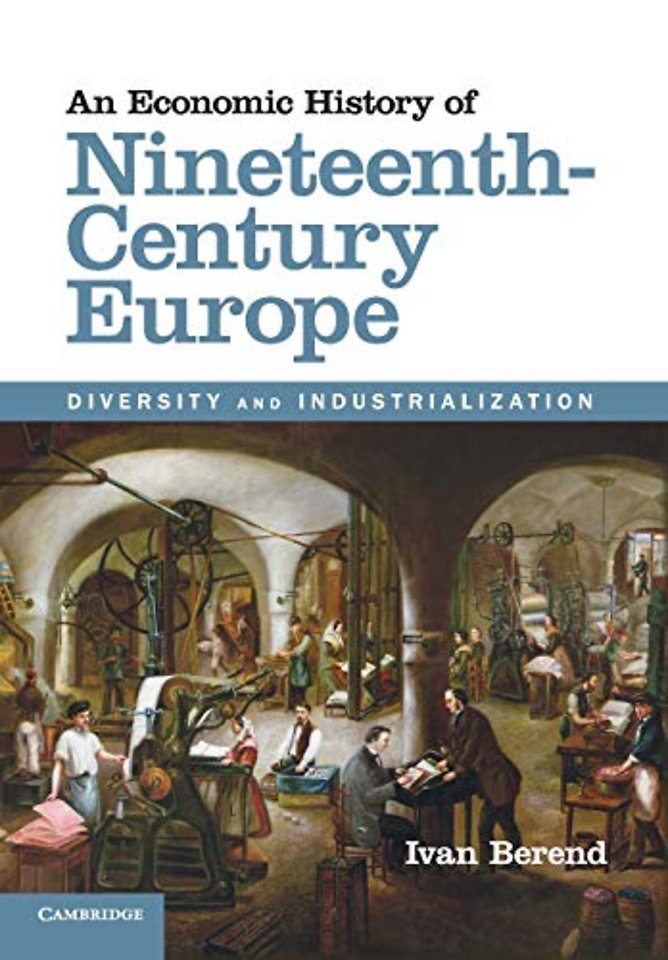
An Economic History of Nineteenth-Century Europe

Diversity and Industrialization

Specificaties
Paperback, 566 blz. | Engels
Cambridge University Press | e druk, 2012
ISBN13: 9781107689992
Rubricering
Cambridge University Press e druk, 2012 9781107689992
€ 35,67
Levertijd ongeveer 8 werkdagen

Samenvatting

Why did some countries and regions of Europe reach high levels of economic advancement in the nineteenth century, while others were left behind? This new transnational survey of the continent's economic development highlights the role of regional differences in shaping each country's economic path and outcome. Presenting a clear and cogent explanation of the historical causes of advancement and backwardness, Ivan Berend integrates social, political, institutional and cultural factors as well as engaging in debates about the relative roles of knowledge, the state and institutions. Featuring boxed essays on key personalities including Adam Smith, Friedrich List, Gustave Eiffel and the Krupp family, as well as brief histories of innovations such as the steam engine, vaccinations and the co-operative system, the book helps to explain the theories and macro-economic trends that dominated the century and their impact on the subsequent development of the European economy right up to the present day.

Specificaties

ISBN13:9781107689992
Taal:Engels
Bindwijze:Paperback
Aantal pagina's:566

Inhoudsopgave

Introduction; Part I. Gradual Revolution: 1. From merchant to industrial capitalism in Northwestern Europe; Part II. Successful Industrial Transformation of the West: 2. Knowledge and the entrepreneurial state; 3. Agriculture, transportation, and communication; 4. The organisation of business and finance; 5. Three versions of successful industrialization; 6. The miracle of knowledge and the state: Scandinavia; 7. Demographic revolution, transformation of life and standard of living; 8. The Europeanization of Europe; Part III. The Peripheries: Semi-Success or Failure of Modern Transformation: 9. The 'sleeping' peripheries, traditional institutions and values; 10. The Western sparks that ignite modernization; 11. Advantage from dependence: Central Europe, the Baltic Area, Finland and Ireland; 12. Profiting from foreign interests: the Mediterranean and Russia; 13. The predator Leviathan in peasant societies: the Balkans and the borderlands of Austria-Hungary; Epilogue: economic disparity – and alternative postwar economic regimes; References.
€ 35,67
Levertijd ongeveer 8 werkdagen

Rubrieken

    Personen

      Trefwoorden

        An Economic History of Nineteenth-Century Europe