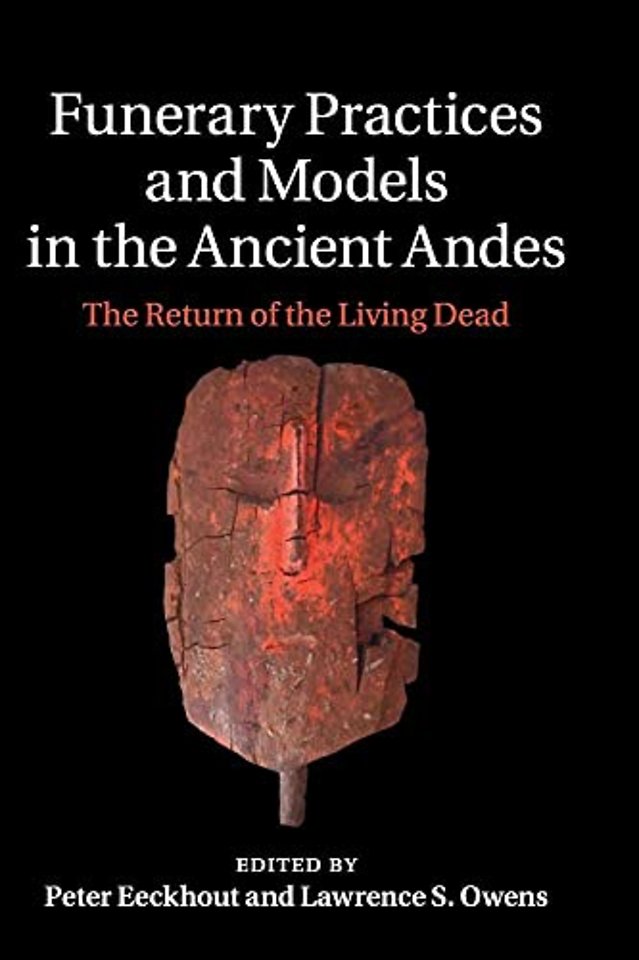
Peter Eeckhout,
Lawrence S. Owens
Cambridge University Press
e druk, 2015
9781107059344
Funerary Practices and Models in the Ancient Andes
The Return of the Living Dead
Specificaties
Gebonden, 320 blz.
|
Engels
Cambridge University Press |
e druk, 2015
ISBN13: 9781107059344
Rubricering
Levertijd ongeveer 8 werkdagen
Samenvatting
This edited volume focuses on the funerary archaeology of the Pan-Andean area in the pre-Hispanic period. The contributors examine the treatment of the dead and provide an understanding of how these ancient groups coped with mortality, as well as the ways in which they strove to overcome the effects of death. The contributors also present previously unpublished discoveries and employ a range of academic and analytical approaches that have rarely - if ever - been utilised in South America before. The book covers the Formative Period to the end of the Inca Empire, and the chapters together comprise a state-of-the-art summary of all the best research on Andean funerary archaeology currently being carried out around the globe.
Specificaties
ISBN13:9781107059344
Taal:Engels
Bindwijze:Gebonden
Aantal pagina's:320
Uitgever:Cambridge University Press
Inhoudsopgave
1. The impossibility of death: introduction to funerary practices and models in the ancient Andes Peter Eeckhout and Lawrence S. Owens; 2. Death and the dead in formative Peru Peter Kaulicke; 3. Far away, so close: living with the ancestors in Panquilma, Peruvian central coast Enrique Lopez-Hurtado; 4. A temple for the dead at San Juanito, lower Santa Valley, during the Initial Period Claude Chapdelaine and Gérard Gagné; 5. Tombs and tumuli on the coast and pampa of Tarapacá: explaining the Formative Period in northern Chile (south central Andes) Carolina Agüero and Mauricio Uribe; 6. Paracas funerary practices in Palpa, south coast of Peru Elsa Tomasto-Cagigao, Markus Reindel and Johny Isla; 7. When the dead speak in Moche: funerary customs in an architectural complex associated with the Huaca del Sol and the Huaca de la Luna Henry Gayoso Rullier and Santiago Uceda Castillo; 8. The construction of social identity: tombs of specialists at San José de Moro, Jequetepeque Valley, Peru Carlos E. Rengifo and Luis Jaime Castillo Butters; 9. Bodies of evidence: mortuary archaeology and the Wari-Tiwanaku paradox William H. Isbell and Antti Korpisaari; 10. To the god of death, disease, and healing: social bioarchaeology of Cemetery I at Pachacamac Lawrence S. Owens and Peter Eeckhout; 11. The preparation of corpses and mummy bundles in Ychsma funerary practices at Armatambo Luisa Díaz Arriola; 12. From one burial to another: a sequence of funerary patterns from the Manteño culture (Integration Period AD 800–1535) site of Japotó, Manabí Province, Ecuador Tania Delabarde; 13. Decapitated for the temple: a Nazca funerary context from Cahuachi Oscar D. Llanos Jacinto; 14. Multidisciplinary study of Nectandra sp. seeds from Chimu funerary contexts at Huaca de la Luna, north coast of Peru María del R. Montoya Vera.