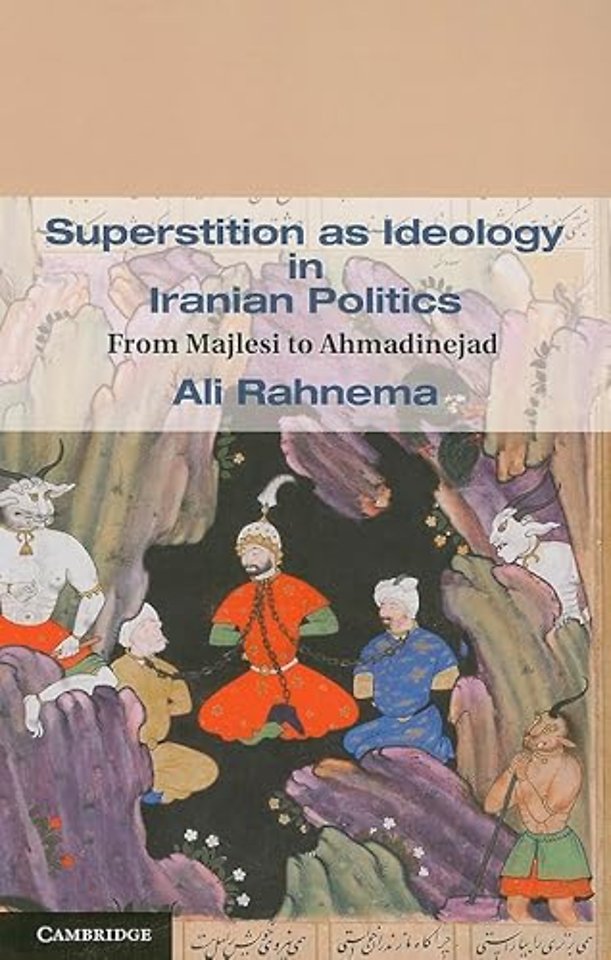
Superstition as Ideology in Iranian Politics

From Majlesi to Ahmadinejad

Specificaties
Gebonden, 334 blz. | Engels
Cambridge University Press | e druk, 2011
ISBN13: 9781107005181
Rubricering
Cambridge University Press e druk, 2011 9781107005181
Onderdeel van serie Cambridge Middle Eas
€ 67,47
Levertijd ongeveer 8 werkdagen

Samenvatting

A superstitious reading of the world based on religion may be harmless at a private level, yet employed as a political tool it can have more sinister implications. As this fascinating book by Ali Rahnema, a distinguished Iranian intellectual, relates, superstition and mystical beliefs have endured and influenced ideology and political strategy in Iran from the founding of the Safavid dynasty in the sixteenth century to the present day. As Rahnema demonstrates through a close reading of the Persian sources and with examples from contemporary Iranian politics, it is this supposed connectedness to the hidden world that has allowed leaders such as Muhammad Reza Shah Pahlavi and Mahmud Ahmadinejad to present themselves and their entourage as representatives of the divine, and their rivals as the embodiment of evil.

Specificaties

ISBN13:9781107005181
Taal:Engels
Bindwijze:Gebonden
Aantal pagina's:334

Inhoudsopgave

Introduction; Part I. Politicizing Occult Islam: 1. Ahmadinejad: a touch of light; 2. Mohammad Reza Shah Pahlavi's supernatural Shi'ism; 3. Shah Esma'il Safavi: the quintessentially occult Shi'i king; Part II. Popular Shi'ism: Majlesism: 4. Milieu, childhood, sanctity and fame; 5. From conceptualization to officialization of a religio-political ideology; 6. Deficiency and defectiveness of the human mind; 7. Society needs the leadership of jurists and/or kings; 8. Superstitious education: fogging minds, fostering resignation; 9. Reconfigurating the necessities of belief: articulating a state religion; 10. Majlesism as an ideology; Conclusion.
€ 67,47
Levertijd ongeveer 8 werkdagen

Rubrieken

    Personen

      Trefwoorden

        Superstition as Ideology in Iranian Politics