Gratis boekenweekgeschenk bij een bestelling boven de €17,50 (geldt alleen voor Nederlandstalige boeken)

Samenvatting

Comprehensive guide to core principles and clinical skills

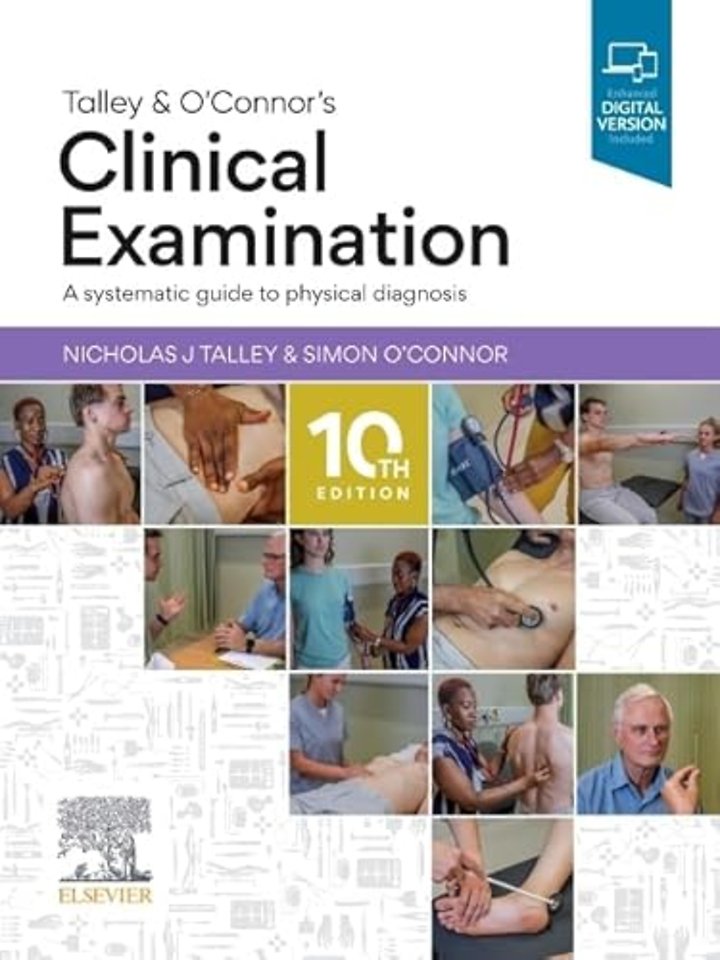
Talley and O’Connor’s Clinical Examination is a complete resource for students and educators covering the core principles, skills and competencies needed for effective patient examination and diagnosis.

For each body system, the book details how to take a systematic and comprehensive health history, how to examine a patient, how to correlate physical signs with disease, and how to use rigorous clinical thinking skills to form a diagnosis.

This tenth edition of the book has been fully updated and forms part of a complete package that includes an eBook, skills videos, ECG and imaging cases, and Objective Structured Clinical Examinations (OSCEs), and is complemented by two companion texts, Talley and O’Connor’s Clinical OSCEs and Clinical Examination Essentials.Suitable for every level of medical student in Australia and New Zealand as well as those in the UK, Ireland, Canada and across Asia and Africa – from pre-clinical studies through to final examsOffers a systematic approach to physical examination and history takingIncludes all important specialties – including women’s health, paediatrics, mental health, and acute careFully updated with the latest evidence, references and historical notesContent organised to maximise comprehension, with supporting full-colour figures, comments, footnotes and aide-memoiresAdditional online material to support learning

New to this edition New section on dermatology and skin colour and the racial differences in diseaseContent displayed separately for junior and more advanced studentsNew videos demonstrating physical examination techniques

Specificaties

ISBN13:9780729599184
Taal:Engels
Bindwijze:Paperback

Inhoudsopgave

<p>Section 1: The general principles of history taking and physical examination </p>​​​​​​1. The general principles of history taking<br>2. Taking the history: advanced history taking<br>3. The general principles of physical examination <p>Section 2: The cardiovascular system </p><p>4. The cardiovascular history <br>5. The cardiac examination <br>6. The limb examination and peripheral vascular disease <br>7. Correlation of physical signs disease and cardiovascular disease <br>8. A summary of the cardiovascular examination and extending the cardiovascular examination </p><p>Section 3: The respiratory system </p><p>9. The respiratory history <br>10. The respiratory examination <br>11. Correlation of physical signs and respiratory disease <br>12. A summary of the respiratory examination and extending the respiratory examination </p><p>Section 4: The gastrointestinal system </p><p>13. The gastrointestinal history <br>14. The gastrointestinal examination <br>15. Correlation of physical signs and gastrointestinal disease <br>16. A summary of the gastrointestinal examination and extending the gastrointestinal examination </p><p>Section 5: The genitourinary system </p><p>17. The genitourinary history <br>18. The genitourinary examination <br>19. A summary of the examination of chronic kidney disease and extending the genitourinary examination </p><p>Section 6: The haematological system </p><p>20. The haematological history <br>21. The haematological examination <br>22. A summary of the haematological examination and extending the haematological examination </p><p>Section 7: The rheumatological system </p><p>23. The rheumatological history <br>24. The rheumatological examination <br>25. Correlation of physical signs with rheumatological and musculoskeletal disease <br>26. A summary of the rheumatological examination and extending the rheumatological examination </p><p>Section 8: The endocrine system </p><p>27. The endocrine history <br>28. The endocrine examination <br>29. Correlation of physical signs and endocrine disease <br>30. A summary of the endocrine examination and extending the endocrine examination </p><p>Section 9 The nervous system </p><p>31. The neurological history <br>32. The neurological examination: general signs and the cranial nerves <br>33. The neurological examination: speech and higher centres <br>34. The neurological examination: the peripheral nervous system <br>35. Correlation of physical signs and neurological syndromes and disease <br>36. A summary of the neurological examination and extending the neurological examinatio </p><p>Section 10: Paediatric and neonatal history and examination </p><p>37. The paediatric history and examination <br>38. The neonatal history and examination </p><p>Section 11: Women's health history and examination </p><p>39. The obstetric history and examination <br>40. The gynaecological history and examination <br>41. The breasts: history and examination </p><p>Section 12: Specialty system history and examination </p><p>42. The eyes, ears, nose and throat <br>43. The skin and lumps <br>44. The older person assessment <br>45. Approaching infectious diseases </p><p>Section 13: Mental health history and examination </p><p>46. The mental health history and mental state examination </p><p>Section 14: Acute care and end of life </p><p>47. The acutely ill patient <br>48. The pre-anaesthetic medical evaluation (PAME) <br>49. Assessment of death </p><p>Section 15: Adult history taking and examination in the wards and clinics </p><p>50. Writing and presenting the adult history and physical examination <br>51. A suggested method for a rapid screening adult physical examination </p>
€ 153,49
Levertijd ongeveer 8 werkdagen

Rubrieken

    Personen

      Trefwoorden

        Talley and O'Connor's Clinical Examination