B Hale
John Wiley & Sons
e druk, 1999
9780631213260
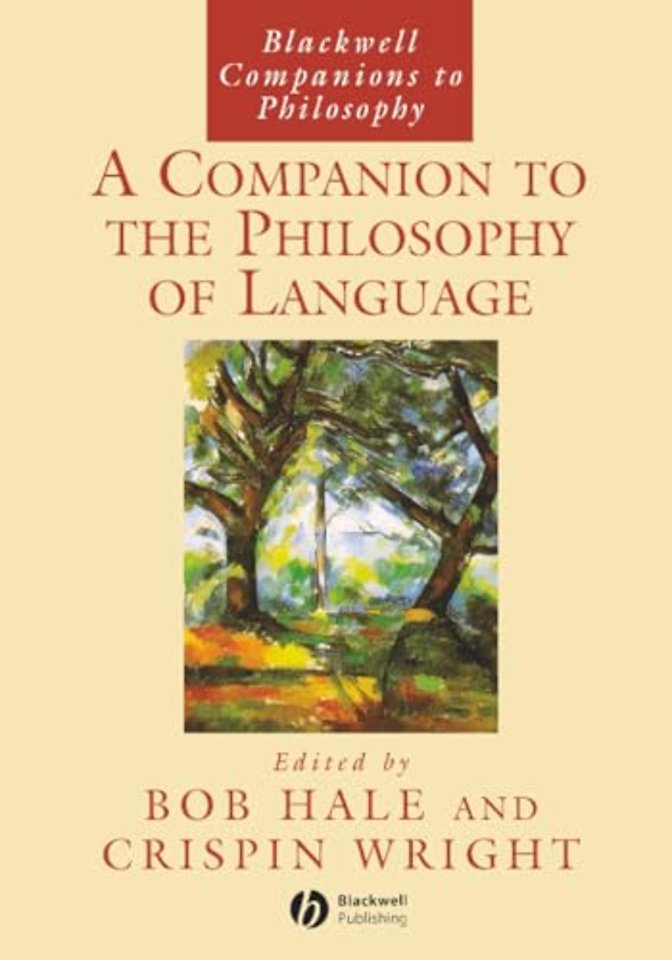
A Companion to the Philosophy of Language
Specificaties
Paperback, 740 blz.
|
Engels
John Wiley & Sons |
e druk, 1999
ISBN13: 9780631213260
Rubricering
Onderdeel van serie
Blackwell Companions to Philosophy
Levertijd ongeveer 8 werkdagen
Samenvatting
This volume provides a survey of contemporary philosophy of language. As well as providing a synoptic view of the key issues, figures, concepts and debates, each essay makes new and original contributions to ongoing debate.
Specificaties
ISBN13:9780631213260
Taal:Engels
Bindwijze:paperback
Aantal pagina's:740
Uitgever:John Wiley & Sons
Hoofdrubriek:Woordenboeken en taal
Inhoudsopgave
Preface.
<p>Notes on Contributors.</p>
<p>Part I: Meaning and Theories of Meaning.</p>
<p>1. Meaning and Truth Conditions: From Frege′s Grand Design to Davidson′s. (David Wiggins).</p>
<p>2. Meaning, Use, Verification. (John Skorupski).</p>
<p>3. Intention and Convention. (Anita Avramides).</p>
<p>4. Pragmatics. (Charles Travis).</p>
<p>5. A Guide to Naturalising Semantics. (Charles Travis).</p>
<p>6. Meaning and Privacy. (Edward Craig).</p>
<p>7. Tacit Knowledge. (Alexander Miller).</p>
<p>8. Radical Interpretation. (Jane Heal).</p>
<p>9. Propositional Attitudes. (Mark Richard).</p>
<p>10. Holism. (Christopher Peacocke).</p>
<p>11. Metaphor. (Richard Moran).</p>
<p>Part II: Language, Truth and Reality.</p>
<p>12. Realism and its Oppositions. (Bob Hale).</p>
<p>13. Theories of Truth. (Ralph C. S. Walker).</p>
<p>14. Analyticity. (Paul Artin Boghossian).</p>
<p>15. Rule–following, Objectivity and Meaning. (Bob Hale).</p>
<p>16. The Interdeterminacy of Translation.(Crispin Wright).</p>
<p>17. Putnam′s Model–theoretical Argument against Metaphysical Realism. (Bob Hale and Crispin Wright).</p>
<p>18. Sorites. (R. M. Sainsbury and Timothy Williamson).</p>
<p>Part III: Reference, Identity and Necessity.</p>
<p>19. Modality. (Bob Hale).</p>
<p>20. Essentialism. (Graeme Forbes).</p>
<p>21. Reference and Necessity. (Robert Stalnaker).</p>
<p>22. Names and Rigid Designation. (Jason Stanley).</p>
<p>23. Indexicals and Demonstratives. (John Perry).</p>
<p>24. Objects and Criteria of Identity. (E. J. Lowe).</p>
<p>25. Relative Identity. (Harold Noonan).</p>
<p>Glossary.</p>
<p>Index.</p>
<p>Notes on Contributors.</p>
<p>Part I: Meaning and Theories of Meaning.</p>
<p>1. Meaning and Truth Conditions: From Frege′s Grand Design to Davidson′s. (David Wiggins).</p>
<p>2. Meaning, Use, Verification. (John Skorupski).</p>
<p>3. Intention and Convention. (Anita Avramides).</p>
<p>4. Pragmatics. (Charles Travis).</p>
<p>5. A Guide to Naturalising Semantics. (Charles Travis).</p>
<p>6. Meaning and Privacy. (Edward Craig).</p>
<p>7. Tacit Knowledge. (Alexander Miller).</p>
<p>8. Radical Interpretation. (Jane Heal).</p>
<p>9. Propositional Attitudes. (Mark Richard).</p>
<p>10. Holism. (Christopher Peacocke).</p>
<p>11. Metaphor. (Richard Moran).</p>
<p>Part II: Language, Truth and Reality.</p>
<p>12. Realism and its Oppositions. (Bob Hale).</p>
<p>13. Theories of Truth. (Ralph C. S. Walker).</p>
<p>14. Analyticity. (Paul Artin Boghossian).</p>
<p>15. Rule–following, Objectivity and Meaning. (Bob Hale).</p>
<p>16. The Interdeterminacy of Translation.(Crispin Wright).</p>
<p>17. Putnam′s Model–theoretical Argument against Metaphysical Realism. (Bob Hale and Crispin Wright).</p>
<p>18. Sorites. (R. M. Sainsbury and Timothy Williamson).</p>
<p>Part III: Reference, Identity and Necessity.</p>
<p>19. Modality. (Bob Hale).</p>
<p>20. Essentialism. (Graeme Forbes).</p>
<p>21. Reference and Necessity. (Robert Stalnaker).</p>
<p>22. Names and Rigid Designation. (Jason Stanley).</p>
<p>23. Indexicals and Demonstratives. (John Perry).</p>
<p>24. Objects and Criteria of Identity. (E. J. Lowe).</p>
<p>25. Relative Identity. (Harold Noonan).</p>
<p>Glossary.</p>
<p>Index.</p>