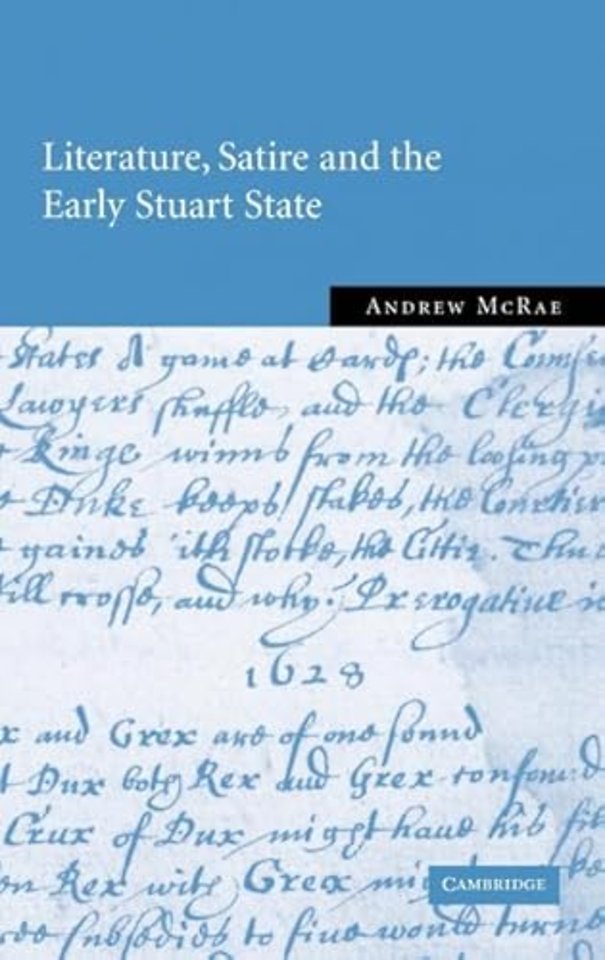
Literature, Satire and the Early Stuart State

Specificaties
Gebonden, 264 blz. | Engels
Cambridge University Press | e druk, 2004
ISBN13: 9780521814959
Rubricering
Cambridge University Press e druk, 2004 9780521814959
€ 122,08
Levertijd ongeveer 8 werkdagen

Samenvatting

Andrew McRae examines the relation between literature and politics at a pivotal moment in English history. He argues that the most influential and incisive political satire in this period may be found in manuscript libels, scurrilous pamphlets and a range of other material written and circulated under the threat of censorship. These are the unauthorised texts of early Stuart England. From his analysis of these texts, McRae argues that satire, as the pre-eminent literary mode of discrimination and stigmatisation, helped people make sense of the confusing political conditions of the early Stuart era. It did so partly through personal attacks and partly also through sophisticated interventions into ongoing political and ideological debates. In such forms satire provided resources through which contemporary writers could define new models of political identity and construct new discourses of dissent. This book wil be of interest to political and literary historians alike.

Specificaties

ISBN13:9780521814959
Taal:Engels
Bindwijze:Gebonden
Aantal pagina's:264

Inhoudsopgave

Acknowledgements; Conventions; List of abbreviations; Introduction; Part I. Personal Politics: 1. The culture of early Stuart libelling; 2. Contesting identities: libels and the early Stuart politician; Part II. Public Politics: 3. Freeing the tongue and the heart: satire and the political subject; 4. Discourses of discrimination: political satire in the 1620s; Part III. The Politics of Division: 5. Satire and sycophancy: Richard Corbett and early Stuart Royalism; 6. Stigmatising Prynne: Puritanism and politics in the 1630s; Epilogue: early Stuart satire and the Civil War; Bibliography; Index.
€ 122,08
Levertijd ongeveer 8 werkdagen

Rubrieken

    Personen

      Trefwoorden

        Literature, Satire and the Early Stuart State