,

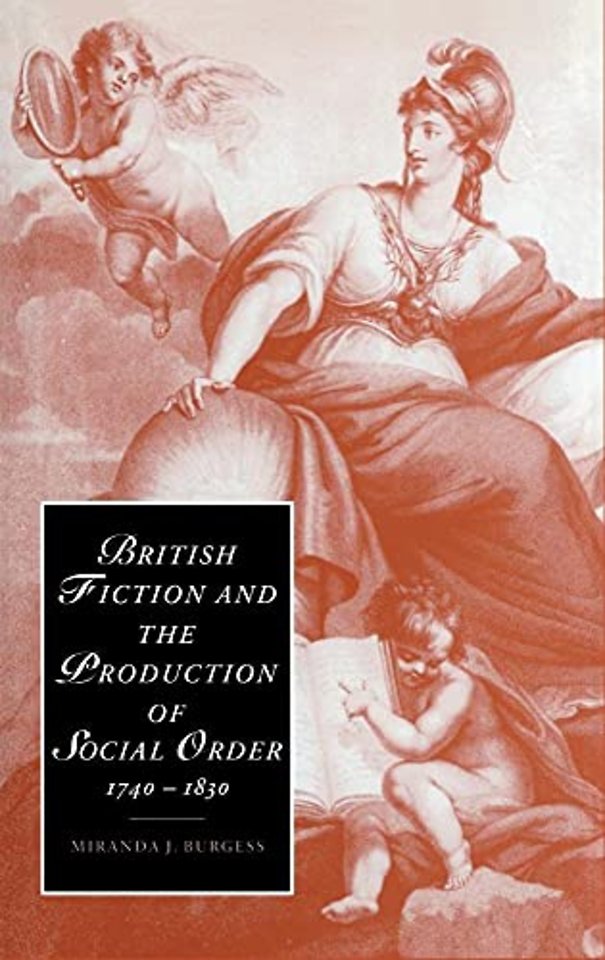
British Fiction and the Production of Social Order, 1740–1830

Specificaties
Gebonden, 324 blz. | Engels
Cambridge University Press | e druk, 2000
ISBN13: 9780521773294
Rubricering
Cambridge University Press e druk, 2000 9780521773294
Onderdeel van serie Cambridge Studies in
€ 116,69
Levertijd ongeveer 8 werkdagen

Samenvatting

In British Fiction and the Production of Social Order Miranda Burgess examines what Romantic-period writers called 'romance': a hybrid genre defined by a shared role in the negotiation of conflicts between political economy and moral philosophy. Reading a broad range of fictional and non-fictional works published between 1740 and 1830, Burgess places authors such as Richardson, Scott, Austen and Wollstonecraft in a new economic, social and cultural context. She explores the interaction between writing and the formation of community, particularly in relation to issues of legitimacy and gender. Burgess argues that the romance held a key role in remaking the national order of a Britain dependent on ideologies of human nature for justification of its social, economic and political systems.

Specificaties

ISBN13:9780521773294
Taal:Engels
Bindwijze:Gebonden
Aantal pagina's:324

Inhoudsopgave

List of figures; Acknowledgments; Introduction: romantic economies; 1. Marketing agreement: Richardson's romance of consensus; 2. 'Summoned into the machine': Burney's genres, Sheridan's sentiment, and conservative critique; 3. Wollstonecraft and the revolution of economic history; 4. Romance at home: Austen, Radcliffe, and the circulation of Britishness; 5. Scott, Hazlitt and the ends of legitimacy; Epilogue: Sensibility, genre and the cultural marketplace; Notes.
€ 116,69
Levertijd ongeveer 8 werkdagen

Rubrieken

    Personen

      Trefwoorden

        British Fiction and the Production of Social Order, 1740–1830