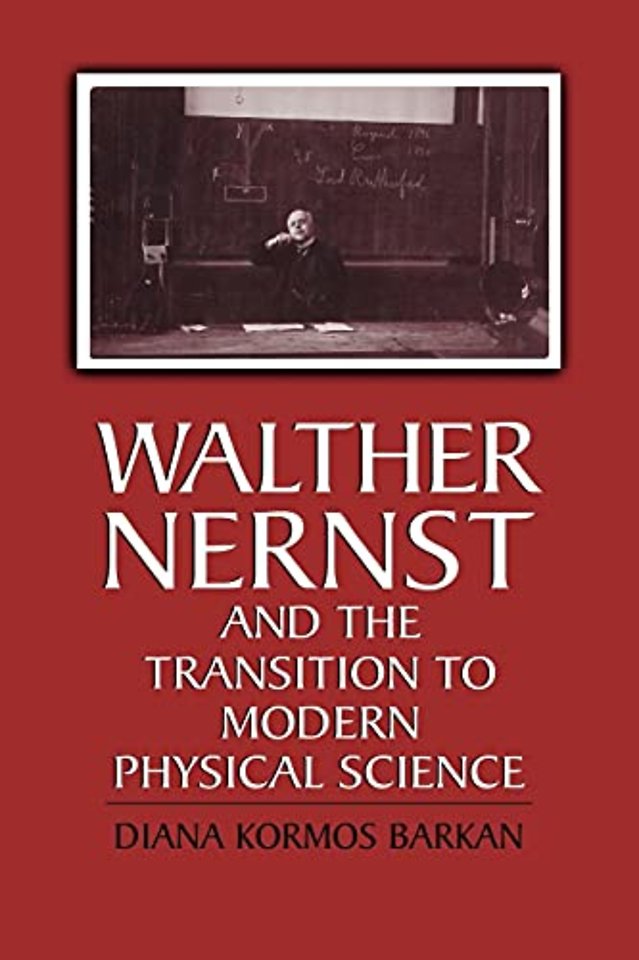
Walther Nernst and the Transition to Modern Physical Science
Samenvatting
Primarily a scientific biography of Walther H. Nernst (1864–1941), one of Germany's most important, productive and often controversial scientists, this 1999 book addresses a set of specific scientific problems that evolved at the intersection of physics, chemistry and technology during one of the most revolutionary periods of modern physical science. Nernst, who won the 1920 Nobel Prize for Chemistry, was a key figure in the transition to a modern physical science, contributing to the study of solutions, of chemical equilibria, and of the behavior of matter at the extremes of the temperature range. A director of major research institutes, rector of the Berlin University, and inventor of a new electric lamp, Nernst was the first 'modern' physical chemist, an able scientific organizer, and a savvy entrepreneur. His career exemplified the increasing connection between German technical industry and academic science, between theory and experiment, and between concepts and practice.