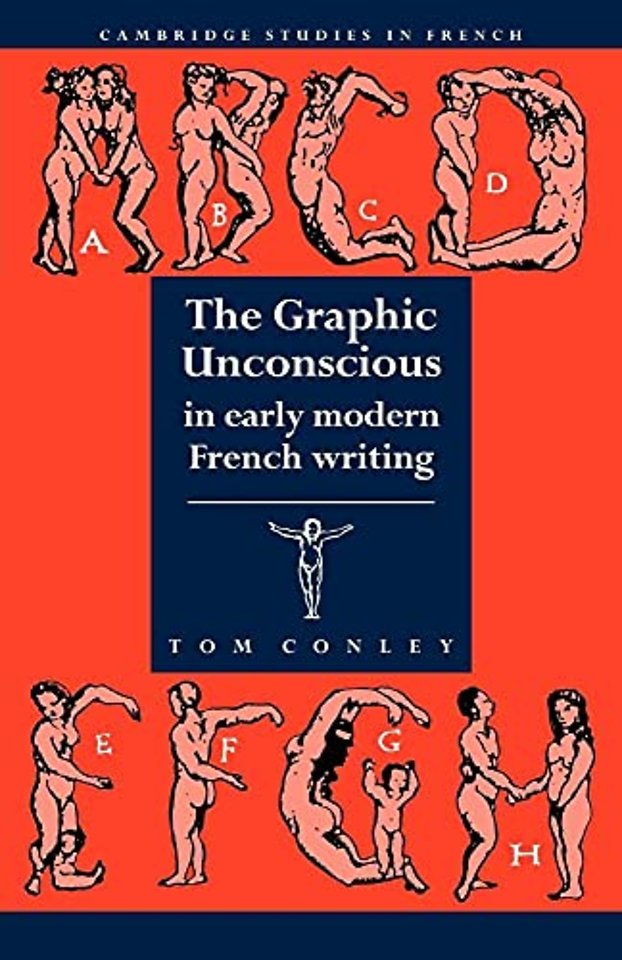
The Graphic Unconscious in Early Modern French Writing
Samenvatting
This 1992 book studies the importance of typographic shapes in French Renaissance literature in the context of psychoanalysis and of the history of printed writing. Focusing on the poetry of Clement Marot, Rabelais's Gargantua, Ronsard's sonnets and the Essais of Montaigne, it argues that printed characters can either supplement or betray what they appear to articulate, revealing compositional patterns that do not appear to be under authorial control. Professor Conley shows that graphic forms are crucial for the development of complex interactions of verbal and visual materials in the early years of print culture. Marot and Rabelais articulate a religious programme through the letter; Ronsard conflates the arts in poetry of the French court in the middle years of the sixteenth century; Montaigne stages the birth of the self in print and inscribes political dimensions in the relationship between the letter and meaning. This unconscious, proto-Freudian writing has complex historical relations with verbal and visual practices in the media of the twentieth century.