Valdir Cechinel–Filho
John Wiley & Sons
e druk, 2012
9780470582268
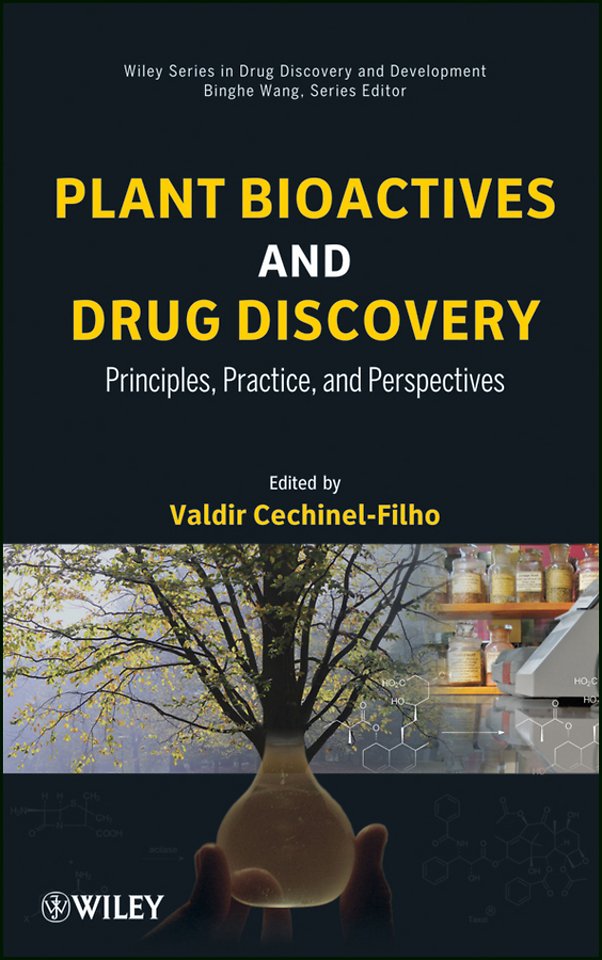
Plant Bioactives and Drug Discovery
Principles, Practice, and Perspectives
Specificaties
Gebonden, 586 blz.
|
Engels
John Wiley & Sons |
e druk, 2012
ISBN13: 9780470582268
Rubricering
Onderdeel van serie
Wiley Series in Drug Discovery and Development
Levertijd ongeveer 15 werkdagen
Samenvatting
Highlighting the complexity and applications of plant bioactive metabolites in organic and medicinal chemistry, this book overviews plant biodiversity as a source of new drugs and drug discovery strategies. In addition, the book describes the role of natural products as drugs targeting specific disease areas, including neurological disorders, inflammation, infectious diseases, and cancer. The coverage also discusses natural products in clinical trials, quality control, and case studies of medicinal plants. A complete sourcebook for this topic, the text includes chapters on marketing, regulations, intellectual property, and academic–industry collaboration.
Specificaties
Inhoudsopgave
<p>Contributors xv</p>
<p>Preface xix</p>
<p>1 Natural Products in Drug Discovery: Recent Advances 1<br /> Gordon M. Cragg, Paul G. Grothaus, and David J. Newman</p>
<p>1.1 Introduction 1</p>
<p>1.2 The Role of Traditional Medicine and Plants in Drug Discovery 2</p>
<p>1.3 The Role of Marine Organisms in Drug Discovery 4</p>
<p>1.4 The Role of Microorganisms in Drug Discovery: An Historical Perspective 6</p>
<p>1.5 Other Sources 8</p>
<p>1.6 The Importance of Natural Products in Drug Discovery and Development 8</p>
<p>1.7 Classical Natural Sources: Untapped Potential 10</p>
<p>1.8 The Unexplored Potential of Microbial Diversity 10</p> 1.9 Development of Drugs From Natural Products: A Multidisciplinary Process 19
<p>1.10 Conclusions 26</p>
<p>References 27</p>
<p>2 Modern Approaches in the Search for New Active Compounds from Crude Extracts of Natural Sources 43<br /> Emerson F. Queiroz, Kurt Hostettmann, and Jean–Luc Wolfender</p>
<p>2.1 Introduction 43</p>
<p>2.2 Selection of the Natural Matrices 45</p>
<p>2.3 Rapid Online Identification and Dereplication 46</p>
<p>2.4 HPLC–Hyphenated Methods for Natural Product Identification 46</p> 2.5 Studies on Natural Products Using LC–NMR, Microflow NMR, and SPE–NMR 57
<p>2.6 Application of Direct NMR Methods for Chemical Profiling of Crude Extracts 67</p> 2.7 Conclusions 69
<p>References 71</p>
<p>3 Natural Products as Lead Compounds in Medicinal Chemistry 81<br /> Eliezer J. Barreiro, Carlos A. M. Fraga, and Lidia M. Lima</p>
<p>3.1 Medicinal Chemistry Definition and the Importance of the Lead Compound in Drug Discovery 81</p>
<p>3.2 Natural Products as Drugs 84</p> 3.4 Natural Products as Lead Compounds for New Drug Candidates 107
<p>3.5 Conclusions 113</p>
<p>Acknowledgments 115</p>
<p>References 115</p>
<p>4 The Importance of Structural Manipulation of Natural Compounds in Drug Discovery and Development 127<br /> Arturo San Feliciano, María Á . Castro, José L. López–Perez, and Esther del Olmo</p>
<p>4.1 Introduction 127</p>
<p>4.2 Chemomodulation of Podophyllotoxin Cyclolignans 132</p> 4.3 Chemoinduction of Bioactivity on Dihydrostilbenoids 140
<br />
<br /> 4.4 Chemoinduction and Chemomodulation of the Antiparasitic Activity of Stilbenoids 150
<p>4.5 Conclusions 152</p>
<p>Acknowledgments 153</p>
<p>References 153</p>
<p>5 The Action of Plants and their Constituents on the Central Nervous System 161<br /> Fúlvio R. Mendes, Giuseppina Negri, Joaquim M. Duarte–Almeida, Ricardo Tabach, and Elisaldo A. Carlini</p>
<p>5.1 Introduction 161</p>
<p>5.2 Plants with CNS Depressant Activity 162</p> 5.3 Plants with the CNS Stimulant Activity 169
<p>5.4 Plants Used as Antidepressants 174</p> 5.5 Adaptogenic Plants 175
<p>5.6 Plants Used to Treat Neurodegenerative Diseases 178</p> 5.7 Plants with the Mind–Altering Activity 182
<p>5.8 Plants Used Against Drug Dependence 188</p>
<p>5.9 Conclusions 188</p>
<p>Acknowledgments 191</p>
<p>References 191</p>
<p>6 The Role of Natural Products in Discovery of New Anti–Infective Agents with Emphasis on Antifungal Compounds 205<br /> Maximiliano Sortino, Marcos Derita, Laura Svetaz, Marcela Raimondi, Melina Di Liberto, Elisa Petenatti, Mahabir Gupta, and Susana Zacchino</p>
<p>6.1 Infectious Diseases and Available Antimicrobial Agents 205</p>
<p>6.2 Fungal Infections and Available Antifungal Agents 206</p> 6.3 The Need of New Antifungal Agents 208
<p>6.4 From Antifungal Compounds to Antifungal Drugs: Some Considerations 223</p>
<p>6.5 Other Strategies Based on Non–targeted Assays 223</p>
<p>6.6 Strategies Based on Targeted Assays for the Discovery of Antifungal Compounds 226</p> 6.7 Conclusion 229
<p>References 229</p>
<p>7 Antiulcer Agents from Higher Plants 241<br /> Luiz C. Klein–Júnior, José R. Santin, and Sérgio F. de Andrade</p>
<p>7.1 Introduction 241</p>
<p>7.2 Medicinal Plants with Antiulcer Activity 243</p> 7.3 Secondary Metabolites as a Source of Anti–Ulcer Drug Leads 251
<p>7.4 Conclusions 256</p>
<p>References 256</p>
<p>8 Recent Progress in the Chemistry and Biology of Paclitaxel (TaxolTM) and Related Taxanes 263<br /> Jun Qi, Jielu Zhao, and David G. I. Kingston</p>
<p>8.1 Introduction 263</p>
<p>8.2 New Chemistry of Paclitaxel 265</p> 8.3 Tubulin Binding 295
<p>8.4 Pharmacology of Paclitaxel 306</p>
<p>8.5 Conclusions 318</p>
<p>References 319</p>
<p>9 Cancer Chemopreventive Activity of Higher Plants 337<br /> A. Douglas Kinghorn, Yulin Ren, Jie Li, and Chung Ki Sung</p>
<p>9.1 Introduction 337</p>
<p>9.2 Potental Cancer Chemopreventive Agents from Selected Dietary Higher Plants 338</p>
<p>9.3 Conclusions 348</p>
<p>Acknowledgments 348</p>
<p>References 348</p>
<p>10 Medicinal Plants and Pharmaceutical Technology 359<br /> Ruth M. Lucinda da Silva, Angélica G. Couto, and Tania M.B. Bresolin</p>
<p>10.1 Introduction 359</p>
<p>10.2 Supply of Herbal Materials 361</p>
<p>10.3 Harvest and Postharvest Processing 363</p> 10.4 Extraction of Herbal Drugs 365
<p>10.5 Dry Extracts 369</p>
<p>10.6 Phytopharmaceutical Dosage Forms 373</p> 10.7 Quality Assurance and Quality Control of Herbal Drugs and Phytopharmaceuticals 377
<p>References 387</p>
<p>11 Natural Products in Clinical Trials 395<br /> Sigrun Chrubasik</p>
<p>11.1 The Quality of Clinical Trials 395</p>
<p>11.2 Examples of Clinical Studies with Natural Products 396</p>
<p>11.3 Evidence of Effectiveness 413</p>
<p>References 416</p>
<p>12 The Influence of Biotic and Abiotic Factors on the Production of Secondary Metabolites in Medicinal Plants 419<br /> Dayana R. Gouvea, Leonardo Gobbo–Neto, and Norberto P. Lopes</p>
<p>12.1 Introduction 419</p>
<p>12.2 Biotic and Abiotic Factors that can Affect Biosynthesis and/or Metabolites Accumulation 422</p> 12.3 Types of Observed Variations on Secondary Metabolites Content 431
<p>12.4 Conclusions 439</p>
<p>References 440</p>
<p>13 Production of Bioactives Compounds: The Importance of Pictet Spengler Reaction in the XXI Century 453<br /> Pilar Menendez, Ilaria D Acquarica, Giuliano Delle Monache, Francesca Ghirga, Andrea Calcaterra, Marco Barba, Alberto Macone, Alberto Boffi, Alessandra Bonamore, and Bruno Botta</p>
<p>13.1 Introduction 453</p>
<p>13.2 Variants and Applications 455</p>
<p>13.3 Asymmetric Synthesis 457</p>
<p>13.4 Chiral Auxiliary and Enantioselective Catalysis 459</p>
<p>13.5 Enzymatic Catalysis 465</p>
<p>13.6 The Pictet Spengler Reaction at Present 468</p> 13.7 Conclusions 478
<p>Acknowledgment 480</p>
<p>References 480</p>
<p>14 Screening Methods for Drug Discovery from Plants 489<br /> Alan L. Harvey</p>
<p>14.1 From Traditional to Phenotypic Screening 489</p>
<p>14.2 Molecular and Cellular Assays 490</p>
<p>14.3 Disease–Specific Assays 492</p> 14.4 Conclusions 495
<p>References 495</p>
<p>15 Phytotherapeutics Intellectual Property Rights, Global Market, and Global Regulatory Guidelines 499<br /> James D. McChesney, Raymond Cooper, and Kip Vought</p>
<p>15.1 Intellectual Property Rights 499</p>
<p>15.2 Biodiversity 501</p>
<p>15.3 Global Market Perspectives 502</p> 15.4 Regulatory Perspectives 507
<p>15.5 Conclusions 525</p>
<p>References 526</p>
<p>16 Cooperation Between the Pharmaceutical Industry and Academic Institutions in Drug Discovery 529<br /> Valdir Cechinel–Filho, Rivaldo Niero, and Rosendo A. Yunes</p>
<p>16.1 Introduction 529</p>
<p>16.2 Interaction Between Academic Institutions and the Pharmaceutical Industry 530</p>
<p>16.3 Overview of the Global Pharmaceutical Market 534</p>
<p>16.4 Reorganization of the Pharmaceutical Industry 535</p> 16.5 Conclusions 541
<p>Acknowledgments 542</p>
<p>References 542</p>
<p>Index 545</p>
<p>Preface xix</p>
<p>1 Natural Products in Drug Discovery: Recent Advances 1<br /> Gordon M. Cragg, Paul G. Grothaus, and David J. Newman</p>
<p>1.1 Introduction 1</p>
<p>1.2 The Role of Traditional Medicine and Plants in Drug Discovery 2</p>
<p>1.3 The Role of Marine Organisms in Drug Discovery 4</p>
<p>1.4 The Role of Microorganisms in Drug Discovery: An Historical Perspective 6</p>
<p>1.5 Other Sources 8</p>
<p>1.6 The Importance of Natural Products in Drug Discovery and Development 8</p>
<p>1.7 Classical Natural Sources: Untapped Potential 10</p>
<p>1.8 The Unexplored Potential of Microbial Diversity 10</p> 1.9 Development of Drugs From Natural Products: A Multidisciplinary Process 19
<p>1.10 Conclusions 26</p>
<p>References 27</p>
<p>2 Modern Approaches in the Search for New Active Compounds from Crude Extracts of Natural Sources 43<br /> Emerson F. Queiroz, Kurt Hostettmann, and Jean–Luc Wolfender</p>
<p>2.1 Introduction 43</p>
<p>2.2 Selection of the Natural Matrices 45</p>
<p>2.3 Rapid Online Identification and Dereplication 46</p>
<p>2.4 HPLC–Hyphenated Methods for Natural Product Identification 46</p> 2.5 Studies on Natural Products Using LC–NMR, Microflow NMR, and SPE–NMR 57
<p>2.6 Application of Direct NMR Methods for Chemical Profiling of Crude Extracts 67</p> 2.7 Conclusions 69
<p>References 71</p>
<p>3 Natural Products as Lead Compounds in Medicinal Chemistry 81<br /> Eliezer J. Barreiro, Carlos A. M. Fraga, and Lidia M. Lima</p>
<p>3.1 Medicinal Chemistry Definition and the Importance of the Lead Compound in Drug Discovery 81</p>
<p>3.2 Natural Products as Drugs 84</p> 3.4 Natural Products as Lead Compounds for New Drug Candidates 107
<p>3.5 Conclusions 113</p>
<p>Acknowledgments 115</p>
<p>References 115</p>
<p>4 The Importance of Structural Manipulation of Natural Compounds in Drug Discovery and Development 127<br /> Arturo San Feliciano, María Á . Castro, José L. López–Perez, and Esther del Olmo</p>
<p>4.1 Introduction 127</p>
<p>4.2 Chemomodulation of Podophyllotoxin Cyclolignans 132</p> 4.3 Chemoinduction of Bioactivity on Dihydrostilbenoids 140
<br />
<br /> 4.4 Chemoinduction and Chemomodulation of the Antiparasitic Activity of Stilbenoids 150
<p>4.5 Conclusions 152</p>
<p>Acknowledgments 153</p>
<p>References 153</p>
<p>5 The Action of Plants and their Constituents on the Central Nervous System 161<br /> Fúlvio R. Mendes, Giuseppina Negri, Joaquim M. Duarte–Almeida, Ricardo Tabach, and Elisaldo A. Carlini</p>
<p>5.1 Introduction 161</p>
<p>5.2 Plants with CNS Depressant Activity 162</p> 5.3 Plants with the CNS Stimulant Activity 169
<p>5.4 Plants Used as Antidepressants 174</p> 5.5 Adaptogenic Plants 175
<p>5.6 Plants Used to Treat Neurodegenerative Diseases 178</p> 5.7 Plants with the Mind–Altering Activity 182
<p>5.8 Plants Used Against Drug Dependence 188</p>
<p>5.9 Conclusions 188</p>
<p>Acknowledgments 191</p>
<p>References 191</p>
<p>6 The Role of Natural Products in Discovery of New Anti–Infective Agents with Emphasis on Antifungal Compounds 205<br /> Maximiliano Sortino, Marcos Derita, Laura Svetaz, Marcela Raimondi, Melina Di Liberto, Elisa Petenatti, Mahabir Gupta, and Susana Zacchino</p>
<p>6.1 Infectious Diseases and Available Antimicrobial Agents 205</p>
<p>6.2 Fungal Infections and Available Antifungal Agents 206</p> 6.3 The Need of New Antifungal Agents 208
<p>6.4 From Antifungal Compounds to Antifungal Drugs: Some Considerations 223</p>
<p>6.5 Other Strategies Based on Non–targeted Assays 223</p>
<p>6.6 Strategies Based on Targeted Assays for the Discovery of Antifungal Compounds 226</p> 6.7 Conclusion 229
<p>References 229</p>
<p>7 Antiulcer Agents from Higher Plants 241<br /> Luiz C. Klein–Júnior, José R. Santin, and Sérgio F. de Andrade</p>
<p>7.1 Introduction 241</p>
<p>7.2 Medicinal Plants with Antiulcer Activity 243</p> 7.3 Secondary Metabolites as a Source of Anti–Ulcer Drug Leads 251
<p>7.4 Conclusions 256</p>
<p>References 256</p>
<p>8 Recent Progress in the Chemistry and Biology of Paclitaxel (TaxolTM) and Related Taxanes 263<br /> Jun Qi, Jielu Zhao, and David G. I. Kingston</p>
<p>8.1 Introduction 263</p>
<p>8.2 New Chemistry of Paclitaxel 265</p> 8.3 Tubulin Binding 295
<p>8.4 Pharmacology of Paclitaxel 306</p>
<p>8.5 Conclusions 318</p>
<p>References 319</p>
<p>9 Cancer Chemopreventive Activity of Higher Plants 337<br /> A. Douglas Kinghorn, Yulin Ren, Jie Li, and Chung Ki Sung</p>
<p>9.1 Introduction 337</p>
<p>9.2 Potental Cancer Chemopreventive Agents from Selected Dietary Higher Plants 338</p>
<p>9.3 Conclusions 348</p>
<p>Acknowledgments 348</p>
<p>References 348</p>
<p>10 Medicinal Plants and Pharmaceutical Technology 359<br /> Ruth M. Lucinda da Silva, Angélica G. Couto, and Tania M.B. Bresolin</p>
<p>10.1 Introduction 359</p>
<p>10.2 Supply of Herbal Materials 361</p>
<p>10.3 Harvest and Postharvest Processing 363</p> 10.4 Extraction of Herbal Drugs 365
<p>10.5 Dry Extracts 369</p>
<p>10.6 Phytopharmaceutical Dosage Forms 373</p> 10.7 Quality Assurance and Quality Control of Herbal Drugs and Phytopharmaceuticals 377
<p>References 387</p>
<p>11 Natural Products in Clinical Trials 395<br /> Sigrun Chrubasik</p>
<p>11.1 The Quality of Clinical Trials 395</p>
<p>11.2 Examples of Clinical Studies with Natural Products 396</p>
<p>11.3 Evidence of Effectiveness 413</p>
<p>References 416</p>
<p>12 The Influence of Biotic and Abiotic Factors on the Production of Secondary Metabolites in Medicinal Plants 419<br /> Dayana R. Gouvea, Leonardo Gobbo–Neto, and Norberto P. Lopes</p>
<p>12.1 Introduction 419</p>
<p>12.2 Biotic and Abiotic Factors that can Affect Biosynthesis and/or Metabolites Accumulation 422</p> 12.3 Types of Observed Variations on Secondary Metabolites Content 431
<p>12.4 Conclusions 439</p>
<p>References 440</p>
<p>13 Production of Bioactives Compounds: The Importance of Pictet Spengler Reaction in the XXI Century 453<br /> Pilar Menendez, Ilaria D Acquarica, Giuliano Delle Monache, Francesca Ghirga, Andrea Calcaterra, Marco Barba, Alberto Macone, Alberto Boffi, Alessandra Bonamore, and Bruno Botta</p>
<p>13.1 Introduction 453</p>
<p>13.2 Variants and Applications 455</p>
<p>13.3 Asymmetric Synthesis 457</p>
<p>13.4 Chiral Auxiliary and Enantioselective Catalysis 459</p>
<p>13.5 Enzymatic Catalysis 465</p>
<p>13.6 The Pictet Spengler Reaction at Present 468</p> 13.7 Conclusions 478
<p>Acknowledgment 480</p>
<p>References 480</p>
<p>14 Screening Methods for Drug Discovery from Plants 489<br /> Alan L. Harvey</p>
<p>14.1 From Traditional to Phenotypic Screening 489</p>
<p>14.2 Molecular and Cellular Assays 490</p>
<p>14.3 Disease–Specific Assays 492</p> 14.4 Conclusions 495
<p>References 495</p>
<p>15 Phytotherapeutics Intellectual Property Rights, Global Market, and Global Regulatory Guidelines 499<br /> James D. McChesney, Raymond Cooper, and Kip Vought</p>
<p>15.1 Intellectual Property Rights 499</p>
<p>15.2 Biodiversity 501</p>
<p>15.3 Global Market Perspectives 502</p> 15.4 Regulatory Perspectives 507
<p>15.5 Conclusions 525</p>
<p>References 526</p>
<p>16 Cooperation Between the Pharmaceutical Industry and Academic Institutions in Drug Discovery 529<br /> Valdir Cechinel–Filho, Rivaldo Niero, and Rosendo A. Yunes</p>
<p>16.1 Introduction 529</p>
<p>16.2 Interaction Between Academic Institutions and the Pharmaceutical Industry 530</p>
<p>16.3 Overview of the Global Pharmaceutical Market 534</p>
<p>16.4 Reorganization of the Pharmaceutical Industry 535</p> 16.5 Conclusions 541
<p>Acknowledgments 542</p>
<p>References 542</p>
<p>Index 545</p>