, ,

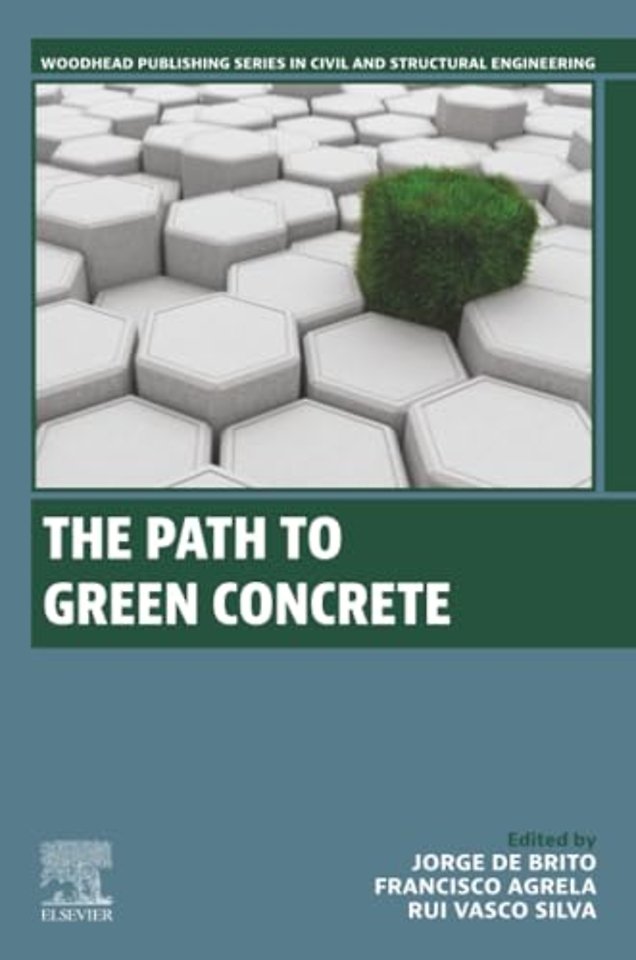
The Path to Green Concrete

Specificaties
Paperback, blz. | Engels
Elsevier Science | e druk, 2024
ISBN13: 9780443191657
Rubricering
Elsevier Science e druk, 2024 9780443191657
€ 301,00
Levertijd ongeveer 8 werkdagen

Samenvatting

The Path to Green Concrete will enlighten the scientific community on recent developments in this field. Within this volume, world-renowned experts summarize recent research findings covering key topics such as: alkali-activated materials using aluminosilicate waste precursors; use of novel cost-effective and eco-efficient supplementary cementitious materials; state of the art characterization techniques and assessment methodologies; advances on the use of biomass ashes, steel slags and waste glass; the role of carbon capture in the production of concrete and mortar; development of eco-efficient composites for specialized applications; recycling of the fine fraction of construction and demolition wastes; and sustainable self-healing concrete.

This book will be a valuable reference resource for academic and industrial researchers, civil and structural engineers, manufacturers, and other construction professionals working in the development of sustainable construction materials.

Specificaties

ISBN13:9780443191657
Taal:Engels
Bindwijze:Paperback

Inhoudsopgave

<p>Section 1 - Developments on green supplementary cementitious materials<br>1. Reactive magnesia<br>Miguel Bravo and Bruna A. Silva<br>2. Stainless Steel Slag<br>Francisco Agrela Sainz and Julia Rosales<br>3. Alkali activation of slag<br>Francisca Puertas<br>4. New and More Sustainable Paths for the Development of Alkali Activated Cements<br>Nuno Cristelo, Jhonathan Rivera and Inés Garcia-Lodeiro<br>5. Alkali-activated aluminosilicate industrial wastes as alternative binders in precast paving blocks<br>Rui Vasco Silva<br>6. Granulation of incinerated municipal solid waste bottom ash with one-part alkali activation technology<br>Priyadharshini Perumal, Suman kumar Adhikary and Mirja Illikainen<br>Section 2 - Construction, demolition and industrial wastes as aggregates in cementitious composites<br>7. 3D printing concrete with by-products<br>Belén Gonzalez-Fonteboa<br>8. Steel slag aggregate in concrete<br>Flora Faleschini, Mariano Angelo Zanini and Daniel Trento<br>9. Microtomography of eco-efficient concrete<br>Carlos Thomas<br>10. Mining waste as aggregate for concrete<br>Lina M. Trujillo López, Jesús Suárez-González, Carlos López-Colina, Ismael García, Miguel Serrano and Fernando Lopez Gayarre<br>Section 3 - Advances on eco-efficient concrete<br>11. Ultra-high-performance concrete<br>Caijun Shi and Xuanhan Zhang<br>12. Self-healing concrete<br>Gurkan Yildirim and Behlul Furkan Ozel<br>13. Cellular concrete<br>Maria Victoria Borrachero Sr.<br>14. Graphene in eco-efficient concrete<br>Manuel Cruz<br>15. Nanoindentation of concrete with sustainable supplementary cementitious materials<br>Wengui Li, Zhiyu Luo, Yipu Guo, Xuqun Lin, Xiaonan Wang, Hanbing Zhao and Xuanrui Zhang<br>16. Pervious concrete with alternative materials<br>Krishna Prapoorna Biligiri and Avishreshth Singh</p>
€ 301,00
Levertijd ongeveer 8 werkdagen

Rubrieken

    Personen

      Trefwoorden

        The Path to Green Concrete