,

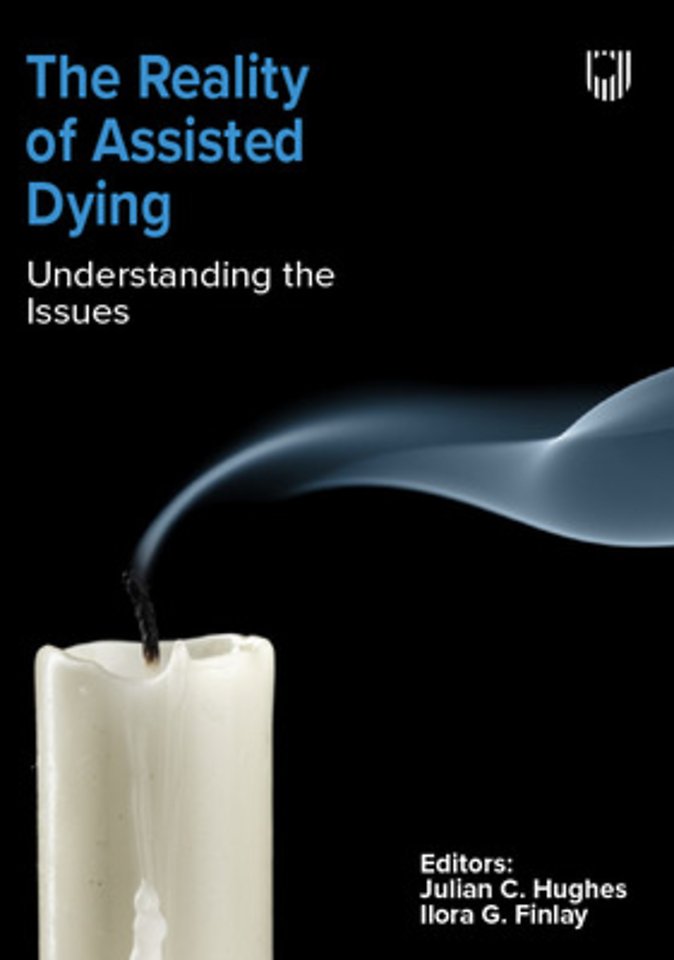
The Reality of Assisted Dying: Understanding the Issues

Specificaties
Paperback, blz. | Engels
McGraw-Hill Education | e druk, 2024
ISBN13: 9780335253173
Rubricering
McGraw-Hill Education e druk, 2024 9780335253173
€ 40,00
Levertijd ongeveer 10 werkdagen

Samenvatting

“This is a book to be read by all involved in either side of this heated debate.”
Dr C Fourcade, President of the French Association for Palliative Care, France

"This powerful collection of essays brilliantly unpacks the legal, ethical and practical issues around the assisted dying debate.”
Jonathan Herring, Professor of Law, University of Oxford, UK

“This is an essential exploration of the complexities behind the sound bites.”
Baroness Campbell of Surbiton DBE, UK

“A much needed, timely compendium covering the main issues underlying and surrounding Assisted Dying.”
Robert Twycross, Past Head, WHO Collaborative Centre for Palliative Care, Oxford, UK

"Wherever your views lie on … assisted dying, you should read this book.”
Dr Matt Morgan, Professor of Intensive Care, Cardiff University, UK, and Curtin University, Australia

At a critical moment in the UK debate, this book provides up-to-date reflections from a broad variety of international experts on the profoundly important issues that surround changes in the law in any jurisdiction in connection with assisted dying and considers the realities that surround such changes.

The Reality of Assisted Dying covers all the important issues in the debates about assisted suicide and euthanasia. This includes thoughts on the role of the law, discussion of important philosophical and ethical concepts, investigating the various issues that arise in the practice of medicine and palliative care, and scrutinizing concerns about definitions, coercion, consequences and safety.

This book:
Provides up-to-date data, evidence and reflections from professionals from countries where assisted dying has been legalized;Takes a fresh look at the arguments around legalization of assisted dying;Shows how a change in the law must take account of all those who will be affected, including families and those who will feel compelled to participate by assisting suicides or performing euthanasia;Shows the problems and dangers of embedding assisted dying within healthcare, and explores how alternative socio-legal procedures would improve legitimacy and monitoring for patients and their families.The book is relevant to a variety of intellectual disciplines and to political and social debates both in the UK and internationally, as well as being of interest to general readers and students studying the many relevant subjects, from medicine, to law, sociology, politics, philosophy and ethics.

Julian C. Hughes has studied and been a professor of both philosophy and of old age psychiatry. He was an NHS consultant in old age psychiatry and served as deputy chair of the Nuffield Council on Bioethics, UK. His most recent book was Dementia and Ethics Reconsidered, published by Open University Press.

Ilora G. Finlay is a Crossbench Peer in the House of Lords, an honorary professor of palliative medicine at Cardiff University, UK, past President of the BMA and the Royal Society of Medicine. A founder director of Living and Dying Well, she co-authored Death by Appointment and led on legislation to encourage the availability of palliative care for all.

Reading Our Times, Assisted Dying: What's really at stake? In conversation with Ilora Finlay and Julian Hughes: http://bit.ly/3CnkBdF

Specificaties

ISBN13:9780335253173
Taal:Engels
Bindwijze:paperback

Inhoudsopgave

PART 1 Context&nbsp;<br/>1 Introduction<br/>Ilora Finlay and Julian C. Hughes&nbsp;<br/>2 Polling on assisted suicide: the misuse of public opinion&nbsp;<br/>Andrew Hawkins&nbsp;<br/>3 Voluntary euthanasia and physician-assisted suicide: seven prominent but weak arguments for legalization<br/>John Keown&nbsp;<br/><br/><br/>PART 2 Global perspectives&nbsp;<br/>4 Assisted dying: the evidence from abroad<br/>Conall Preston&nbsp;<br/>5 Making euthanasia legal in the Netherlands: implications for the doctor-patient relationship&nbsp;<br/>Cees Hertogh&nbsp;<br/>6 The Dutch experience: from the perspective of lifelong disability&nbsp;<br/>Irene Tuffrey-Wijne and Leopold Curfs&nbsp;<br/>7 The rapid expansion of euthanasia and assisted suicide: the view from Canada&nbsp;<br/>Ramona Coelho and Leonie Herx&nbsp;<br/>8 Assisted dying in Aotearoa New Zealand: a victory of politics over informed debate?<br/>Sinead Donnelly, Peter Thirkell, John Kleinsman and Wendi Wicks&nbsp;<br/>9 The Australian perspective&nbsp;<br/>Frank Brennan, Adrian Dabscheck and Leeroy William&nbsp;<br/><br/><br/>PART 3 Law&nbsp;<br/>10 Read the question!<br/>Robert Preston&nbsp;<br/>11 Safeguards - what safeguards?&nbsp;<br/>Robert Preston&nbsp;<br/>12 Reviewing prosecution policy on assisted suicide and 'mercy killing' in England and Wales&nbsp;<br/>Alexandra Mullock&nbsp;<br/>13 Assisted dying - the capacity complexities<br/>Alex Ruck Keene&nbsp;<br/>14 A journey through the contested territory of assisted dying: how law can go wrong - and right<br/>Richard Huxtable&nbsp;<br/><br/><br/>PART 4 Medical and palliative care issues&nbsp;<br/>15 Physician-assisted suicide for psychiatric disorders: pros and cons(equences)&nbsp;John Maher&nbsp;<br/>16 Challenges in diagnosis and prognosis<br/>Fiona MacCormick&nbsp;<br/>17 Palliative care: need, provision and evidence<br/>Katherine E. Sleeman and Lesley E. Williamson&nbsp;<br/>18 Sedation at the end of Life&nbsp;<br/>Katherine Frew and Paul Paes&nbsp;<br/>19 Should assisted dying be part of mainstream health care?<br/>Suzanne Ost and Nancy Preston&nbsp;<br/>20 De-medicalization: why we should completely separate assisted dying from health care and what this would achieve&nbsp;<br/>H. Lucy Thomas&nbsp;<br/>21 The enigma of lethal drugs&nbsp;<br/>Claud Regnard&nbsp;<br/><br/><br/>PART 5 Safety and vulnerable groups&nbsp;<br/>22 Disability - a duty to die?&nbsp;<br/>Tanni Grey-Thompson and Flora Klintworth&nbsp;<br/>23 People with intellectual disabilities and autistic people<br/>Sheila Hollins and Alice Firth&nbsp;<br/>24 Vulnerable lives - euthanasia in the newborn and paediatric populations&nbsp;<br/>John Wyatt<br/>25 Older people and those living with dementia&nbsp;<br/>Julian C. Hughes&nbsp;<br/>26 The euthanasia paradox - free choice or coercion?&nbsp;<br/>John Maher&nbsp;<br/><br/><br/>PART 6 Philosophical and ethical concepts&nbsp;<br/>27 Autonomy and assisted suicide&nbsp;<br/>Onora O'Neill&nbsp;<br/>28 Dignity, quality of life and the care of the dying<br/>Daniel P. Sulmasy&nbsp;<br/>29 The imperative to prevent suicide and not to encourage or assist it<br/>David Albert Jones&nbsp;<br/>30 Instability of eligibility criteria for assisted death and its implications Scott&nbsp;<br/>Y.H. Kim&nbsp;<br/><br/><br/>PART 7 Faith and no faith&nbsp;<br/>31 The place of religion in the public debate about assisted suicide<br/>Nigel Biggar&nbsp;<br/>32 Assisted suicide: an Islamic perspective<br/>Abdul-Azim Ahmed&nbsp;<br/>33 Assisted dying: a Jewish perspective<br/>Alexandra Wright&nbsp;<br/>34 The Humanist case against assisted suicide and euthanasia&nbsp;<br/>Kevin Yuill<br/><br/>
€ 40,00
Levertijd ongeveer 10 werkdagen

Rubrieken

    Personen

      Trefwoorden

        The Reality of Assisted Dying: Understanding the Issues