, ,

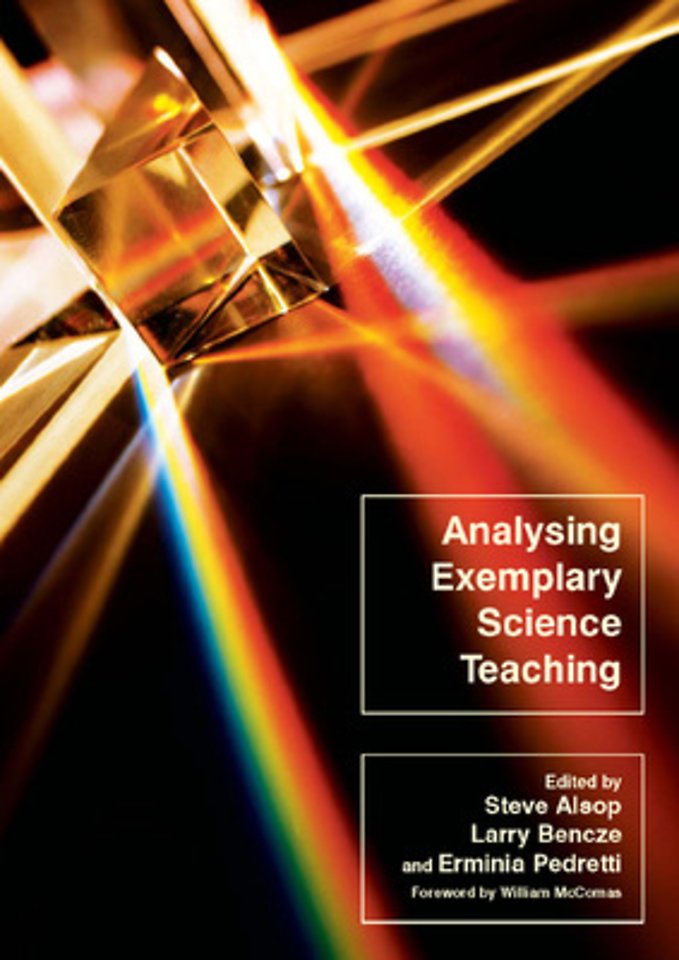
Analysing Exemplary Science Teaching

Specificaties
Paperback, blz. | Engels
McGraw-Hill Education | e druk, 2004
ISBN13: 9780335213115
Rubricering
McGraw-Hill Education e druk, 2004 9780335213115
€ 41,50
Levertijd ongeveer 10 werkdagen

Samenvatting

"I read lots of books in which science education researchers tell science teachers how to teach. This book, refreshingly, is written the other way round.We read a number of accounts by outstanding science and technology teachers of how they use new approaches to teaching to motivate their students and maximise their learning. These accounts are then followed by some excellentanalyses from leading academics. I learnt a lot from reading this book."
Professor Michael Reiss, Institute of Education, University of London

"Provides an important new twist on one of the enduring problems of case-based learning... This is a book that deserves careful reading and re-reading, threading back and forwards from the immediate and practical images of excellence in the teachers’ cases to the comprehensive andscholarly analyses in the researchers’ thematic chapters."
Professor William Louden, Edith Cowan University, Australia

Through a celebration of teaching and research, this book explores exemplary practice in science education and fuses educational theory and classroom practice inunique ways.

Analysing Exemplary Science Teaching brings together twelve academics, ten innovativeteachers and three exceptional students in a conversation about teaching and learning.Teachers and students describe some of their most noteworthy classroom practice,whilst scholars of international standing use educational theory to discuss, define andanalyse the documented classroom practice.

Classroom experiences are directly linked with theory by a series of annotatedcomments. This distinctive web-like structure enables the reader to actively movebetween practice and theory, reading about classroom innovation and then theorizingabout the basis and potential of this teaching approach.

Providing an international perspective, the special lessons described and analysed aredrawn from middle and secondary schools in the UK, Canada and Australia. This bookis an invaluable resource for preservice and inservice teacher education, as well as forgraduate studies. It is of interest to a broad spectrum of individuals, including trainingteachers, teachers, researchers, administrators and curriculum coordinators in scienceand technology education.

Specificaties

ISBN13:9780335213115
Taal:Engels
Bindwijze:paperback

Inhoudsopgave

List of contributors<br>Foreword: Exemplary practice as exemplary research <br> William F. McComas<br>General Preface<br>Acknowledgements<p>INTRODUCTION: Creating possibilities│Steve Alsop, Erminia Pedretti and Larry Bencze<p>PART 1: Accounts of Exemplary practice<p>Account 1: Kidney function and dysfunction: enhancing an understanding of science and the impact on society │Keith Hicks<p>Account 2: Episodes in physics │George Alex Przywolnik<p>Account 3: Recollections of organic chemistry│ Josie Ellis<p>Account 4: The science class of tomorrow? │Richard Rennie and Kim Edwards<p>Account 5: Science with a human touch: historical vignettes in the teaching and learning of science│Karen Kettle<p>Account 6: Exploring the nature of science: re-interpreting Burgess Shale fossils │Katherine Bellomo<p>Account 7: Motivating the unmotivated: relevance and empowerment through a town hall debate │Susan A. Yoon<p>Account 8: Mentoring students towards independent scientific inquiry │ Alex Corry<p>Account 9: Learning to do science │Gabriel Ayyavoo, Vivien Tzau and Desmond Ngai<p>Account 10: Practice drives theory: An integrated approach in technological education │James Johnston<p>PART 2: Account Analysis<p> Analysis 1: Challenging traditional views of the nature of science and scientific inquiry│Derek Hodson <p>Analysis 2: Developing arguments │Sibel Erduran and Jonathan Osborne <p>Analysis 3:STSE Education: principles and practices │Erminia Pedretti <p>Analysis 4:Conceptual development │Keith Taber<p>Analysis 5:Problem-based, contextualised learning│ Ann Marie Hill and Howard Smith<p>Analysis 6:Motivational beliefs and classroom contextual factors: exploring affect in accounts of exemplary practice│Steve Alsop <p>Analysis 7:Instructional technologies, technocentrism and science education │Jim Hewitt<p>Analysis 8:Reading accounts: central themes in science teachers' descriptions of exemplary teaching practice │John Wallace <p>Analysis 9:Equity in science teaching and learning: the inclusive science curriculum│Leonie Rennie<p>Analysis 10:School science for/against social justice│ Larry Bencze <p>PART 3: Possibilities, accounts, hypertext and theoretical lenses<p>Reflection 1:Voices and viewpoints: what have we learned about exemplary science teaching?│ Erminia Pedretti, Larry Bencze and Steve Alsop<p>Reflection 2:Integrating educational resources into school science praxis│ Larry Bencze, Steve Alsop and Erminia Pedretti<p>References<br>Index
€ 41,50
Levertijd ongeveer 10 werkdagen

Rubrieken

    Personen

      Trefwoorden

        Analysing Exemplary Science Teaching