Mohammad Reza Rahimpour,
Babak Omidvar,
Nazanin Abrishami Shirazi,
Mohammad Amin Makarem
e.a.
Elsevier Science
e druk, 2023
9780323951630
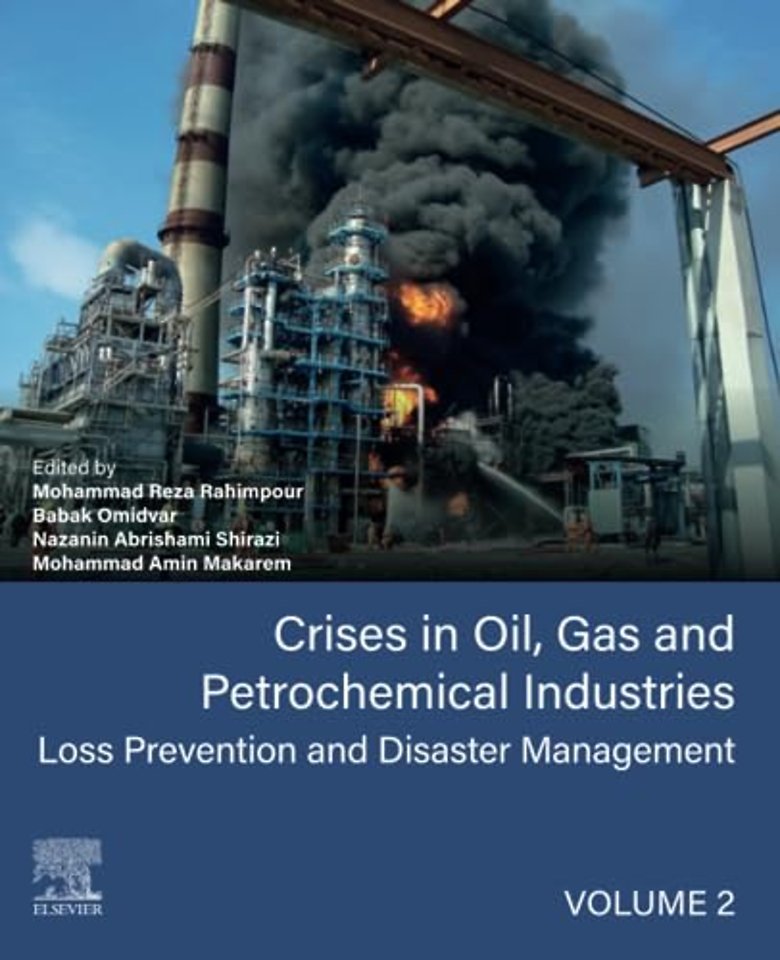
Crises in Oil, Gas and Petrochemical Industries
Loss Prevention and Disaster Management
Specificaties
Paperback, blz.
|
Engels
Elsevier Science |
e druk, 2023
ISBN13: 9780323951630
Rubricering
Levertijd ongeveer 8 werkdagen
Samenvatting
Crises in Oil, Gas and Petrochemical Industries: Loss Prevention and Disaster Management, Volume Two provides an overview of both natural and manmade disasters occurring in oil, gas and petrochemical industries and prepares special solutions based on their types. The book focuses on loss prevention and disaster management in petrochemical industries from different points-of-view. Sections review methods for making the apparatus safer and continue with discussions on the process of facing and managing disasters during the occurrence. Final sections cover loss and economic analysis after disasters and methods of reversibility are presented with case studies from around the world.
Specificaties
Inhoudsopgave
<p>Section I: Basics in oil, gas and petrochemical industries</p> <p>1. Introduction to safe design and standards</p> <p>2. Instruments vulnerability and resiliency</p> <p>3. Risk analysis and hazard probabilities</p> <p>Section II: Pre-disaster strategies in oil, gas and petrochemical industries</p> <p>4. Heat generation and exchange systems safety: Furnaces, heat exchangers, reformers, etc</p> <p>5. Pressurizing and work generation systems: compressors, turbines, etc</p> <p>6. Reaction mediums and apparatus safety: reactors, columns, etc</p> <p>7. Separation and purification apparatus safety: separators, trays, towers etc</p> <p>8. Storage systems safety: vessels, reservoirs, etc</p> <p>9. Chemicals Transporting Systems Safety: Pumps, Pipelines, and Valves</p> <p>10. Safety in controlling systems and apparatus</p> <p>11. Resilient units design and plant construction against future crises</p> <p>Section III: During and postdisaster strategies in oil, gas and petrochemical industries</p> <p>12. Crisis Management and Decision Making</p> <p>Section IV: Post-disaster management in oil, gas and petrochemical industries</p> <p>13. Post-disasters issues and problems</p> <p>14. Economic analysis of disasters</p> <p>Section V: Disaster case studies</p> <p>15. Disasters cases in oil industry</p> <p>16. Disasters cases in gas industry</p> <p>17. Effectiveness of Floating Roof Sealing System Insulation for Crude-Oil Storage Tanks: A Case Study of Lightning Strikes</p> <p>18. Explosion and Fire Following Earthquake Risk Assessment of Gas Pipelines in Urban Areas</p>