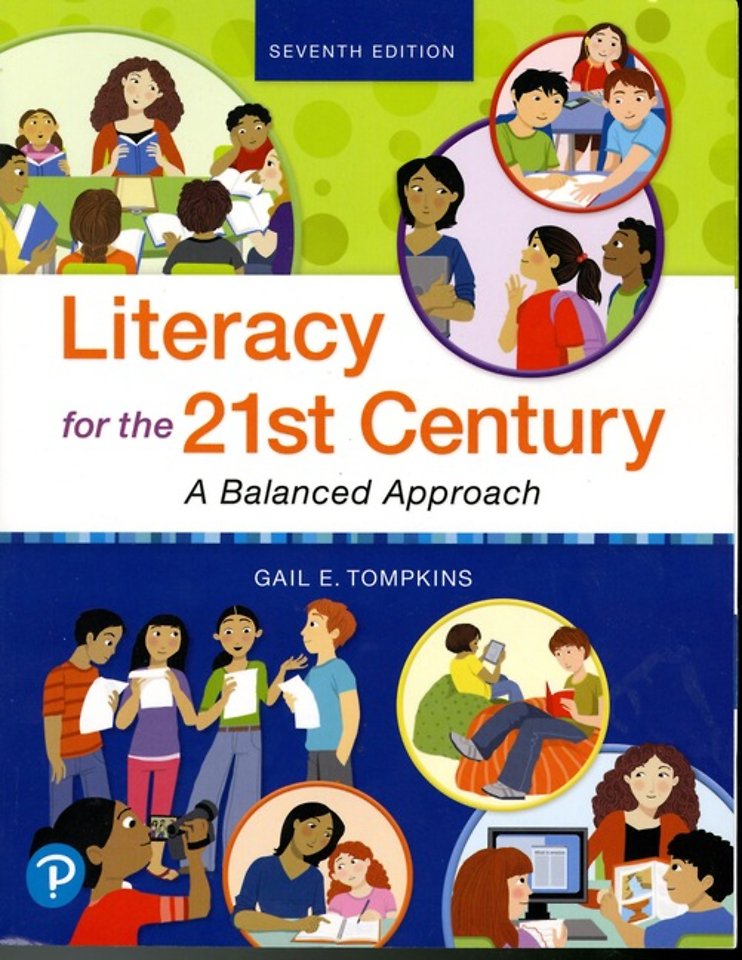
,

Literacy for the 21st Century

A Balanced Approach

Specificaties
Paperback, blz. | Engels
Pearson Education | e druk, 2018
ISBN13: 9780134813103
Rubricering
Pearson Education e druk, 2018 9780134813103
€ 114,94
Levertijd ongeveer 8 werkdagen

Samenvatting

Teaching literacy with a balance of theory and applications

Integrating the best of what we currently know about teaching reading and writing, as well as ideas that will lead us into the future, Literacy for the 21st Century: A Balanced Approach, provides the balance of pedagogy and application that teachers need to be successful in the classroom. It covers the fundamental components of literacy, illustrates how to teach skills and strategies, identifies how to differentiate instruction to meet the diverse needs of students today, and supports digital teaching and learning. An emphasis is placed on preparing readers to become teachers who will ensure their students meet grade-level standards. To help readers create a classroom environment that allows all students to flourish, the Seventh Edition provides the theoretical background and most contemporary and practical approaches for literacy instruction.

This title is also available in Revel. Revel is Pearson’s newest way of delivering our respected content. Informed by extensive research on how people read, think, and learn, Revel is an interactive learning environment that enables students to read, practice, and study in one continuous experience—for less than the cost of a traditional textbook.


Learn more about Revel.

Specificaties

ISBN13:9780134813103
Taal:Engels
Bindwijze:Paperback

Inhoudsopgave

<p style="margin: 0px;">BRIEF TABLE OF CONTENTS</p> <p style="margin: 0px;"><br></p> <p style="margin: 0px;">PART ONE Literacy in the 21st Century 1<br>Chapter 1 Becoming an Effective Literacy Teacher</p> <p style="margin: 0px;">Chapter 2 The Reading and Writing Processes</p> <p style="margin: 0px;">Chapter 3 Assessing Literacy Development</p> <p style="margin: 0px;"><br></p> <p style="margin: 0px;">PART TWO Components of Literacy Development<br>Chapter 4 The Youngest Readers and Writers</p> <p style="margin: 0px;">Chapter 5 Cracking the Alphabetic Code</p> <p style="margin: 0px;">Chapter 6 Developing Fluent Readers and Writers</p> <p style="margin: 0px;">Chapter 7 Expanding Academic Vocabulary</p> <p style="margin: 0px;">Chapter 8 Promoting Comprehension: Reader Factors</p> <p style="margin: 0px;">Chapter 9 Promoting Comprehension: Text Factors</p> <p style="margin: 0px;"><br></p> <p style="margin: 0px;">PART THREE Organizing for Instruction</p> <p style="margin: 0px;">Chapter 10 Organizing for Instruction</p> <p style="margin: 0px;">Chapter 11 Differentiating for Success</p> <p style="margin: 0px;"><br></p> <p style="margin: 0px;">PART FOUR Compendium of Instructional Procedures</p> <p style="margin: 0px;">Chapter 12 Reading and Writing Across the Curriculum</p> <p style="margin: 0px;"></p> <p style="margin: 0px;"><br></p> <p style="margin: 0px;"><br></p> <p style="margin: 0px;">DETAILED&nbsp;TABLE OF CONTENTS<br></p> <p style="margin: 0px;"><br></p> <p style="margin: 0px;">PART ONE Literacy in the 21st Century 1</p> <p style="margin: 0px;"></p> <p style="margin: 0px;">&nbsp;</p> <p style="margin: 0px;">Chapter 1 Becoming an Effective Literacy Teacher 4</p> <p style="margin: 0px;">PLAN: Preview the Learning Outcomes 4</p> <p style="margin: 0px;">Principle 1: Effective Teachers Understand How Students Learn 6</p> <p style="margin: 0px;">Behaviorism 6</p> <p style="margin: 0px;">Constructivism 6</p> <p style="margin: 0px;">Sociolinguistics 8</p> <p style="margin: 0px;">Information Processing 10</p> <p style="margin: 0px;">MONITOR: Check Your Understanding 1.1 11</p> <p style="margin: 0px;">Principle 2: Effective Teachers Support Students’ Use of the Cueing Systems 11</p> <p style="margin: 0px;">The Phonological System 12</p> <p style="margin: 0px;">The Syntactic System 13</p> <p style="margin: 0px;">The Semantic System 13</p> <p style="margin: 0px;">The Pragmatic System 14</p> <p style="margin: 0px;">MONITOR: Check Your Understanding 1.2 14</p> <p style="margin: 0px;">Principle 3: Effective Teachers Create a Community of Learners 14</p> <p style="margin: 0px;">Characteristics of a Classroom Community 15</p> <p style="margin: 0px;">How to Create the Classroom Culture 16</p> <p style="margin: 0px;">MONITOR: Check Your Understanding 1.3 16</p> <p style="margin: 0px;">Principle 4: Effective Teachers Adopt a Balanced Approach to Instruction 16</p> <p style="margin: 0px;">MONITOR: Check Your Understanding 1.4 19</p> <p style="margin: 0px;">Principle 5: Effective Teachers Address Standards 19</p> <p style="margin: 0px;">The Common Core State Standards 19</p> <p style="margin: 0px;">MONITOR: Check Your Understanding 1.5 20</p> <p style="margin: 0px;">Principle 6: Effective Teachers Scaffold Students’ Reading and Writing 21</p> <p style="margin: 0px;">Modeled Reading and Writing 22</p> <p style="margin: 0px;">Shared Reading and Writing 23</p> <p style="margin: 0px;">Interactive Reading and Writing 23</p> <p style="margin: 0px;">Guided Reading and Writing 23</p> <p style="margin: 0px;">Independent Reading and Writing 24</p> <p style="margin: 0px;">MONITOR: Check Your Understanding 1.6 24</p> <p style="margin: 0px;">Principle 7: Effective Teachers Organize for Instruction 24</p> <p style="margin: 0px;">Guided Reading 25</p> <p style="margin: 0px;">Basal Reading Programs 25</p> <p style="margin: 0px;">Literature Focus Units 25</p> <p style="margin: 0px;">Literature Circles 25</p> <p style="margin: 0px;">Reading and Writing Workshop 25</p> <p style="margin: 0px;">MONITOR: Check Your Understanding 1.7 28</p> <p style="margin: 0px;">Principle 8: Effective Teachers Differentiate Instruction 28</p> <p style="margin: 0px;">MONITOR: Check Your Understanding 1.8 29</p> <p style="margin: 0px;">Principle 9: Effective Teachers Link Instruction and Assessment 29</p> <p style="margin: 0px;">The Instruction—Assessment Cycle 30</p> <p style="margin: 0px;">Classroom Assessment Tools 31</p> <p style="margin: 0px;">High-Stakes Tests 31</p> <p style="margin: 0px;">MONITOR: Check Your Understanding 1.9 31</p> <p style="margin: 0px;">REVIEW: Teaching Reading and Writing 32</p> <p style="margin: 0px;">Evaluate &amp; Reflect 32</p> <p style="margin: 0px;">References 33</p> <p style="margin: 0px;">&nbsp;</p> <p style="margin: 0px;">Chapter 2 The Reading and Writing Processes 36</p> <p style="margin: 0px;">PLAN: Preview the Learning Outcomes 36</p> <p style="margin: 0px;">VIGNETTE: The Reading Process in Action 36</p> <p style="margin: 0px;">The Reading Process 39</p> <p style="margin: 0px;">Stage 1: Prereading 41</p> <p style="margin: 0px;">Stage 2: Reading 42</p> <p style="margin: 0px;">Stage 3: Responding 44</p> <p style="margin: 0px;">Stage 4: Exploring 46</p> <p style="margin: 0px;">Stage 5: Applying 47</p> <p style="margin: 0px;">MONITOR: Check Your Understanding 2.1 47</p> <p style="margin: 0px;">The Writing Process 48</p> <p style="margin: 0px;">Stage 1: Prewriting 48</p> <p style="margin: 0px;">Stage 2: Drafting 50</p> <p style="margin: 0px;">Stage 3: Revising 51</p> <p style="margin: 0px;">Stage 4: Editing 52</p> <p style="margin: 0px;">Stage 5: Publishing 55</p> <p style="margin: 0px;">MONITOR: Check Your Understanding 2.2 58</p> <p style="margin: 0px;">The Writer’s Craft 58</p> <p style="margin: 0px;">Ideas 58</p> <p style="margin: 0px;">Organization 58</p> <p style="margin: 0px;">Voice 59</p> <p style="margin: 0px;">Word Choice 59</p> <p style="margin: 0px;">Sentence Fluency 59</p> <p style="margin: 0px;">Conventions 59</p> <p style="margin: 0px;">Presentation 60</p> <p style="margin: 0px;">MONITOR: Check Your Understanding 2.3 61</p> <p style="margin: 0px;">Reading and Writing Are Reciprocal Processes 61</p> <p style="margin: 0px;">Comparing the Two Processes 61</p> <p style="margin: 0px;">Classroom Connections 61</p> <p style="margin: 0px;">MONITOR: Check Your Understanding 2.4 62</p> <p style="margin: 0px;">Literacy Strategies 63</p> <p style="margin: 0px;">Reading Strategies 63</p> <p style="margin: 0px;">Digital Reading Strategies 63</p> <p style="margin: 0px;">Writing Strategies 64</p> <p style="margin: 0px;">Strategy Instruction 64</p> <p style="margin: 0px;">MONITOR: Check Your Understanding 2.5 65</p> <p style="margin: 0px;">REVIEW: Teaching the Reading and Writing Processes 66</p> <p style="margin: 0px;">Evaluate &amp; Reflect 66</p> <p style="margin: 0px;">References 67</p> <p style="margin: 0px;">&nbsp;</p> <p style="margin: 0px;">Chapter 3 Assessing Literacy Development 70</p> <p style="margin: 0px;">PLAN: Preview the Learning Outcomes 70</p> <p style="margin: 0px;">VIGNETTE: Mrs. McNeal Does Second-Quarter Assessments 70</p> <p style="margin: 0px;">Classroom Assessment 75</p> <p style="margin: 0px;">Step 1: Planning for Assessment 75</p> <p style="margin: 0px;">Step 2: Monitoring Students’ Progress 75</p> <p style="margin: 0px;">Step 3: Evaluating Students’ Learning 78</p> <p style="margin: 0px;">Step 4: Reflecting on Students’ Learning 79</p> <p style="margin: 0px;">MONITOR: Check Your Understanding 3.1 80</p> <p style="margin: 0px;">Diagnostic Tests 80</p> <p style="margin: 0px;">Determining Students’ Reading Levels 81</p> <p style="margin: 0px;">Diagnosing Students’ Strengths and Weaknesses 86</p> <p style="margin: 0px;">MONITOR: Check Your Understanding 3.2 91</p> <p style="margin: 0px;">High-Stakes Testing 91</p> <p style="margin: 0px;">Problems With High-Stakes Testing 92</p> <p style="margin: 0px;">Preparing for Standardized Tests 93</p> <p style="margin: 0px;">The Politics of High-Stakes Testing 96</p> <p style="margin: 0px;">MONITOR: Check Your Understanding 3.3 96</p> <p style="margin: 0px;">Portfolio Assessment 96</p> <p style="margin: 0px;">Collecting Work in Portfolios 97</p> <p style="margin: 0px;">Involving Students in Self-Assessment 97</p> <p style="margin: 0px;">Showcasing Students’ Portfolios 99</p> <p style="margin: 0px;">MONITOR: Check Your Understanding 3.4 99</p> <p style="margin: 0px;">REVIEW: Assessing Literacy Development 99</p> <p style="margin: 0px;">Evaluate &amp; Reflect 100</p> <p style="margin: 0px;">References 101</p> <p style="margin: 0px;">PART TWO Components of Literacy Development 103</p> <p style="margin: 0px;">&nbsp;</p> <p style="margin: 0px;">Chapter 4 The Youngest Readers and Writers 106</p> <p style="margin: 0px;">PLAN: Preview the Learning Outcomes 106</p> <p style="margin: 0px;">VIGNETTE: K—3 Students’ Literacy Development 106</p> <p style="margin: 0px;">Nurturing Children’s Oral Language Development 111</p> <p style="margin: 0px;">Oral Language Activities 111</p> <p style="margin: 0px;">Learning a Second Language 112</p> <p style="margin: 0px;">The Link Between Oral Language and Literacy 113</p> <p style="margin: 0px;">Assessing Children’s Oral Language 114</p> <p style="margin: 0px;">MONITOR: Check Your Understanding 4.1 114</p> <p style="margin: 0px;">Fostering an Interest in Literacy 114</p> <p style="margin: 0px;">Concepts About Print 114</p> <p style="margin: 0px;">Concepts About Words 115</p> <p style="margin: 0px;">Concepts About the Alphabet 116</p> <p style="margin: 0px;">Assessing Children’s Concepts About Written Language 119</p> <p style="margin: 0px;">MONITOR: Check Your Understanding 4.2 119</p> <p style="margin: 0px;">How Children Develop as Readers and Writers 120</p> <p style="margin: 0px;">Stage 1: Emergent Reading and Writing 120</p> <p style="margin: 0px;">Stage 2: Beginning Reading and Writing 121</p> <p style="margin: 0px;">Stage 3: Fluent Reading and Writing 123</p> <p style="margin: 0px;">MONITOR: Check Your Understanding 4.3 125</p> <p style="margin: 0px;">Instructional Practices 130</p> <p style="margin: 0px;">Morning Message 130</p> <p style="margin: 0px;">Shared Reading 133</p> <p style="margin: 0px;">Language Experience Approach 134</p> <p style="margin: 0px;">Interactive Writing 136</p> <p style="margin: 0px;">Manuscript Handwriting 137</p> <p style="margin: 0px;">Writing Centers 138</p> <p style="margin: 0px;">MONITOR: Check Your Understanding 4.4 139</p> <p style="margin: 0px;">REVIEW: Teaching the Youngest Readers and Writers 139</p> <p style="margin: 0px;">Evaluate &amp; Reflect 140</p> <p style="margin: 0px;">References 140</p> <p style="margin: 0px;">&nbsp;</p> <p style="margin: 0px;">Chapter 5 Cracking the Alphabetic Code 142</p> <p style="margin: 0px;">PLAN: Preview the Learning Outcomes 142</p> <p style="margin: 0px;">VIGNETTE: First Grade Phonics Instruction 142</p> <p style="margin: 0px;">Phonemic Awareness 146</p> <p style="margin: 0px;">Phonemic Awareness Strategies 147</p> <p style="margin: 0px;">Teaching Phonemic Awareness 147</p> <p style="margin: 0px;">Assessing Children’s Phonemic Awareness 154</p> <p style="margin: 0px;">Why Phonemic Awareness Is Important 155</p> <p style="margin: 0px;">MONITOR: Check Your Understanding 5.1 155</p> <p style="margin: 0px;">Phonics 155</p> <p style="margin: 0px;">Phonics Concepts 156</p> <p style="margin: 0px;">Teaching Phonics 160</p> <p style="margin: 0px;">Assessing Students’ Phonics Knowledge 165</p> <p style="margin: 0px;">The Role of Phonics in a Balanced Literacy Program 166</p> <p style="margin: 0px;">MONITOR: Check Your Understanding 5.2 166</p> <p style="margin: 0px;">Spelling 166</p> <p style="margin: 0px;">Stages of Spelling Development 166</p> <p style="margin: 0px;">Teaching Spelling 171</p> <p style="margin: 0px;">Weekly Spelling Tests 175</p> <p style="margin: 0px;">Assessing Students’ Spelling 177</p> <p style="margin: 0px;">The Controversy About Spelling Instruction 178</p> <p style="margin: 0px;">MONITOR: Check Your Understanding 5.3 179</p> <p style="margin: 0px;">REVIEW: Assisting Students in Cracking the Alphabetic Code 179</p> <p style="margin: 0px;">Evaluate &amp; Reflect 180</p> <p style="margin: 0px;">References 180</p> <p style="margin: 0px;">&nbsp;</p> <p style="margin: 0px;">Chapter 6 Developing Fluent Readers and Writers 182</p> <p style="margin: 0px;">Plan: Preview the Learning Outcomes 182</p> <p style="margin: 0px;">VIGNETTE: High-Frequency Words 182</p> <p style="margin: 0px;">Reading Fluency 186</p> <p style="margin: 0px;">Automatic Reading 186</p> <p style="margin: 0px;">Reading Speed 193</p> <p style="margin: 0px;">Prosody 194</p> <p style="margin: 0px;">Assessing Reading Fluency 195</p> <p style="margin: 0px;">MONITOR: Check Your Understanding 6.1 197</p> <p style="margin: 0px;">Writing Fluency 198</p> <p style="margin: 0px;">Automatic Writing 198</p> <p style="margin: 0px;">Writing Speed 199</p> <p style="margin: 0px;">Writer’s Voice 200</p> <p style="margin: 0px;">Assessing Writing Fluency 201</p> <p style="margin: 0px;">MONITOR: Check Your Understanding 202</p> <p style="margin: 0px;">Dysfluent Students 202</p> <p style="margin: 0px;">Older Dysfluent Readers 203</p> <p style="margin: 0px;">Older Dysfluent Writers 204</p> <p style="margin: 0px;">Obstacles to Fluency 206</p> <p style="margin: 0px;">MONITOR: Check Your Understanding 6.3 212</p> <p style="margin: 0px;">REVIEW: Developing Fluent Readers and Writers 212</p> <p style="margin: 0px;">Evaluate &amp; Reflect 212</p> <p style="margin: 0px;">References 213</p> <p style="margin: 0px;">&nbsp;</p> <p style="margin: 0px;">Chapter 7 Expanding Academic Vocabulary 216</p> <p style="margin: 0px;">PLAN: Preview the Learning Outcomes 216</p> <p style="margin: 0px;">VIGNETTE: The Word Wizards Club 216</p> <p style="margin: 0px;">Academic Vocabulary 220</p> <p style="margin: 0px;">Three Tiers of Words 220</p> <p style="margin: 0px;">Levels of Word Knowledge 222</p> <p style="margin: 0px;">Word Consciousness 223</p> <p style="margin: 0px;">MONITOR: Check Your Understanding 7.1 225</p> <p style="margin: 0px;">Word-Study Concepts 225</p> <p style="margin: 0px;">Multiple Meanings of Words 225</p> <p style="margin: 0px;">Synonyms: Words With Similar Meanings 227</p> <p style="margin: 0px;">Antonyms: Words That Mean the Opposite 227</p> <p style="margin: 0px;">Homonyms: Words That Confuse 228</p> <p style="margin: 0px;">Root Words and Affixes 229</p> <p style="margin: 0px;">Etymologies: Word Histories 232</p> <p style="margin: 0px;">Figurative Meanings 233</p> <p style="margin: 0px;">MONITOR: Check Your Understanding 7.2 236</p> <p style="margin: 0px;">Teaching Students to Unlock Word Meanings 236</p> <p style="margin: 0px;">Word Walls 236</p> <p style="margin: 0px;">Explicit Instruction 238</p> <p style="margin: 0px;">Word-Study Activities 238</p> <p style="margin: 0px;">Word-Learning Strategies 241</p> <p style="margin: 0px;">Incidental Word Learning 243</p> <p style="margin: 0px;">The Role of Oral Language 244</p> <p style="margin: 0px;">Assessing Students’ Vocabulary Knowledge 245</p> <p style="margin: 0px;">MONITOR: Check Your Understanding 7.3 247</p> <p style="margin: 0px;">REVIEW: Expanding Students’ Academic Vocabulary 247</p> <p style="margin: 0px;">Evaluate &amp; Reflect 247</p> <p style="margin: 0px;">References 248</p> <p style="margin: 0px;">&nbsp;</p> <p style="margin: 0px;">Chapter 8 Promoting Comprehension: Reader Factors 250</p> <p style="margin: 0px;">PLAN: Preview the Learning Outcomes 250</p> <p style="margin: 0px;">VIGNETTE: Ms. Ali Teaches Comprehension Strategies 250</p> <p style="margin: 0px;">What Is Comprehension 255</p> <p style="margin: 0px;">Reader and Text Factors 256</p> <p style="margin: 0px;">Text Complexity 256</p> <p style="margin: 0px;">Prerequisites for Comprehension 258</p> <p style="margin: 0px;">MONITOR: Check Your Understanding 8.1 259</p> <p style="margin: 0px;">Comprehension Strategies 259</p> <p style="margin: 0px;">Activating Background Knowledge 260</p> <p style="margin: 0px;">Connecting 261</p> <p style="margin: 0px;">Determining Importance 261</p> <p style="margin: 0px;">Drawing Inferences 262</p> <p style="margin: 0px;">Evaluating 263</p> <p style="margin: 0px;">Monitoring 264</p> <p style="margin: 0px;">Predicting 265</p> <p style="margin: 0px;">Questioning 265</p> <p style="margin: 0px;">Repairing 266</p> <p style="margin: 0px;">Setting a Purpose 266</p> <p style="margin: 0px;">Summarizing 266</p> <p style="margin: 0px;">Visualizing 266</p> <p style="margin: 0px;">Comprehension Skills 267</p> <p style="margin: 0px;">MONITOR: Check Your Understanding 8.2 268</p> <p style="margin: 0px;">Teaching Students About Reader Factors 268</p> <p style="margin: 0px;">Explicit Instruction 269</p> <p style="margin: 0px;">Developing Comprehension Through Reading 273</p> <p style="margin: 0px;">Assessing Reader Factors 278</p> <p style="margin: 0px;">MONITOR: Check Your Understanding 8.3 280</p> <p style="margin: 0px;">Motivation 281</p> <p style="margin: 0px;">Teachers’ Role 281</p> <p style="margin: 0px;">Students’ Role 282</p> <p style="margin: 0px;">How to Engage Students 283</p> <p style="margin: 0px;">Assessing Motivation 284</p> <p style="margin: 0px;">Comparing Capable and Less Capable Students 285</p> <p style="margin: 0px;">MONITOR: Check Your Understanding 8.4 286</p> <p style="margin: 0px;">REVIEW: Teaching About Reader Factors 287</p> <p style="margin: 0px;">Evaluate &amp; Reflect 287</p> <p style="margin: 0px;">References 288</p> <p style="margin: 0px;">&nbsp;</p> <p style="margin: 0px;">Chapter 9 Promoting Comprehension: Text Factors 290</p> <p style="margin: 0px;">PLAN: Preview the Learning Outcomes 290</p> <p style="margin: 0px;">VIGNETTE: Reading and Writing About Frogs 290</p> <p style="margin: 0px;">Text Factors of Stories 294</p> <p style="margin: 0px;">Formats of Stories 294</p> <p style="margin: 0px;">Narrative Genres 295</p> <p style="margin: 0px;">Elements of Story Structure 299</p> <p style="margin: 0px;">Narrative Devices 304</p> <p style="margin: 0px;">Looking at the Text Factors in a Story 306</p> <p style="margin: 0px;">MONITOR: Check Your Understanding 9.1 306</p> <p style="margin: 0px;">Text Factors of Nonfiction 306</p> <p style="margin: 0px;">Nonfiction Genres 306</p> <p style="margin: 0px;">Expository Text Structures 308</p> <p style="margin: 0px;">Nonfiction Features 308</p> <p style="margin: 0px;">Looking at the Text Factors in a Nonfiction Book 311</p> <p style="margin: 0px;">MONITOR: Check Your Understanding 9.2 311</p> <p style="margin: 0px;">Text Factors of Poetry 311</p> <p style="margin: 0px;">Formats of Poetry Books 311</p> <p style="margin: 0px;">Poetic Forms 313</p> <p style="margin: 0px;">Poetic Devices 316</p> <p style="margin: 0px;">Looking at the Text Factors in a Book of Poetry 317</p> <p style="margin: 0px;">MONITOR: Check Your Understanding 9.3 317</p> <p style="margin: 0px;">Teaching About Text Factors 317</p> <p style="margin: 0px;">Mini-lessons 318</p> <p style="margin: 0px;">Comprehension Strategies 318</p> <p style="margin: 0px;">Reading and Writing Activities 319</p> <p style="margin: 0px;">Assessing Text Factors 320</p> <p style="margin: 0px;">MONITOR: Check Your Understanding 9.4 320</p> <p style="margin: 0px;">REVIEW: Facilitating Students’ Comprehension of Text Factors 320</p> <p style="margin: 0px;">Evaluate &amp; Reflect 321</p> <p style="margin: 0px;">References 321</p> <p style="margin: 0px;">&nbsp;</p> <p style="margin: 0px;">PART THREE Organizing for Instruction 325</p> <p style="margin: 0px;">&nbsp;</p> <p style="margin: 0px;">Chapter 10 Organizing for Instruction 328</p> <p style="margin: 0px;">PLAN: Preview the Learning Outcomes 328</p> <p style="margin: 0px;">VIGNETTE: A Yearlong Author Study 328</p> <p style="margin: 0px;">Conducting Guided Reading Lessons 332</p> <p style="margin: 0px;">Components 332</p> <p style="margin: 0px;">Reading Strategies 333</p> <p style="margin: 0px;">Instructional Materials 334</p> <p style="margin: 0px;">Applying the Reading Process 334</p> <p style="margin: 0px;">Managing Guided Reading 334</p> <p style="margin: 0px;">MONITOR: Check Your Understanding 10.1 334</p> <p style="margin: 0px;">Teaching With Basal Reading Programs 335</p> <p style="margin: 0px;">Components 335</p> <p style="margin: 0px;">Instructional Materials 337</p> <p style="margin: 0px;">Applying the Reading Process 338</p> <p style="margin: 0px;">Managing a Basal Reading Program 339</p> <p style="margin: 0px;">MONITOR: Check Your Understanding 10.2 340</p> <p style="margin: 0px;">Teaching With Literature Focus Units 340</p> <p style="margin: 0px;">Steps in Developing a Unit 341</p> <p style="margin: 0px;">Units Featuring a Picture Book 343</p> <p style="margin: 0px;">Units Featuring a Novel 343</p> <p style="margin: 0px;">Units Featuring a Genre 343</p> <p style="margin: 0px;">Units Featuring an Author 345</p> <p style="margin: 0px;">Managing Literature Focus Units 346</p> <p style="margin: 0px;">MONITOR: Check Your Understanding 10.3 346</p> <p style="margin: 0px;">Orchestrating Literature Circles 346</p> <p style="margin: 0px;">Key Features of Literature Circles 346</p> <p style="margin: 0px;">Implementing Literature Circles 350</p> <p style="margin: 0px;">Using Literature Circles With Young Children 351</p> <p style="margin: 0px;">Applying the Reading Process 351</p> <p style="margin: 0px;">Managing Literature Circles 352</p> <p style="margin: 0px;">MONITOR: Check Your Understanding 10.4 352</p> <p style="margin: 0px;">Implementing Reading and Writing Workshop 353</p> <p style="margin: 0px;">Reading Workshop 354</p> <p style="margin: 0px;">Applying the Reading Process 358</p> <p style="margin: 0px;">Writing Workshop 359</p> <p style="margin: 0px;">Applying the Writing Process 361</p> <p style="margin: 0px;">Managing a Workshop Classroom 362</p> <p style="margin: 0px;">MONITOR: Check Your Understanding 10.5 363</p> <p style="margin: 0px;">REVIEW: Organizing for Instruction 363</p> <p style="margin: 0px;">Evaluate &amp; Reflect 364</p> <p style="margin: 0px;">References 364</p> <p style="margin: 0px;">&nbsp;</p> <p style="margin: 0px;">Chapter 11 Differentiating for Success 366</p> <p style="margin: 0px;">PLAN: Preview the Learning Outcomes 366</p> <p style="margin: 0px;">VIGNETTE: Classroom Interventions 366</p> <p style="margin: 0px;">Ways to Differentiate Instruction 371</p> <p style="margin: 0px;">Grouping for Instruction 372</p> <p style="margin: 0px;">Tiered Activities 374</p> <p style="margin: 0px;">MONITOR: Check Your Understanding 11.1 384</p> <p style="margin: 0px;">Struggling Readers and Writers 384</p> <p style="margin: 0px;">Struggling Readers 384</p> <p style="margin: 0px;">Struggling Writers 385</p> <p style="margin: 0px;">High-Quality Instruction 385</p> <p style="margin: 0px;">Interventions 389</p> <p style="margin: 0px;">MONITOR: Check Your Understanding 11.2 394</p> <p style="margin: 0px;">REVIEW: Differentiating Literacy Instruction 394</p> <p style="margin: 0px;">Evaluate &amp; Reflect 394</p> <p style="margin: 0px;">References 395</p> <p style="margin: 0px;">&nbsp;</p> <p style="margin: 0px;">PART FOUR Compendium of Instructional Procedures 435</p> <p style="margin: 0px;">Anticipation Guides 436</p> <p style="margin: 0px;">Book Talks 437</p> <p style="margin: 0px;">Choral Reading 438</p> <p style="margin: 0px;">Cloze Procedure 439</p> <p style="margin: 0px;">Collaborative Books 440</p> <p style="margin: 0px;">Double-Entry Journals 441</p> <p style="margin: 0px;">Exclusion Brainstorming 442</p> <p style="margin: 0px;">Grand Conversations 443</p> <p style="margin: 0px;">Hot Seat 444</p> <p style="margin: 0px;">Interactive Read-Alouds 445</p> <p style="margin: 0px;">Interactive Writing 447</p> <p style="margin: 0px;">KWL Charts 448</p> <p style="margin: 0px;">Language Experience Approach 450</p> <p style="margin: 0px;">Learning Logs 452</p> <p style="margin: 0px;">Making Words 454</p> <p style="margin: 0px;">Mini-lessons 455</p> <p style="margin: 0px;">Open-Mind Portraits 456</p> <p style="margin: 0px;">Possible Sentences 457</p> <p style="margin: 0px;">Prereading Plan 458</p> <p style="margin: 0px;">Question-Answer-Relationships 460</p> <p style="margin: 0px;">&nbsp;</p> <p style="margin: 0px;">Chapter 12 Reading and Writing Across the Curriculum 398</p> <p style="margin: 0px;">PLAN: Preview the Learning Outcomes 398</p> <p style="margin: 0px;">VIGNETTE: Third Graders’ Multigenre Projects 398</p> <p style="margin: 0px;">Learning Tools 402</p> <p style="margin: 0px;">Reading to Learn 403</p> <p style="margin: 0px;">Writing to Learn 405</p> <p style="margin: 0px;">MONITOR: Check Your Understanding 12.1 408</p> <p style="margin: 0px;">Demonstrating Learning 408</p> <p style="margin: 0px;">Reports 409</p> <p style="margin: 0px;">Essays 411</p> <p style="margin: 0px;">Poems 411</p> <p style="margin: 0px;">Multigenre Projects 413</p> <p style="margin: 0px;">MONITOR: Check Your Understanding 12.2 415</p> <p style="margin: 0px;">Content Area Textbooks 415</p> <p style="margin: 0px;">Textbook Features 415</p> <p style="margin: 0px;">Making Textbooks More Comprehensible 416</p> <p style="margin: 0px;">Learning How to Study 418</p> <p style="margin: 0px;">Why Aren’t Content Area Textbooks Enough? 421</p> <p style="margin: 0px;">MONITOR: Check Your Understanding 12.3 421</p> <p style="margin: 0px;">Thematic Units 421</p> <p style="margin: 0px;">How to Develop a Unit 422</p> <p style="margin: 0px;">A First Grade Unit on Trees 425</p> <p style="margin: 0px;">A Fourth Grade Unit on Desert Ecosystems 425</p> <p style="margin: 0px;">A Sixth Grade Unit on Ancient Egypt 426</p> <p style="margin: 0px;">MONITOR: Check Your Understanding 12.4 426</p> <p style="margin: 0px;">REVIEW: Reading and Writing Across the Curriculum 433</p> <p style="margin: 0px;">Evaluate &amp; Reflect 433</p> <p style="margin: 0px;">References 434</p> <p style="margin: 0px;">Quickwriting 461</p> <p style="margin: 0px;">RAFT 463</p> <p style="margin: 0px;">Readers Theatre 464</p> <p style="margin: 0px;">Reading Logs 465</p> <p style="margin: 0px;">Revising Groups 466</p> <p style="margin: 0px;">Rubrics 468</p> <p style="margin: 0px;">Running Records 470</p> <p style="margin: 0px;">Semantic Feature Analysis 471</p> <p style="margin: 0px;">Shared Reading 472</p> <p style="margin: 0px;">Sketch-to-Stretch 473</p> <p style="margin: 0px;">Story Boards 474</p> <p style="margin: 0px;">Story Retelling 476</p> <p style="margin: 0px;">Sustained Silent Reading 478</p> <p style="margin: 0px;">Tea Party 479</p> <p style="margin: 0px;">Think-Alouds 480</p> <p style="margin: 0px;">Word Sorts 481</p> <p style="margin: 0px;">Word Walls 483</p> <p style="margin: 0px;">Glossary 487</p> <p style="margin: 0px;">Index 493</p> <p style="margin: 0px;">&nbsp;</p>
€ 114,94
Levertijd ongeveer 8 werkdagen

Rubrieken

    Personen

      Trefwoorden

        Literacy for the 21st Century