Gratis boekenweekgeschenk bij een bestelling boven de €17,50 (geldt alleen voor Nederlandstalige boeken)

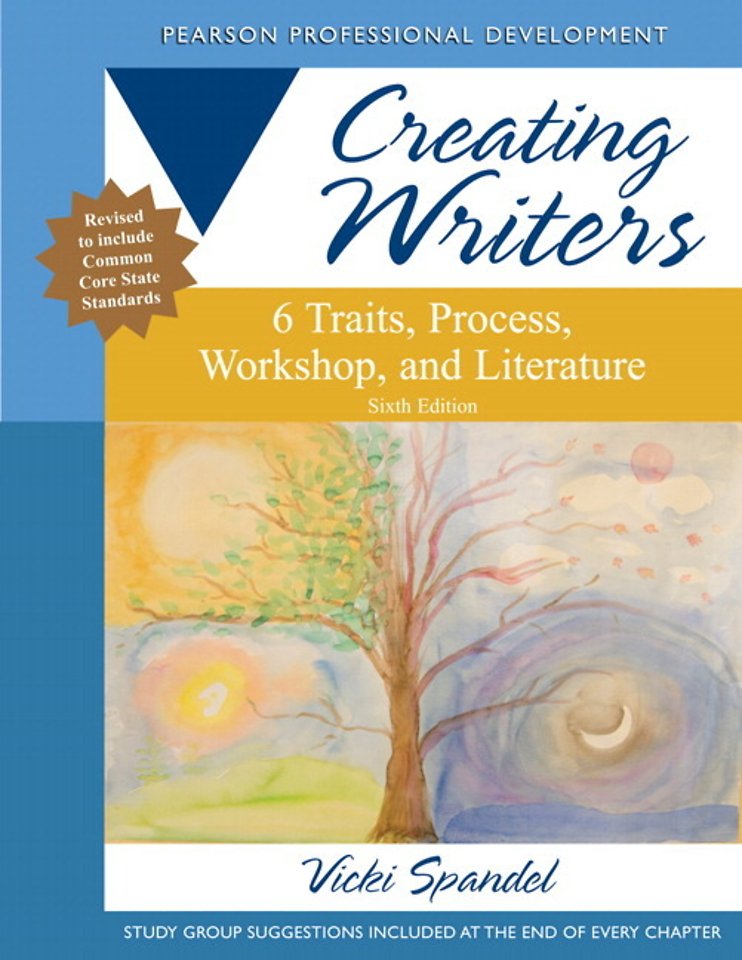
Creating Writers

6 Traits, Process, Workshop, and Literature

Specificaties
Paperback, blz. | Engels
Pearson Education | e druk, 2013
ISBN13: 9780132944106
Rubricering
Pearson Education e druk, 2013 9780132944106
€ 92,14
Levertijd ongeveer 8 werkdagen

Samenvatting


Creating Writers: 6 Traits, Process, Workshop, and Literature, 6/e

Vicki Spandel


This one-of-a-kind book combines the elements of traits, literature, workshop, and process into one seamless presentation focused on creating successful writers.


More than any other book on the market today, Creating Writers: 6 Traits, Process, Workshop, and Literature, 6/e, truly puts the six traits of writing in context, showing how they are best taught—within writing workshop and as a way of enriching writing process. Written by the pioneer of 6-trait writing, this edition organizes all materials by trait, features new one-page writing guides, and offers an increased emphasis on literature, connecting writing to reading as never before. It also provides a clear link between the six traits and the Common Core Standards for Writing and presents new lessons, engaging classroom activities, suggestions for using technology, and an expanded collection of student writing sure to promote lively discussions.  


The text itself is well-written, and in my opinion Spandel does not waste words.  As I read through the book, I found myself hanging on to her every word. 

-  Jane Feber, Retired Language Arts Teacher, Jacksonville, FL


This book is frequently helpful to me as a classroom teacher. Writing lessons in our classrooms look different every year, every day. Our lessons depend on the needs of our individual students.  I am always looking to CW for new ways to help my kiddos become joyful writers. I so appreciate Spandel’s warm and inviting style—she speaks to me.

- Judy Mazur, 5th Grade Teacher, Buena Vista Elementary School, Walnut Creek, CA


Spandel provides more than just theory or just strategies; rather, she combines both theory and practice within a flexible framework that my candidates can use to approach writing instruction in a structured — but not prescribed — manner.  Spandel’s approach helps my students see ways to synthesize literature, reading, and writing instruction in a meaningful fashion.

- Kristina J. Doubet, Professor, Department of Middle and Secondary Education, James Madison University, Harrisonburg, VA 


Vicki Spandel has worked as a language arts teacher, editor, journalist, technical writer, and award winning video producer. Since her work developing the original, internationally recognized 6-Trait Model for writing assessment and instruction, she has served as scoring director for more than 75 state, county, and district writing assessments. Vicki is a frequent visitor in writing classrooms, providing coaching on writing, revision, and editing.  Her books include Creating Writers Through 6-Trait Writing and Creating Young Writers (Allyn & Bacon); The 9 Rights of Every Writer (Heinemann); and The Write Traits series (Great Source Education Group).
Specificaties

ISBN13:9780132944106
Taal:Engels
Bindwijze:Paperback

Inhoudsopgave

<p><strong>Chapter 1: Getting Acquainted with the Six Traits </strong></p> <p>Enter the traits . . .</p> <p>Who invented the six traits?</p> <p>A Quick Overview</p> <p>Responding to Student Writing</p> <p>What Teachers Value in Writing</p> <p>Warming Up with the One-Pager</p> <p>10 Tips for Scoring Well</p> <p>Connecting the 6 Traits to Research-Based Strategies</p> <p>Connecting the 6 Traits to the Common Core Standards for Writing</p> <p>Some Closing Thoughts</p> <p>Study Group: Interactive Questions and Activities</p> <p><strong>Chapter 2: Setting the Stage with Writing Process and Writing Workshop </strong></p> <p>Setting the Stage with Writing Process</p> <p>Experience: The Well We Draw From</p> <p>Rehearsing and Prewriting: Giving Shape to the Ideas We’ve Chosen</p> <p>Drafting: Going from Beginning to End</p> <p>Sharing with an Audience</p> <p>Revising: Letting the Traits Shine</p> <p>Editing: Making the Reader Feel “At Home” in Your Text</p> <p>Publishing: Honoring and Preserving Writing</p> <p>Assessing: for Students, the First Step in Revising</p> <p>What about Genre?</p> <p>Setting the Stage with Writing Workshop</p> <p> What happens in writing workshop?</p> <p> Following a Routine</p> <p> On Day 1</p> <p> Are some writers too young?</p> <p> Ensuring Safety</p> <p> Allotting Time</p> <p> Two Myths</p> <p>In Judy’s Third Grade Writing Workshop</p> <p>The Atmosphere</p> <p>Room Arrangement</p> <p>Workshop Schedule</p> <p>Conferences</p> <p>Sharing</p> <p>In Billie’s Seventh Grade Writing Workshop</p> <p>Trait Aerobics</p> <p> The Magic of Modeling</p> <p> Backwards Planning</p> <p>In Barbara’s Middle School Writing Workshop</p> <p>Choosing Topics</p> <p> Modeling</p> <p> Assessing Writing as a Class</p> <p> Pick Your Corner!</p> <p> Reviewing Individual Students’ Work</p> <p>In Andrea’s Second-Language Classroom</p> <p>Key Words</p> <p> Learning Kinesthetically</p> <p> Everyone Writes</p> <p> Using Technology</p> <p>In Jim’s High School Writing Class</p> <p>Focus, Direction–and Language</p> <p> Comparing Responses</p> <p> Built-in Flexibility</p> <p>Study Group: Interactive Questions and Activities</p> <p><strong>Chapter 3: Making Meaning with IDEAS</strong></p> <p>How do I begin?</p> <p>Student Writing Guide for Ideas (Figure 3.2) </p> <p>Teacher Writing Guide for Ideas (Figure 3.3)</p> <p>Ideas: Meaning &amp; Message</p> <p>A Definition </p> <p>Trait Shortie for Ideas (Figure 3.4) </p> <p>Warming Up with Literature</p> <p>Just a Taste (small samples)</p> <p>Using a Whole Book</p> <p>Other Books Wonderful for Teaching Ideas </p> <p>Assessing Writing Samples for Ideas</p> <p>Paper 1: Making Decisions (Expository, Grade 8)</p> <p>Paper 2: The Best Gift (Memoir, Grade 6)</p> <p>Paper 3: The Baseball (Narrative, Grade 5)</p> <p>Paper 4: Metamorphosis (Narrative, Grade 9)</p> <p>Paper 5: Going Veggie (Persuasive, Grade 4)</p> <p>Paper 6: Writing Is Important (Expository, Grade 11)</p> <p>Paper 7: Harder Than You Think (Expository, Grade 10)</p> <p>Paper 8: Why Writing Matters (Expository, Grade 6)</p> <p>Lessons and Strategies for Teaching IDEAS</p> <p>Some Quick Trait Logistics 52</p> <p>How long should I spend teaching a single trait?</p> <p>Is it important to teach the traits in a particular order?</p> <p>Should I teach every feature of every trait?</p> <p>What happens once I finish teaching all the traits?</p> <p>Study Group: Interactive Questions and Activities</p> <p><strong>Chapter 4: Showcasing the Message with ORGANIZATION</strong></p> <p>Organization: Structure and Design</p> <p>A Definition</p> <p>Student Writing Guide for Organization (Figure 4.1)</p> <p>Teacher Writing Guide for Organization (Figure 4.2)</p> <p>Trait Shortie for Organization (Figure 4.3)</p> <p>Warming Up with Literature</p> <p>Just a taste . . .</p> <p>Using a whole book</p> <p>Other Books with Interesting Organizational Structure</p> <p>Assessing Writing Samples for Organization</p> <p>Paper 1: Some Cartoons Are Violent! (Persuasive, Grade 3)</p> <p>Paper 2: A Great Book (Literary Analysis, Grade 8)</p> <p>Paper 3: Movies and Books: A Comparison (Expository, Grade 8)</p> <p>Paper 4: Are Films Too Violent? (Persuasive, Grade 5)</p> <p>Paper 5: How to Be a Good Driver (Expository, Grade 12)</p> <p>Paper 6: Computing Batting Averages (Expository, Grade 6)</p> <p>Paper 7: Cats or Dogs (Persuasive, Grade 6)</p> <p>Paper 8: Sand Dollar (Narrative, Grade 8)</p> <p>Lessons and Strategies for Teaching ORGANIZATION</p> <p>Study Group: Interactive Questions and Activities</p> <p><strong>Chapter 5: Making the Heart Beat with VOICE </strong></p> <p>Voice: The Heartbeat</p> <p>A Definition</p> <p>What Is Voice? (Figure 5.1)</p> <p>Student Writing Guide for Voice (Figure 5.2)</p> <p>Teacher Writing Guide for Voice (Figure 5.3)</p> <p>Trait Shortie for Voice (Figure 5.4)</p> <p>Warming Up with Literature</p> <p>Just a taste . . .</p> <p>Using a whole book</p> <p>Other Books with Striking (Read-aloud) Voice</p> <p>Assessing Writing Samples for Voice</p> <p>Paper 1: Why You Need a Job (Persuasive, Grade 9)</p> <p>Paper 2: Zeena and the Marshmellows (Persuasive, Grade 5)</p> <p>Paper 3: A Sunflower Seed (Expository/Reflective, Grade 5)</p> <p>Paper 4: Fishing (Narrative/Expository, Grade 11)</p> <p>Paper 5: You Whant to Be My Friend? (Expository, Grade 3)</p> <p>Paper 6: Unscripted Television: Enjoy It While You Can (Persuasive, Middle School)</p> <p>Paper 7: The Perfect Tree (Narrative/Memoir, Grade 7)</p> <p>Lessons and Strategies for Teaching VOICE</p> <p>Study Group: Interactive Questions and Activities</p> <p><strong>Chapter 6: Enhancing Meaning and Voice with WORD CHOICE</strong></p> <p>Word Choice: Phrasing and Terminology</p> <p>A Definition</p> <p>Student Writing Guide for Word Choice (Figure 6.1)</p> <p>Teacher Writing Guide for Word Choice (Figure 6.2)</p> <p>Trait Shortie for Word Choice (Figure 6.3)</p> <p>Warming Up with Literature</p> <p>Just a taste . . .</p> <p>Using a whole book</p> <p>Other Books Filled with Words and Expressions You’ll Remember</p> <p>Assessing Writing Samples for Word Choice</p> <p>Paper 1: Chad (Descriptive, Grade 3)</p> <p>Paper 2: Pets Are Forever: An Investigative Report (Expository, Grade 8)</p> <p>Paper 3: Fishing Lessons (Memoir, Grade 7)</p> <p>Paper 4: Elephants (Expository, Grade 5)</p> <p>Paper 5: A Strange Visitor (Narrative/Imaginative, Grade 5)</p> <p>Paper 6: The Pirate Ship (Descriptive, Grade 5)</p> <p>Paper 7: Kill Measure 34–Now! (Persuasive, Grade 8)</p> <p>Lessons and Strategies for Teaching Word Choice</p> <p>Study Group: Interactive Questions and Activities</p> <p><strong>Chapter 7: Enhancing Meaning and Voice with SENTENCE FLUENCY</strong></p> <p>Sentence Fluency: Rhythm &amp; Readability</p> <p>A Definition</p> <p>Student Writing Guide for Sentence Fluency (Figure 7.1)</p> <p>Teacher Writing Guide for Sentence Fluency (Figure 7.2)</p> <p>Trait Shortie for Sentence Fluency (Figure 7.3)</p> <p>Warming Up with Literature</p> <p>Just a taste . . .</p> <p>Using a whole book</p> <p>Other Books Filled with Collectible Sentences</p> <p>Assessing Writing Samples for Sentence Fluency</p> <p>Paper 1: The Closet Monster (Imaginative Fantasy, Grade 3)</p> <p>Paper 2: The Big Road (Narrative, Grade 7)</p> <p>Paper 3: Xeriscaping (Persuasive, Grade 5)</p> <p>Paper 4: The Ritual of Rocks and Sticks (Imaginative/Narrative, Grade 6)</p> <p>Paper 5: Why I Write (Expository, Grade 7)</p> <p>Paper 6: A Rescue (Narrative, Grade 4)</p> <p>Paper 7: Marco Polo (Imaginative Journal (Grade 4)</p> <p>Paper 8: Call Me When You Get There (Expository, Grade 8)</p> <p>Lessons and Strategies for Teaching Sentence Fluency</p> <p>Study Group: Interactive Questions and Activities</p> <p><strong>Chapter 8: Preparing to Publish with CONVENTIONS &amp; PRESENTATION</strong></p> <p>Step 1: Editing (Textual Conventions)</p> <p> Conventions? Isn’t that the easiest trait to assess?</p> <p>Step 2: Packaging (Visual Conventions/Presentation)</p> <p> How important is presentation in the overall score?</p> <p>Going Beyond Print</p> <p>Conventions &amp; Presentation: Readiness for Publication</p> <p>A Definition</p> <p>Student Writing Guide for Conventions &amp; Presentation (Figure 8.2)</p> <p>Teacher Writing Guide for Conventions &amp; Presentation (Figure 8.3)</p> <p>Trait Shortie for Conventions &amp; Presentation (Figure 8.4)</p> <p>Warming Up with Literature</p> <p>Books with Clever Conventions</p> <p>Books with Arresting Presentation</p> <p>Resource Books for You, Your Students or Both</p> <p>Assessing Writing Samples for Conventions</p> <p>6 Keys to Scoring Conventions Well</p> <p>Paper 1: Haircut from Hell (Narrative/Imaginative, Grade 7)</p> <p>Paper 2: Japan (Expository, Grade 3)</p> <p>Paper 3: The Joke (Memoir, Grade 7)</p> <p>Paper 4: Computer Blues (Narrative, Grade 12)</p> <p>Considering Presentation</p> <p>Poetry: “Rain and Ivy”</p> <p>A Published Piece: Coco Writes</p> <p>Original Art: Thandi</p> <p>An Original Picture Book: A Great Journey</p> <p>A Collage of Covers: Creating Writers</p> <p>Lessons and Strategies for Teaching Conventions</p> <p>A Message for Parents and Guardians</p> <p>Strategies for Introducing and Teaching Presentation</p> <p>Expanding Presentation through Technology</p> <p>Study Group: Interactive Questions and Activities</p> <p><strong>Chapter 9: Going INFORMATIONAL</strong></p> <p>Trait by Trait: A Quick Review</p> <p>Informational Writing</p> <p>A Definition</p> <p>One-Pager Informational Writing Guide for Teachers (9.1)</p> <p>Informational Writing Guides for Students (9.2 through 9.7)</p> <p>Assessing Informational Writing</p> <p>Paper 1: Black Widows (Informational, Grade 3)</p> <p>Paper 2: Gorillas (Informational (Grade 4)</p> <p>Paper 3: Our History: Strange But True (Informational, Grade 5)</p> <p>Paper 4: Mini Vampires (Informational, Grade 5)</p> <p>Paper 5: Stars (Informational, Grade 5)</p> <p>Paper 6: The Middle Ages (Informational, Grade 7)</p> <p>Paper 7: Life in the Middle Ages (Informational, Grade 7)</p> <p>Paper 8: Humboldt Penguins (Informational, Grade 9)</p> <p>Paper 9: Method Acting (Informational, Grade 12)</p> <p>9 Strategies for Helping Students Create Powerful Informational Writing</p> <p>Informational Favorites (A Booklist)</p> <p>Persuasive Writing and Thoughts About “Trait Eight”</p> <p>4 Simple Steps to Your Own Persuasive Checklist</p> <p>Paper 11: Driving Tests Should Be Harder (Persuasive, Grade 7)</p> <p>Paper 12: Smoking Stinks! (Persuasive, Grade 5)</p> <p>Study Group: Interactive Questions and Activities</p> <p><strong>Chapter 10: Exploring the World of BEGINNING WRITERS</strong></p> <p>Focusing on Strengths</p> <p>Bat and Spider (Age 4)</p> <p>Mike’s Note (Age 5)</p> <p>Taking a Close Look at Primary Writing</p> <p>What to Look for in Primary Writing (Figure 10.1)</p> <p>Early Guides to Traits (Figure 10.2)</p> <p>Sample Papers</p> <p>“Clouds” by Nicole (Grade 1)</p> <p>“Sam Is My Friend” by Kean (Grade 1)</p> <p>“My Favorite Brother Is Nick” by Lincoln (Grade 1)</p> <p>“I Like My Library” by Nicholas (Grade 1)</p> <p>“CatDog Shopping” by Jocelyn (Grade 1)</p> <p>Mason’s First Book (K)</p> <p>“Old” by Megan (Grade 3)</p> <p>“Dear Tooth Fairy” by Leah (Grade 2)</p> <p>“Jamey the Cat” by Veronica (Grade 2)</p> <p>“Pyramid” by Brad (Grade 2)</p> <p>Three Short Pieces by Andrew (K)</p> <p>“Love” by Kaden (Grade 1)</p> <p>“My Friend” by Jane (Grade 1)</p> <p>“Spiderman” by Wyatt (Grade 1)</p> <p>“My Winter Vacation” by Connor (Grade 2)</p> <p>“Guess Why I Like School” by Hollie (Grade 1)</p> <p>Using the 6 Traits to Teach Primary Writing</p> <p>Primary Books for Teaching Ideas</p> <p>Primary Books for Teaching Organization</p> <p>Primary Books for Teaching Voice</p> <p>Primary Books for Teaching Word Choice</p> <p>Primary Books for Teaching Sentence Fluency</p> <p>Primary Books for Teaching Conventions &amp; Presentation</p> <p>Assessing Young Writers</p> <p>Assessment Step 1: Looking Carefully at Student Writing</p> <p>Assessment Step 2: Observing Young Writers Carefully</p> <p>Assessment Step 3: Asking Children to Talk about Their Process</p> <p>Assessment Step 4: Keeping Portfolios</p> <p>Assessment Step 5: Using Age-Appropriate Tools for Assessment</p> <p>Avoid Scales Intended for Older Writers</p> <p>Early Guides to Traits (Assessing Examples)</p> <p>Primary Continuums (Figure 10.17)</p> <p>Closing Thoughts</p> <p>Study Group: Interactive Questions and Activities</p> <p><strong>Chapter 11: COMMUNICATING about Students’ Writing<br></strong>Comments</p> <p>But . . . we meant well!</p> <p>Encouraging Comments + Modeling = Path to Success</p> <p>Offer Suggestions through Modeling</p> <p>Comments plus Rubrics</p> <p>Quick Practice</p> <p>“Waters of Death” (Figure 11.2)</p> <p>“The Bathroom” (Figure 11.3)</p> <p>Conferences</p> <p> A good conference begins with listening</p> <p> . . . is also short</p> <p> . . . puts the writer in control</p> <p> . . . is flexible</p> <p>Sharing: Connecting with an Audience</p> <p>10 Things You Can Do</p> <p>1. Help students develop good listening skills</p> <p>2. Think about logistics.</p> <p>3. Define roles clearly</p> <p>4. Model what not to do.</p> <p>5. Write notes.</p> <p>6. Encourage responders to “begin with I.”</p> <p>7. Participate.</p> <p>8. Don’t apologize–and don’t over-react.</p> <p>9. Make it real–by sharing what you picture, how you feel.</p> <p>10. Keep it snappy.</p> <p> Debriefing</p> <p>Communicating with Parents or Guardians</p> <p>Comments on Student Writing</p> <p>“Waters of Death” (Figure 11.2)</p> <p>“The Bathroom” (Figure 11.3)</p> <p>Study Group: Interactive Questions and Activities</p> <p><strong>Chapter 12: ASSESSING Our Students Well</strong></p> <p>Making Large-Scale Writing Assessment All It Can Be</p> <p>Step 1: Have a clear purpose.</p> <p>Step 2: Design an Assessment to match our vision of success.</p> <p>Step 3: Match the assessment approach to the task.</p> <p>Step 4: Design rubrics or writing guides with care.</p> <p>Step 5: Be thoughtful about prompts.</p> <p>Step 6: Abolish forever the dreaded “off-topic” label.</p> <p>Step 7: Become truly skilled assessors.</p> <p>Step 8: Teach on-demand writing as a genre unto itself.</p> <p>Step 9: Minimize bias.</p> <p>Step 10: Consider multiple samples.</p> <p>Step 11: Ensure that assessments are reliable and valid.</p> <p>Step 12: Make writing a priority.</p> <p>Making Classroom Writing Assessment All It Can Be</p> <p>Step 1: Define our personal vision of success.</p> <p>Step 2: Let the writing tell its own story.</p> <p>Step 3: Think process–not just product.</p> <p>Step 4: Assess some pieces deeply–to see what students can do.</p> <p>Step 5: Provide both formative and summative assessment.</p> <p>Step 6: Assess what matters–not what’s obvious.</p> <p>Step 7: Teach students to evaluate their own work.</p> <p>Step 8: Make personal comments a major part of any feedback.</p> <p>Step 9: Be flexible about genre and format.</p> <p>Step 10: Encourage students to develop “habits of mind” essential for success.</p> <p>Grading</p> <p>What Grades Mean to Students</p> <p>How and What to Grade</p> <p>Grading as a Control Issue</p> <p>Translating Analytical Scores into Grades</p> <p>Final Thoughts</p> <p>Study Group: Interactive Questions and Activities</p> <p>Looking Forward: Expanding the Vision</p> <p><strong>Appendices </strong></p> <p><strong>Appendix 1 </strong>Brief History of the Traits</p> <p><strong>Appendix 2</strong> Teacher Three-Level Writing Guide (Adaptable to 5- or 6-Point)</p> <p><strong>Appendix 3</strong> Student Three-Level Writing Guide (Adaptable to 5- or 6-Point)</p> <p><strong>Appendix 4</strong> Student “Leap the River” Writing Guide in Spanish</p> <p><strong>Appendix 5</strong> Student Checklist in Spanish</p> <p><strong>Appendix 6</strong> Requirements by Genre: Common Core Standards for Writing</p>
€ 92,14
Levertijd ongeveer 8 werkdagen

Rubrieken

    Personen

      Trefwoorden

        Creating Writers