Colleen Belk,
Virginia Borden Maier
Pearson Education
e druk, 2006
9780131888043
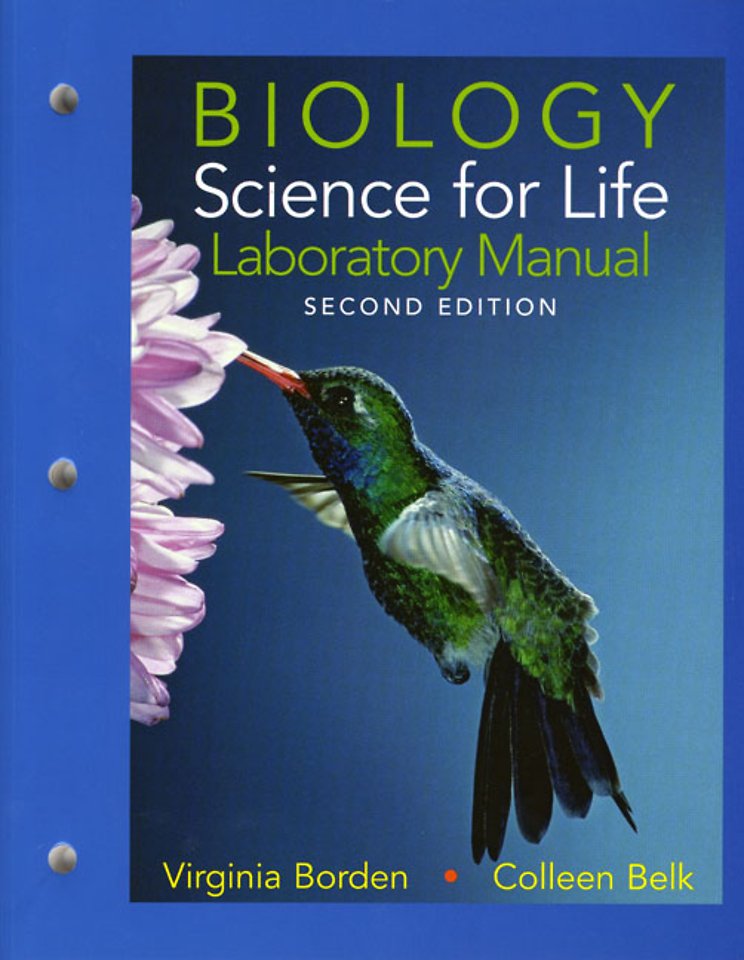
Laboratory Manual for Biology
Science for Life
Specificaties
Paperback, blz.
|
Engels
Pearson Education |
e druk, 2006
ISBN13: 9780131888043
Rubricering
Levertijd ongeveer 8 werkdagen
Samenvatting
Cointains 75 lab exercises under 17 topics, all written by the textbook authors and tied directly to the textbook.
Specificaties
Inhoudsopgave
<h2>Table of Contents</h2> <p> </p> <ol> <li><strong>Can Science Cure the Common Cold?</strong> <ul> <li>Introduction to the Scientific Method</li> <li>1.1 The Process of Science <ul> <li>The Nature of Hypotheses</li> <li>Scientific Theories</li> <li>The Logic of Hypothesis Tests</li> </ul></li> <li>1.2 Hypothesis Testing <ul> <li>The Experimental Method</li> <li>Controlled Experiments</li> <li>Minimizing Bias in Experimental Design</li> <li>Using Correlation to Test Hypotheses</li> </ul></li> <li>1.3 Understanding Statistics <ul> <li>What Statistical Tests Can Tell Us</li> <li>Factors that Influence Statistical Significance</li> <li>What Statistical Tests Cannot Tell Us</li> </ul></li> <li>1.4 Evaluating Scientific Information <ul> <li>Primary Sources</li> <li>Information from Anecdotes</li> <li>Science in the News</li> <li>Understanding Science from Secondary Sources</li> <li>Is There a Cure for the Common Cold?</li> <li>Sounds Right, But Is It?</li> <li>THE BIG QUESTION How do I know what to believe?</li> <li>Review</li> </ul></li> </ul></li> </ol> <h3>UNIT ONE Chemistry and Cells</h3> <ol> <li><strong>Science Fiction, Bad Science, and Pseudoscience</strong> <ul> <li>Water, Biochemistry, and Cells</li> <li>2.1 A Definition of Life</li> <li>2.2 The Properties of Water <ul> <li>The Structure of Water</li> <li>Water Is a Good Solvent</li> <li>Water Facilitates Chemical Reactions</li> <li>Water Moderates Temperature</li> <li>The Drinking-Water Hypothesis Requires More Substantiation</li> </ul></li> <li>2.3 Chemistry for Biology Students <ul> <li>Chemical Bonds</li> <li>The Bermuda Triangle Revisited</li> </ul></li> <li>2.4 Biological Macromolecules <ul> <li>Carbohydrates</li> <li>Proteins</li> <li>Lipids</li> <li>Nucleic Acids</li> <li>Dietary Macromolecules and Behavior</li> </ul></li> <li>2.5 An Introduction to Evolutionary Theory <ul> <li>Sounds Right, But Is It?</li> <li>THE BIG QUESTION Does balanced reporting help us draw more accurate conclusions?</li> <li>Review</li> </ul></li> </ul></li> <li><strong>Is It Possible to Supplement Your Way to Better Performance and Health?</strong> <ul> <li>Nutrients and Membrane Transport</li> <li>3.1 Nutrients <ul> <li>Macronutrients</li> <li>Micronutrients</li> <li>Antioxidants</li> </ul></li> <li>3.2 Cell Structure <ul> <li>Plasma Membrane</li> <li>Subcellular Structures</li> </ul></li> <li>3.3 Transport Across Membranes <ul> <li>Passive Transport: Diffusion, Facilitated Diffusion, and Osmosis</li> <li>Active Transport: Pumping Substances across the Membrane</li> <li>Exocytosis and Endocytosis: Movement of Large Molecules across the Membrane</li> <li>Sounds Right, But Is It?</li> <li>THE BIG QUESTION Should I routinely use detox products?</li> <li>Review</li> </ul></li> </ul></li> <li><strong>Body Weight and Health</strong> <ul> <li>Enzymes, Metabolism, and Cellular Respiration</li> <li>4.1 Enzymes and Metabolism <ul> <li>Enzymes</li> <li>Metabolism</li> </ul></li> <li>4.2 Cellular Respiration <ul> <li>Structure and Function of ATP</li> <li>Cellular Respiration</li> <li>Stages of Cellular Respiration</li> <li>Metabolism of Other Nutrients</li> <li>Metabolism without Oxygen: Anaerobic Respiration and Fermentation</li> </ul></li> <li>4.3 Body Weight and Health <ul> <li>Body Mass Index</li> <li>Underweight Is Unhealthy</li> <li>Sounds Right, But Is It?</li> <li>THE BIG QUESTION How unhealthy is anorexia?</li> <li>Review</li> </ul></li> </ul></li> <li><strong>Life in the Greenhouse</strong> <ul> <li>Photosynthesis and Climate Change</li> <li>5.1 The Greenhouse Effect <ul> <li>Earth Is a Greenhouse</li> <li>Water, Heat, and Temperature</li> </ul></li> <li>5.2 The Flow of Carbon</li> <li>5.3 Can Photosynthesis Slow Down Global Climate Change? <ul> <li>Chloroplasts: The Site of Photosynthesis</li> <li>The Process of Photosynthesis</li> </ul></li> <li>5.4 How High Temperatures Might Reduce Photosynthesis</li> <li>5.5 How We Can Slow Global Climate Change <ul> <li>Sounds Right, But Is It?</li> <li>THE BIG QUESTION Should global warming be kept below 4°C?</li> <li>Review</li> </ul></li> </ul></li> </ol> <h3>UNIT TWO Genetics</h3> <ol> <li><strong>Cancer</strong> <ul> <li>DNA Synthesis and Mitosis</li> <li>6.1 What Is Cancer? <ul> <li>Tumors Can Be Cancerous</li> <li>Risk Factors for Cancer</li> </ul></li> <li>6.2 Passing Genes and Chromosomes to Daughter Cells <ul> <li>Genes and Chromosomes</li> <li>DNA Replication</li> </ul></li> <li>6.3 The Cell Cycle and Mitosis <ul> <li>Interphase</li> <li>Mitosis</li> <li>Cytokinesis</li> </ul></li> <li>6.4 Cancer Prevention, Detection, and Treatment <ul> <li>Tumor Suppressors Help Prevent Cancer</li> <li>Cancer Detection</li> <li>Cancer Treatment</li> <li>Sounds Right, But Is It?</li> <li>THE BIG QUESTION Can I prevent myself from getting cancer?</li> <li>Review</li> </ul></li> </ul></li> <li><strong>Fertility</strong> <ul> <li>Meiosis and Human Reproduction</li> <li>7.1 Producing Sperm and Eggs: Meiosis <ul> <li>Interphase</li> <li>Meiosis I</li> <li>Meiosis II</li> </ul></li> <li>7.2 Problems with Meiosis and Lowered Fertility</li> <li>7.3 Bringing Sperm and Egg Together <ul> <li>Male Reproductive Anatomy</li> <li>Female Reproductive Anatomy</li> <li>Sounds Right, But Is It?</li> <li>THE BIG QUESTION Does marijuana use impair fertility?</li> <li>Review</li> </ul></li> </ul></li> <li><strong>Does Testing Save Lives?</strong> <ul> <li>Mendelian Genetics</li> <li>8.1 The Inheritance of Traits <ul> <li>Genes and Chromosomes</li> <li>Producing Diversity in Offspring</li> </ul></li> <li>8.2 Basic Mendelian Genetics: When the Role of Genes Is Clear <ul> <li>Genotype and Phenotype</li> <li>Genetic Diseases in Humans</li> <li>Using Punnett Squares to Predict Offspring Genotypes</li> </ul></li> <li>8.3 Extensions of Mendelian Genetics</li> <li>8.4 Sex and Inheritance <ul> <li>Sex Determination and X-Linkage</li> <li>Pedigrees</li> <li>Sounds Right, But Is It?</li> <li>THE BIG QUESTION Should there be universal screening for killer diseases?</li> <li>Review</li> </ul></li> </ul></li> <li><strong>Biology of Wrongful Convictions</strong> <ul> <li>Complex Genetic Traits, Heritability, and DNA Profiling</li> <li>9.1 Eyewitness Testimony and Complex Genetic Traits <ul> <li>Polygenic Traits</li> <li>Quantitative Traits</li> </ul></li> <li>9.2 Genes, Criminality, and Implicit Bias <ul> <li>Studying Nature versus Nurture</li> <li>The Use and Misuse of Heritability</li> <li>Implicit Bias</li> </ul></li> <li>9.3 Positive Identification <ul> <li>DNA Profiling</li> <li>Polymerase Chain Reaction</li> <li>Sounds Right, But Is It?</li> <li>The Big Question Should the death penalty be abolished in the United States?</li> <li>Review</li> </ul></li> </ul></li> <li><strong>Genetically Modified Organisms</strong> <ul> <li>Gene Expression, Mutation, Stem Cells, and Cloning</li> <li>10.1 Protein Synthesis and Gene Expression <ul> <li>From Gene to Protein</li> <li>Transcription</li> <li>Translation</li> <li>Mutations</li> <li>Gene Expression</li> </ul></li> <li>10.2 Producing Recombinant Proteins <ul> <li>Cloning a Gene Using Bacteria</li> <li>FDA Regulations</li> </ul></li> <li>10.3 Genetically Modified Plants and Animals <ul> <li>Modifying Crop Plants</li> <li>Modifying Animals</li> <li>Gene Editing Using CRISPR in Plants and Animals</li> </ul></li> <li>10.4 Genetically Modified Humans <ul> <li>Stem Cells</li> <li>Gene Therapy</li> <li>Gene Editing in Humans</li> <li>Cloning Humans</li> <li>Sounds Right, But Is It?</li> <li>THE BIG QUESTION Should anti-GMO activists give up the fight?</li> <li>Review</li> </ul></li> </ul></li> </ol> <h3>UNIT THREE Evolution</h3> <ol> <li><strong>Where Did We Come From?</strong> <ul> <li>The Evidence for Evolution</li> <li>11.1 What Is Evolution? <ul> <li>The Process of Evolution</li> <li>The Theory of Evolution</li> </ul></li> <li>11.2 Charles Darwin and the Theory of Evolution <ul> <li>Early Views of Evolution</li> <li>The Voyage of the Beagle</li> <li>Developing the Hypothesis of Common Descent</li> <li>Alternative Ideas on the Origins and Relationships among Organisms</li> </ul></li> <li>11.3 Examining the Evidence for Common Descent <ul> <li>Linnaean Classification</li> <li>Anatomical Homology</li> <li>Developmental Homologies</li> <li>Molecular Homology</li> <li>Biogeography</li> <li>The Fossil Record</li> </ul></li> <li>11.4 Are Alternatives to the Theory of Evolution Equally Valid? <ul> <li>Weighing the Alternatives</li> <li>The Best Scientific Explanation for the Diversity of Life</li> <li>Sounds Right, But Is It?</li> <li>THE BIG QUESTION Should high school biology teachers be required to "teach the controversy"?</li> <li>Review</li> </ul></li> </ul></li> <li><strong>An Evolving Enemy</strong> <ul> <li>Natural Selection</li> <li>12.1 Return of a Killer <ul> <li>What Is Tuberculosis?</li> <li>Treatment-and Treatment Failure</li> </ul></li> <li>12.2 Natural Selection Causes Evolution <ul> <li>Darwin's Observations</li> <li>Darwin's Inference: Natural Selection Causes Evolution</li> <li>Testing Natural Selection</li> </ul></li> <li>12.3 Natural Selection Since Darwin <ul> <li>The Modern Synthesis</li> <li>The Subtleties of Natural Selection</li> <li>Patterns of Selection</li> </ul></li> <li>12.4 Natural Selection and Human Health <ul> <li>Tuberculosis Fits Darwin's Observations</li> <li>Selecting for Drug Resistance</li> <li>Stopping Drug Resistance</li> <li>Can Natural Selection Save Us from Superbugs?</li> <li>Sounds Right, But Is It?</li> <li>THE BIG QUESTION Should I stop purchasing meats that are raised using antibiotics?</li> <li>Review</li> </ul></li> </ul></li> <li><strong>Understanding Race</strong> <ul> <li>Speciation and Macroevolution</li> <li>13.1 What Is a Species? <ul> <li>The Biological Species Concept</li> <li>Speciation</li> <li>Isolation and Divergence of Gene Pools</li> <li>The Evolution of Reproductive Isolation</li> </ul></li> <li>13.2 Are Human Races Biological? <ul> <li>The History of Human Races</li> <li>The Morphological Species Concept</li> <li>Modern Humans: A History</li> <li>Genetic Evidence of Divergence</li> <li>Human Races Are Not Isolated Biological Groups</li> <li>Human Races Have Never Been Truly Isolated</li> </ul></li> <li>13.3 Why Human Groups Differ <ul> <li>Natural Selection</li> <li>Convergent Evolution</li> <li>Genetic Drift</li> <li>Sexual Selection</li> <li>Assortative Mating</li> <li>Sounds Right, But Is It?</li> <li>THE BIG QUESTION Are affirmative action policies that favor black students applying for college admission good public policy?</li> <li>Review</li> </ul></li> </ul></li> <li><strong>The Greatest Species on Earth?</strong> <ul> <li>Biodiversity and Classification</li> <li>14.1 Biological Classification <ul> <li>How Many Species Exist?</li> <li>Domains of Life</li> </ul></li> <li>14.2 The Diversity of Life <ul> <li>The Domains Bacteria and Archaea</li> <li>The Origin of the Domain Eukarya</li> <li>The Protista</li> <li>Kingdom Animalia</li> <li>Kingdom Fungi</li> <li>Kingdom Plantae</li> <li>Not Quite Living: Viruses</li> </ul></li> <li>14.3 Learning about Species <ul> <li>Reconstructing Evolutionary History</li> <li>The Greatest Species on Earth</li> <li>Sounds Right, But Is It?</li> <li>THE BIG QUESTION Should lab mice and rats have the same rights as other nonhuman animals?</li> <li>Review</li> </ul></li> </ul></li> </ol> <h3>UNIT FOUR Ecology</h3> <ol> <li><strong>Is the Human Population Too Large?</strong> <ul> <li>Population Ecology</li> <li>15.1 Population Growth <ul> <li>Population Structure</li> <li>Exponential Population Growth</li> <li>The Demographic Transition</li> </ul></li> <li>15.2 Limits to Population Growth <ul> <li>Carrying Capacity and Logistic Growth</li> <li>Earth's Carrying Capacity for Humans</li> </ul></li> <li>15.3 The Future of the Human Population <ul> <li>A Possible Population Crash?</li> <li>Avoiding Disaster</li> <li>Sounds Right, But Is It?</li> <li>THE BIG QUESTION Should the international community continue to provide food aid to populations experiencing food crises?</li> <li>Review</li> </ul></li> </ul></li> <li><strong>Conserving Biodiversity</strong> <ul> <li>Community and Ecosystem Ecology</li> <li>16.1 The Sixth Extinction <ul> <li>Measuring Extinction Rates</li> <li>Causes of Extinction</li> </ul></li> <li>16.2 The Consequences of Extinction <ul> <li>Loss of Resources</li> <li>Predation, Mutualism, and Competition</li> <li>Energy and Chemical Flows</li> <li>Psychological Effects</li> </ul></li> <li>16.3 Saving Species <ul> <li>Protecting Habitat</li> <li>Small Populations Are Vulnerable</li> <li>Conservation Genetics</li> <li>Protecting Biodiversity versus Meeting Human Needs</li> <li>Sounds Right, But Is It?</li> <li>THE BIG QUESTION Is wind power good or bad for birds?</li> <li>Review</li> </ul></li> </ul></li> <li><strong>The Human Footprint</strong> <ul> <li>Climate and Biomes</li> <li>17.1 Climate Determines Habitability <ul> <li>Global Temperature and Precipitation Patterns</li> <li>Local Influences on Climate</li> </ul></li> <li>17.2 Terrestrial Biomes and the Human Footprint <ul> <li>Tundra</li> <li>Desert</li> <li>Forests and Shrublands</li> <li>Grasslands</li> </ul></li> <li>17.3 Aquatic Biomes and the Human Footprint <ul> <li>Freshwater</li> <li>Saltwater</li> <li>Sounds Right, But Is It?</li> <li>THE BIG QUESTION Can my actions make a difference on global environmental issues?</li> <li>Review</li> </ul></li> </ul></li> </ol> <h3>Appendix: Metric System Conversions</h3> <p></p>