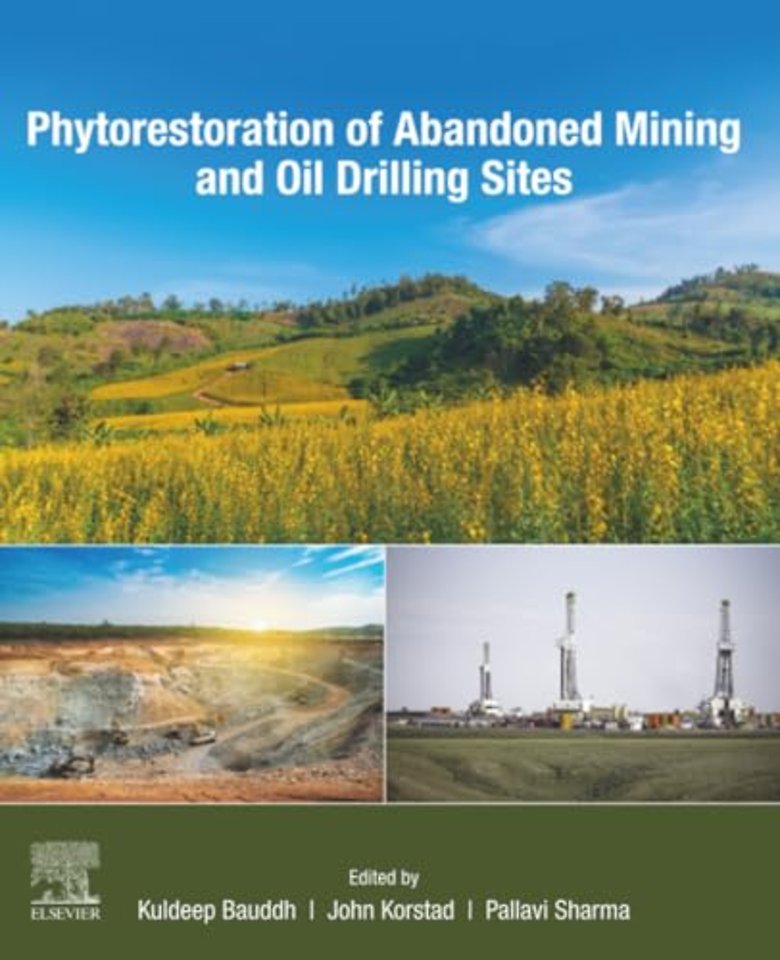
, ,

Phytorestoration of Abandoned Mining and Oil Drilling Sites

Specificaties
Paperback, blz. | Engels
Elsevier Science | e druk, 2020
ISBN13: 9780128212004
Rubricering
Elsevier Science e druk, 2020 9780128212004
€ 212,20
Levertijd ongeveer 8 werkdagen

Samenvatting

Phytorestoration of Abandoned Mining and Oil Drilling Sites presents case studies and the latest research on the most effective methods to address the large amounts of waste materials released due to mining and oil drilling. In particular, phytoremediation is described as a novel, eco-friendly, cost-effective method for extracting toxic compounds by plants for the restoration of contaminated sites. Plantings on these contaminated areas lead to the removal of toxic substances such as heavy metals and hydrocarbons, improvement in the physicochemical and biological properties of the soil, long-term forest ecosystem rehabilitation, restoration of ecosystem productivity, stability and biological diversity, and reductions in CO2.

Utilizing worldwide examples, this book discusses the potential of phytoremediation as an ideal solution for sites contaminated by mining and oil drilling sites.

Specificaties

ISBN13:9780128212004
Taal:Engels
Bindwijze:Paperback

Inhoudsopgave

1. Characteristics of Former Mining and Oil Drilling Sites and Adverse Impacts of These Activities on the Environment and Human Health<br>2. An Overview of Phytorestoration of Former Mining and Oil Drilling Sites<br>3. Contamination of the Stream Water and Sediments with Uranium Mine and Their Possible Phytoremediation<br>4. Influence of Open Cast Mining on the Soil Properties of Ledo Colliery of Tinsukia District of Assam, India<br>5. Potential of Purun tikus to Restore the Iron (Fe) Contaminated Acid Mine Drainage by Using Constructed Wetland<br>6. Phytoreclamation of Abandoned Acid Mine Drainage Site after Treatment with Fly Ash<br>7. Role of Fungi in Restoration of Mine Dump Soil Contaminated with Petroleum Hydrocarbons<br>8. Assessment of Native Plant Species Growing in Mining-Spoiled Soils for Phytorestoration of Heavy Metals<br>9. Assessment of Phytoremediation Potential of Plant Species in Copper Mine Tailings<br>10. Phytostabilization of Metalliferous Mine Waste<br>11. Restoration of Coal Mine Waste Sites by Using Plant Species<br>12. Phytoaccumulation of Trace Elements by Grevillea pteridifolia Knight Grown on Iron Ore Tailings<br>13. Evaluation of Natural Phytoremediation Processes Occurring at Ex-Tin Mining Catchment<br>14. Uranium Mine Tailing Remediation by Amending Land Soil and Invading Native Plant Species<br>15. Physiological and Antioxidant Responses in Plants Exposed to Heavy Metals During Cultivation in Mining Dump Sites<br>16. Potential of Ricinus communis for the Removal of Toxic Metals from Mining Dumping Sites<br>17. Phytorestoration Potential of Invasive Plant Species during Cultivation in Mining Dump Sites<br>18. Phytoextraction of Heavy Metals by Tree Species Growing on Hazardous Mining Sludge<br>19. Selection of Plant Species for Phytoremediation of Oil Drilling Sites: An Overview<br>20. Phytoremediation Study of Oil Spill Site Using Common Nigerian Vegetables<br>21. Case Studies of Phytorestoration of Abandoned Oil Drilling Sites<br>22. Phytoremediation of Oil Contaminated Aquatic Sites using Aquatic Macrophytes<br>23. Phytomining: A Sustainable Approach for Recovery and Extraction of Valuable Metals<br>24. Phytomining Potential of Albizia julibrissin Plant<br>25. Restoring Indigenous Knowledge for Mining Dump Sites: A Study at Iron Mining Areas in Jharkhand
€ 212,20
Levertijd ongeveer 8 werkdagen

Rubrieken

    Personen

      Trefwoorden

        Phytorestoration of Abandoned Mining and Oil Drilling Sites