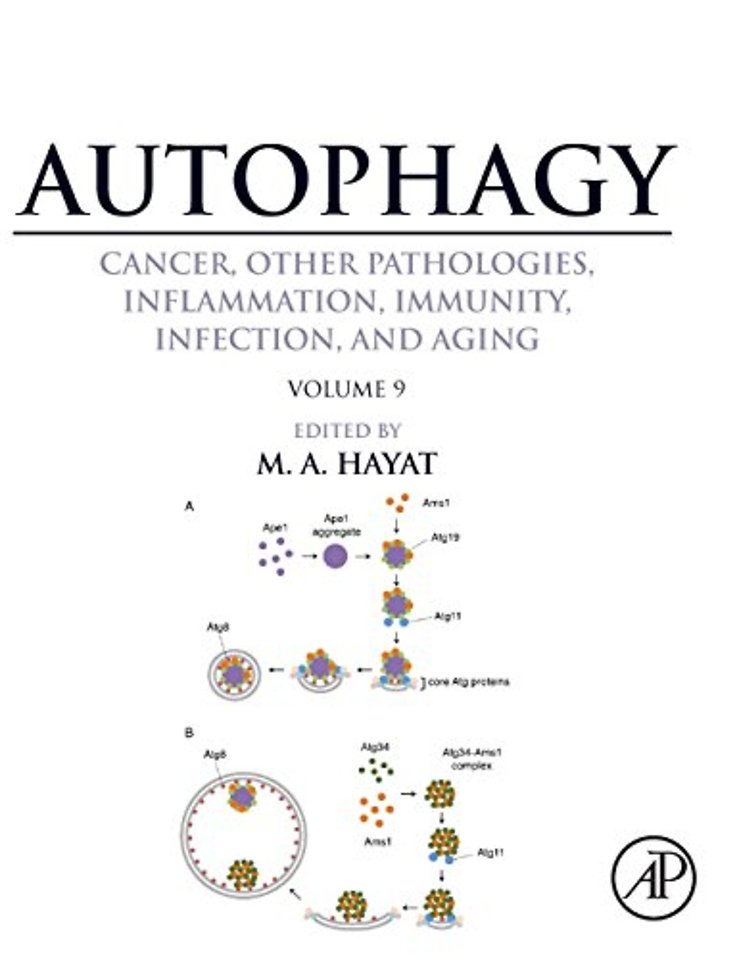
Autophagy: Cancer, Other Pathologies, Inflammation, Immunity, Infection, and Aging

Volume 9: Human Diseases and Autophagosome

Specificaties
Gebonden, blz. | Engels
Elsevier Science | e druk, 2016
ISBN13: 9780128029367
Rubricering
Elsevier Science e druk, 2016 9780128029367
€ 193,00
Levertijd ongeveer 8 werkdagen

Samenvatting

Autophagy: Cancer, Other Pathologies, Inflammation, Immunity, Infection, and Aging: Volume 9: Human Diseases and Autophagosome offers a valuable guide to both cellular processes while helping researchers explore their potentially important connections.

Volume 9 emphasizes the role of autophagy in diseases, such as leukemia, antifungal and antibacterial immunity, and transplantation. This volume also explains, in detail, the molecular mechanism(s) underlying the formation of autophagosomes, including the progression of omegasomes to autophagosomes. This information is important because one of the major functions of autophagy is to degrade and eliminate excessive, old, and harmful materials from the cell. Autophagosomes receive these materials (cellular cargo) and transport them to lysosomes for degradation. Lysosomes contain the digestive enzymes (hydrolases) that breakdown proteins, lipids, carbohydrates, etc. (self-digestion).

To further explain this phenomenon, the role of the endoplasmic reticulum (ER) in the formation of autophagosomes is discussed. ULK1 and Beclin 1 proteins are also important in the initial formation of autophagosomes, and are also discussed. Because much of the early research in this area was carried out using yeast cells, the role of Golgi complex in the autophagosome formation in these cells is explained.

This volume also includes an explanation of the role of the autophagy-related gene ATG5 in cancer (e.g., gastrointestinal cancer). Paradoxically, autophagy is a “double-edged sword” because it eliminates some pathogens, whereas it can be used by some intracellular pathogens to multiply and cause infection. This book is an asset to newcomers, providing a concise overview of the role of autophagy in necrosis and inflammation, while also serving as an excellent reference for more experienced scientists and clinicians.

Specificaties

ISBN13:9780128029367
Taal:Engels
Bindwijze:Gebonden

Inhoudsopgave

<p>Part I: Molecular Mechanisms</p> <p>Chapter 1. Overview of Autophagy</p> <p>Chapter 2. Autophagic Structures in Yeast</p> <p>Chapter 3. Mitophagy: Sensors, Regulators, and Effectors</p> <p>Chapter 4. Regulation of Autophagy by Actin-Associated Signaling Pathways</p> <p>Chapter 5. G2019S Mutation of LRRK2 Increases Autophagy via MEK/ERK Pathway</p> <p>Chapter 6. Cargo Proteins Facilitate the Formation of Transport Vesicles, but not Autophagosomes</p> <p>Chapter 7. Absence of Bax and Bak: Implications for Autophagy and Alternative Mitochondrial Functions</p> <p>Chapter 8. The Antiapoptotic Protein BCL-2 Has Also an Antiautophagy Role Through Beclin 1 Inhibition</p> <p>Chapter 9. Organic Pollutant Perfluorooctane Sulfonate–Induced Lysosomal Membrane Permeabilization Blocks Autophagy Flux in Human Hepatoma Cells</p> <p>Part II: Autophagy and Cancer</p> <p>Chapter 10. Mutant p53 Located in the Cytoplasm Inhibits Autophagy</p> <p>Chapter 11. Role of Autophagy in Regulation Survival or Death of Cancer Cells</p> <p>Chapter 12. Regulation of Autophagy in Chronic Lymphocytic Leukemia: The Role of Histone Deacetylase Inhibitors</p> <p>Chapter 13. Improving the Survival of Mesenchymal Stromal Cells Against Oxidative Stress in Transplantation: Role of Autophagy Induction</p> <p>Part III: Autophagy and Infection</p> <p>Chapter 14. Low-Density Lipoprotein Receptor-Related Protein-1 Mediates Vacuolating Cytotoxin-Induced Autophagy and Apoptosis During Helicobacter pylori Infection</p> <p>Chapter 15. Cytomegalovirus Blocks Autophagy During Infection of the Retinal Pigment Epithelial Cells: Functional Relationship Between Autophagy and Apoptosis</p> <p>Chapter 16. Unusual Functions for the Autophagy Machinery in Apicomplexan Parasites</p> <p>Chapter 17. Subversion of Innate Phagocytic Cells by Orientia tsutsugamushi</p> <p>Chapter 18. Intracellular Bacterium Anaplasma phagocytophilum Induces Autophagy by Secreting Substrate Ats-1 that Neutralizes the Beclin 1-ATG14L Autophagy Initiation Pathway</p> <p>Chapter 19. Host Autophagy in Antifungal Immunity</p>
€ 193,00
Levertijd ongeveer 8 werkdagen

Rubrieken

    Personen

      Trefwoorden

        Autophagy: Cancer, Other Pathologies, Inflammation, Immunity, Infection, and Aging