, , , e.a.

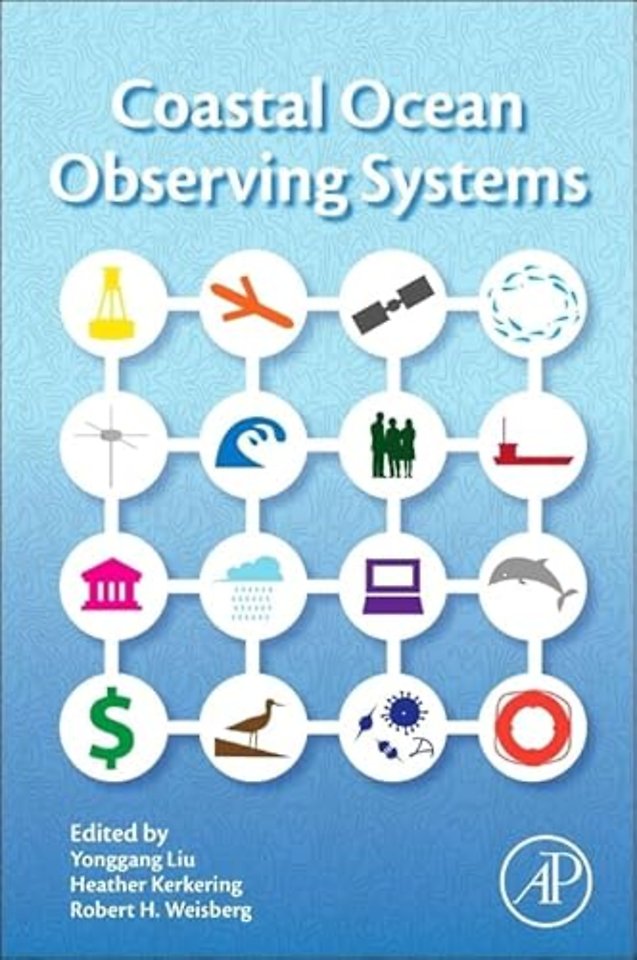
Coastal Ocean Observing Systems

Specificaties
Paperback, blz. | Engels
Elsevier Science | e druk, 2015
ISBN13: 9780128020227
Rubricering
Elsevier Science e druk, 2015 9780128020227
€ 112,54
Levertijd ongeveer 8 werkdagen

Samenvatting

Coastal Ocean Observing Systems provides state-of-the-art scientific and technological knowledge in coastal ocean observing systems, along with guidance on establishing, restructuring, and improving similar systems. The book is intended to help oceanographers understand, identify, and recognize how oceanographic research feeds into the various designs of ocean observing systems. In addition, readers will learn how ocean observing systems are defined and how each system operates in relation to its geographical, environmental, and political region.

The book provides further insights into all of these problem areas, offering lessons learned and results from the types of research sponsored and utilized by ocean observing systems and the types of research design and experiments conducted by professionals specializing in ocean research and affiliated with observing systems.

Specificaties

ISBN13:9780128020227
Taal:Engels
Bindwijze:Paperback

Inhoudsopgave

<p>Preface</p> <p>1. Introduction to Coastal Ocean Observing Systems: Advances and Syntheses</p> <p>2. National Ocean Observing Systems in a Global Context</p> <p>3. The Importance of Federal and Regional Partnerships in Coastal Observing</p> <p>4. Basic Tenets for Coastal Ocean Ecosystems Monitoring</p> <p>5. The Monitoring of Harmful Algal Blooms through Ocean Observing: The Development of the Caifornia Harmful Algae Bloom Monitoring and Alert Program</p> <p>6. Sustained Ocean Observing Along the Coast of Southeastern Australia: NSW-IMOS 2007-2014</p> <p>7. Projeto Azul: Operational Ocean Observation and Forecasts in an Active Oil and Gas area of Southeastern Brazil</p> <p>8. Zooplankton Data from High-Frequency Coastal Transects: Enriching the Contributions of Ocean Observing Systems to Ecosystem-based Management in the Northern California Current</p> <p>9. The IMOS Ocean Radar Facility, ACORN</p> <p>10. How Are High Resolution Wave Observations and HF Radar Derived Surface Currents Critical to Decision-Making for Maritime Operations?</p> <p>11. Observing Frontal Instabilities of the Florida Current Using High Frequency Radar</p> <p>12. Fine Scale Tidal and Subtidal Variability of an Upwelling Influenced Bay as Measured by the Mexican High Frequency Radar Observing System</p> <p>13. Effect of Radio Frequency Interference (RFI) Noise Energy on WERA Performance Using the "Listen Before Talk" Adaptive Noise Procedure on the West Florida Shelf </p> <p>14. Ocean Remote Sensing Using X-band Shipborne Nautical Radar - Applications in Eastern Canada</p> <p>15. Estimating Nearshore Bathymetry from X-band Radar Data</p> <p>16. Wind, Wave and Current retrieval utilizing X-Band Marine Radars</p> <p>17. Glider Salinity Correction for Unpumped CTD Sensors Across a Sharp Thermocline</p> <p>18. Sensors for Ocean Observing: The Optical Phytoplankton Discriminator</p> <p>19. Observing System Impacts on Estimates of California Current Transport</p> <p>20. Assimilation of HF Radar Observations in the Chesapeake-Delaware Bay Using the Navy Coastal Ocean Model (NCOM) and the Four Dimensional Variational (4DVAR) Method</p> <p>21. System-Wide Monitoring Program of the National Estuarine Research Reserve System: Research to Address Coastal Management Issues</p> <p>22. Integrating Environmental Monitoring and Observing Systems in Support of Science to Inform Decision Making: Case Studies for the Southeast</p> <p>23. One System, Many Societal Benefits: An Efficient, Cost-effective Ocean Observing System for the Gulf of Mexico</p>
€ 112,54
Levertijd ongeveer 8 werkdagen

Rubrieken

    Personen

      Trefwoorden

        Coastal Ocean Observing Systems