
Lester Packer,
Enrique Cadenas
Elsevier Science
e druk, 2013
9780124058828
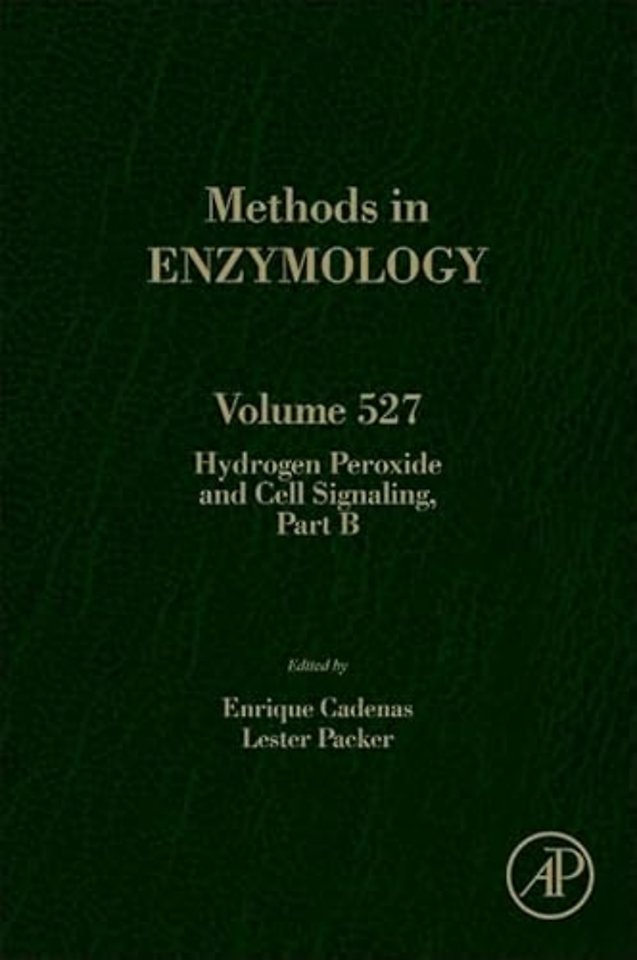
Hydrogen Peroxide and Cell Signaling, Part B
Specificaties
Gebonden, blz.
|
Engels
Elsevier Science |
e druk, 2013
ISBN13: 9780124058828
Rubricering
Onderdeel van serie
Methods in Enzymology
Levertijd ongeveer 8 werkdagen
Samenvatting
This new volume of Methods in Enzymology continues the legacy of this premier serial with quality chapters authored by leaders in the field. This is the second of three volumes on hydrogen peroxide and cell signaling, and includes chapters on such topics as the cellular steady-state of H2O2, evaluating peroxiredoxin sensitivity towards inactivation by peroxide substrates, and peroxiredoxins as preferential targets in H2O2-induced signaling.
Specificaties
ISBN13:9780124058828
Taal:Engels
Bindwijze:Gebonden
Uitgever:Elsevier Science
Serie:Methods in Enzymology
Inhoudsopgave
1. The Cellular Steady-State of H2O2: Latency Concepts and Gradients <br>2. Evaluating Peroxiredoxin Sensitivity Towards Inactivation by Peroxide Substrates <br>3. Peroxiredoxins as Preferential Targets in H2O2-Induced Signaling <br>4. Selenium in the Redox Regulation of the Nrf2 and the Wnt Pathway <br>5. Selenoprotein W as Biomarker for the Efficacy of Selenium Compounds to Act as Source for Selenoprotein Biosynthesis <br>6. Peroxiredoxins and Sulfiredoxin at the Crossroads of the No and H2o2 Signaling Pathways <br>7. Glutathione and g-glutamylcysteine in Hydrogen Peroxide Detoxification <br>8. Peroxiredoxin-6 and NADPH Oxidase Activity <br>9. Study of the Signaling Function of Sulfiredoxin and Peroxiredoxin III in Isolated Adrenal Gland: Unsuitability of Clonal and Primary Adrenocortical Cells <br>10. The Use of HyPer to Examine Spatial and Temporal Changes in H2O2- in High Light-Exposed Plants <br>11. Analysis of Environmental Stress in Plants with the Aid of Marker Genes for H2O2 Responses <br>12. The Role of Plant Bax Inhibitor-1 in Suppressing H2O2-Induced Cell Death <br>13. Comparative Analysis of Cyanobacterial and Plant Peroxiredoxins and their Electron Donors: Peroxidase Activity and Susceptibility to Overoxidation <br>14. Using Hyper as a Molecular Probe to Visualize Hydrogen Peroxide in Living Plant cells: A Method with Virtually Unlimited Potential in Plant Biology