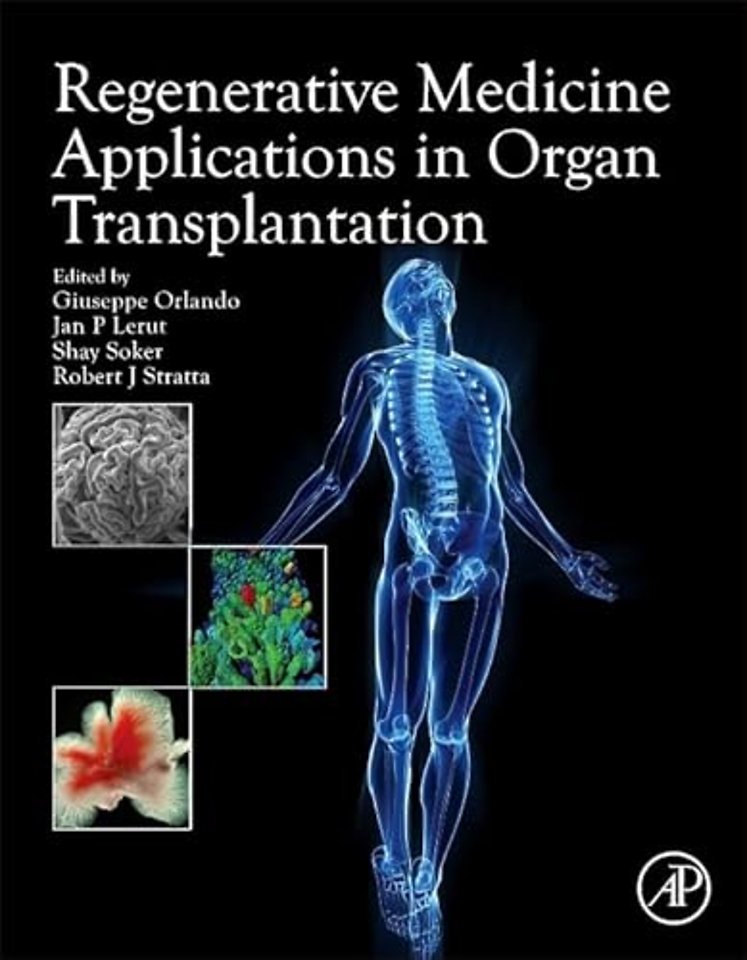
Regenerative Medicine Applications in Organ Transplantation

Specificaties
Gebonden, blz. | Engels
Elsevier Science | e druk, 2013
ISBN13: 9780123985231
Rubricering
Elsevier Science e druk, 2013 9780123985231
€ 235,00
Levertijd ongeveer 8 werkdagen

Samenvatting

Regenerative Medicine Applications in Organ Transplantation illustrates exactly how these two fields are coming together and can benefit one another. It discusses technologies being developed, methods being implemented, and which of these are the most promising. The text encompasses tissue engineering, biomaterial sciences, stem cell biology, and developmental biology, all from a transplant perspective. Organ systems considered include liver, renal, intestinal, pancreatic, and more. Leaders from both fields have contributed chapters, clearly illustrating that regenerative medicine and solid organ transplantation speak the same language and that both aim for similar medical outcomes. The overall theme of the book is to provide insight into the synergy between organ transplantation and regenerative medicine.

Recent groundbreaking achievements in regenerative medicine have received unprecedented coverage by the media, fueling interest and enthusiasm in transplant clinicians and researchers. Regenerative medicine is changing the premise of solid organ transplantation, requiring transplantation investigators to become familiar with regenerative medicine investigations that can be extremely relevant to their work. Similarly, regenerative medicine investigators need to be aware of the needs of the transplant field to bring these two fields together for greater results.

Specificaties

ISBN13:9780123985231
Taal:Engels
Bindwijze:Gebonden

Inhoudsopgave

<p>Meet the Editors<br>Preface<br>1. Introduction: Regenerative medicine and solid organ transplantation from a historical perspective<br>2. Solid organ transplantation: has the promise been kept and the needs met?</p> <p>Principles of Regenerative Medicine and Cell, Tissue, and Organ Bioengineering<br>3. Strategies for the specification of tissue engineering biomaterials<br>4. Principles of Stem Cell Biology<br>5. Principles of cell sheet technology<br>6. Principles of bioprinting technology<br>7. Synthetic biomaterial for regenerative medicine applications <br>8. Natural biomaterials for regenerative medicine applications<br>9. Bioartificial biomaterials for regenerative medicine applications<br>10. Bioactivated materials for cell and tissue guidance<br>11. Biocompatibility and immune response to biomaterials<br>12. Harnessing regenerative and immunomodulatory properties of stem cells<br>13. Bioreactors for tissue engineering purposes</p> <p>Kidney<br>14. Current status of renal transplantation<br>15. Living related renal transplantation: progress, pitfalls and promise<br>16. Machine perfusion of kidneys donated after cardiac death: the Carrel and Lindbergh legacy<br>17. Renal regeneration: the bioengineering approach<br>18. Renal regeneration: the stem cell biology approach<br>19. Renal regeneration: the developmental approach</p> <p>Liver<br>20. Current status of liver transplantation<br>21. Living related liver transplantation: progress, pitfalls and promise<br>22. Donation after cardiac death liver transplantation<br>23. Artificial liver support<br>24. Liver regeneration: the bioengineering approach<br>25. Liver regeneration: the developmental biology approach<br>26. Liver regeneration: the stem cell approach<br>27. Liver bioengineering using human cells</p> <p>Heart<br>28. Current status of heart transplantation<br>29. Artificial heart support<br>30. Heart regeneration: the bioengineering approach<br>31. Heart regeneration: the developmental and stem cell biology approach</p> <p>Small Bowel<br>32. Current status of intestinal transplantation<br>33. Living related small bowel transplantation: progress, pitfalls and promise<br>34. Intestinal regeneration: the bioengineering approach<br>35. Intestinal regeneration: the developmental biology approach<br>36. Intestinal regeneration: stem cell approach<br>37. Building blocks for engineering the small intestine</p> <p>Endocrine pancreas and islets of Langerhans<br>38. Current status of pancreas transplantation<br>39. Living related pancreas transplantation: progress, pitfalls and promise<br>40. Current status of islet transplantation<br>41. Pancreatic islets regeneration: the bioengineering approach<br>42. Pancreatic islet regeneration: the developmental and stem cell biology approach<br>43. Microencapsulation technology<br>44. Autologous islets transplantation</p> <p>Lung<br>45. Current status of lung transplantation<br>46. Living related lung transplantation: progress, pitfalls and promise<br>47. Artificial Lung Support<br>48. Lung regeneration: the bioengineering approach<br>49. Lung regeneration: the developmental biology approach<br>50. Lung regeneration: stem cell approach</p> <p>Composite tissues allotransplantation<br>Immunosuppression-free transplantation in the regenerative medicine era<br>Epilogue: Organ Bioengineering and Regeneration as the new Holy Grail of Organ Transplantation</p>
€ 235,00
Levertijd ongeveer 8 werkdagen

Rubrieken

    Personen

      Trefwoorden

        Regenerative Medicine Applications in Organ Transplantation