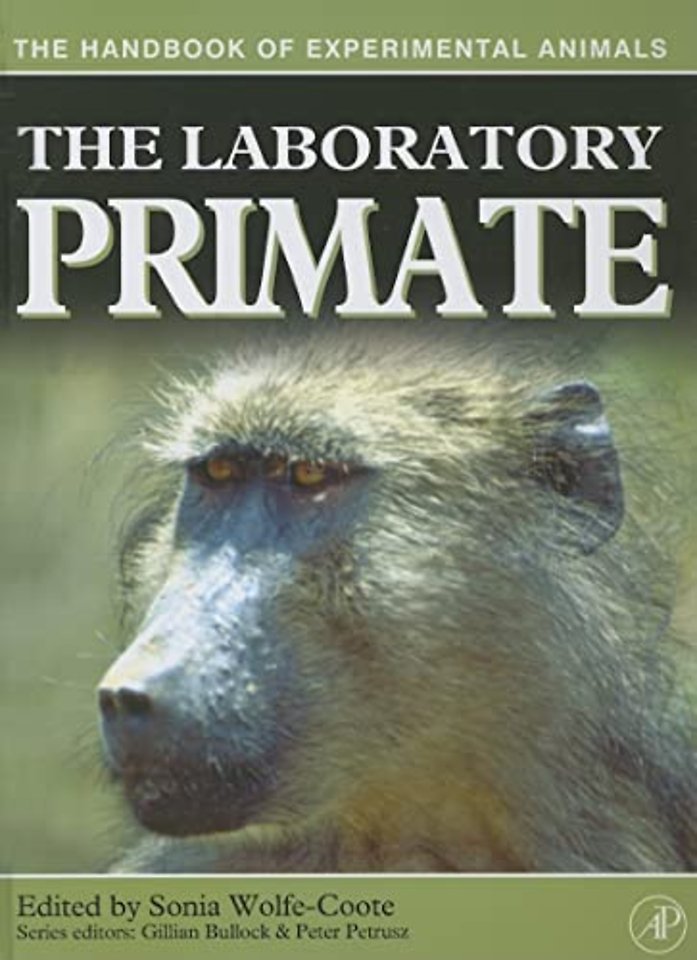
Sonia Wolfe-Coote
Elsevier Science
e druk, 2005
9780120802616
The Laboratory Primate
Specificaties
Gebonden, blz.
|
Engels
Elsevier Science |
e druk, 2005
ISBN13: 9780120802616
Rubricering
Onderdeel van serie
Handbook of Experimental Animals
Levertijd ongeveer 8 werkdagen
Samenvatting
A volume in the Handbook of Experimental Animals series, The Laboratory Primate details the past and present use of primates in biomedical research, and the husbandry, nutritional requirements, behaviour, and breeding of each of the commonly used species. Practical information on regulatory requirements, not available in other texts, is covered. Sections on experimental models cover the major areas of biomedical research, including AIDS, cancer, neurobiology and gene therapy. Assisted reproductive technology, tissue typing, and minimum group sizes for infectious disease/vaccine studies are also included.
Specificaties
Inhoudsopgave
Part 1: Definition of the Primate Model<br><br>1.1 The Taxonomy of Primates in the Laboratory Context <br>1.2 Similarities of Non Human Primates to Humans <br>1.3 General Anatomy <br>1.4 Pathology<br>1.4.1 Non infectious diseases <br>1.4.2 Common Viral Infections <br>1.4.3 Modelling Parasitic diseases in Non Human<br>Primates: Malaria, Chagas Disease and Filariasis <br>1.5 Reproduction: Definition of a Primate Model of Female Fertility <br>1.6 Male Reproduction and Fertilization <br>1.7 Primate Natural History and Social Behaviour: Implications for Laboratory Housing <br><br>Part 2: Primate Management<br><br>2.1 New World Primates<br>2.1.1 Husbandry and Management: Marmosets and <br>Tamarins <br>2.2 Old World Primates<br>2.2.1 Practical Care & Management of Macaques <br>2.2.2 Vervet Monkey Breeding <br>2.3 Nutrition and Nutritional Diseases <br>2.4 Environmental Enrichment & Refinement of Handling Procedures <br>2.5 Development of Specific Pathogen Free (SPF)<br>Non Human Primate Colonies <br>2.6 Medical Care <br><br>Part 3: Current Uses in Biomedical Research<br><br>3.1 Factors affecting the choice of species<br>3.2 Techniques & Procedures<br>3.2.1 Anaesthesia <br>3.2.2 Rigid Endoscopy <br>3.2.3 Ultrasound Imaging in Rhesus (Macaca mulatta)and Long-tailed (Macaca fascicularis) Macaques: Reproductive & Research Applications<br>3.2.4 Functional Magnetic Resonances Imaging in Conscious Marmoset Monkeys : Methods and Applications in Neuroscience Research<br>3.2.5 Radiographic Imaging of Non Human Primates<br>3.2.6 Imaging: Positron Emission Tomography (PET)<br>3.3 Current Uses in Biomedical Research<br>3.3.1 The Use of the Primate Model in Research<br>3.3.2 Chronic Diseases <br>3.3.3 Practical approaches to Pharmacological<br>3.3.4 Non Human Primate Models of Human Aging<br>3.3.5 Primate Models of Neurological Disease <br>3.3.6 Genetics: A survey of Non Human Primate<br>Genetics, Genetic Management and Applications<br>to Biomedical Research <br>3.3.7 The Respiratory System & its use in research<br>3.3.8 Reproduction – Male <br>3.3.9 Reproduction – Female <br>3.3.10 The Baboon as an Appropriate Model for Study<br>3.3.11 Virology Research<br>3.3.12 Parasitic Diseases of Non Human Primates