Juan Carlos Duran-Alvarez,
Blanca Jiménez-Cisneros
Elsevier Science
e druk, 2021
9780081029718
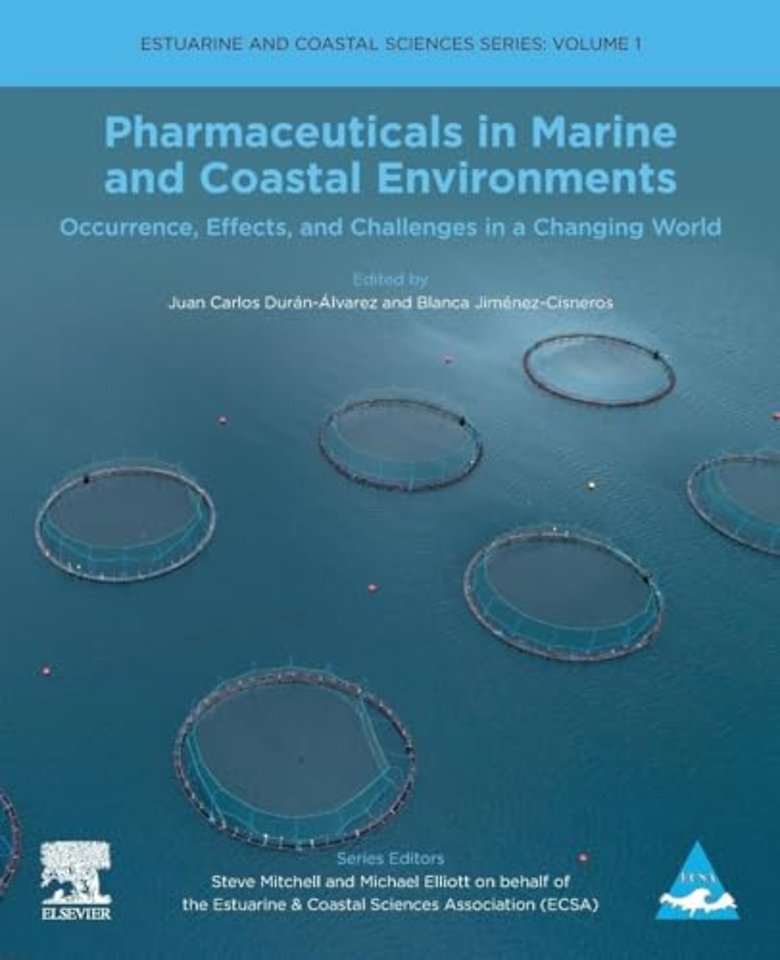
Pharmaceuticals in Marine and Coastal Environments
Occurrence, Effects, and Challenges in a Changing World
Specificaties
Paperback, blz.
|
Engels
Elsevier Science |
e druk, 2021
ISBN13: 9780081029718
Rubricering
Onderdeel van serie
Estuarine and Coastal Sciences Series
Levertijd ongeveer 8 werkdagen
Samenvatting
Pharmaceuticals in Marine and Coastal Environments: Occurrence, Effects, and Challenges in a Changing World is divided into three sections that address a) coastal areas as the main entrance of pharmaceuticals into the ocean, b) the occurrence and distribution of pharmaceuticals in the environmental compartments of the ocean media, and c) the effects that such pollutants may cause to the exposed marine organisms. With its comprehensive discussions, the book provides a wide depiction of the current state-of-the-art on these topics in an effort to open new sources of investigation and find suitable solutions.
Specificaties
Inhoudsopgave
1. Point and diffuse sources of pharmaceuticals in coastal zones<br>2. Occurrence spatiotemporal distribution and environmental fate of pharmaceutical residues in urban estuaries<br>3. Pharmaceutical active compounds in marine and coastal environments of arid and semi-arid countries in the Arab Region<br>4. Occurrence and distribution of antibiotics and antibiotic resistance determinants in coastal environments <br>5. Occurrence and environmental fate of pharmaceuticals, personal care products and illicit drugs (PPCPIDs) in tropical ecosystems<br>6. Environmental risk assessment of pharmaceutical and personal care products in estuarine and coastal waters<br>7. New sampling methods for detecting pharmaceutical residues in seawater and sediments<br>8. Present and future challenges in the multiresidue determination of pharmaceuticals in marine samples <br>9. Analytical strategies to detect and quantify pharmaceutical residues in marine biota<br>10. Sources and occurrence of pharmaceutical residues in offshore seawater<br>11. Occurrence of pharmaceutical residues in marine sediments<br>12. Pharmaceuticals residues in the pristine Antarctic ecosystem <br>13. On the search of a suitable indicator of pharmaceutical pollution in marine environments<br>14. Effective biomarkers to assess the toxicity of pharmaceutical residues on marine bivalves<br>15. Metabolic effects of pharmaceuticals in fish<br>16. Pharmaceuticals and aquatic benthic organisms: toxicity and accumulation<br>17. Endocrine disruption of pharmaceuticals on marine organisms: thyroidal, gonadotrophic and behavioural responses<br>18. Biological effects of antidepressants on marine organisms<br>19. Impacts of climate change and ocean acidification on the effects caused by pharmaceutical residues to marine organisms<br>20. Strategies to remove pharmaceutical residues from seawater