William Hopwood,
George Young,
Jay Leiner
McGraw-Hill Education
2e druk, 2011
9780078136665
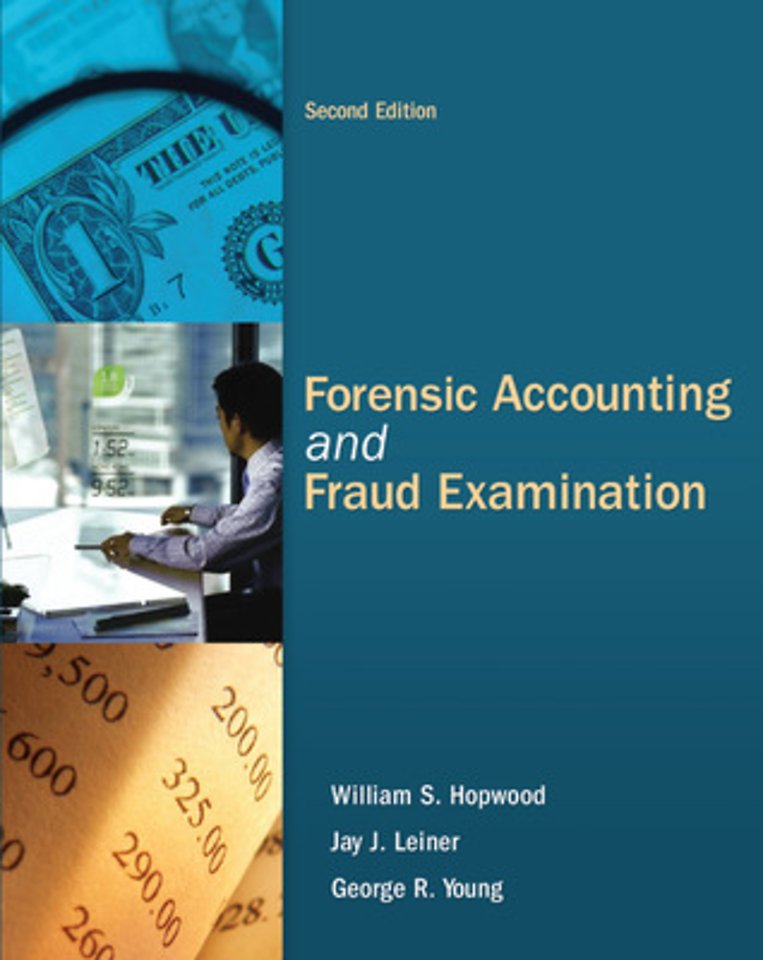
Forensic Accounting and Fraud Examination
Specificaties
Gebonden, blz.
|
Engels
McGraw-Hill Education |
2e druk, 2011
ISBN13: 9780078136665
Rubricering
Levertijd ongeveer 10 werkdagen
Samenvatting
Grounded firmly in real-world practice, Forensic Accounting provides the most comprehensive view of fraud investigation on the market. Where other books focus almost entirely on auditing and financial reporting, Hopwood, Young, and Leiner include a vast range of civil and criminal accounting fraud and related activities, from false business valuations and employer fraud to information security and counter-terrorism. The author team provide experience in fraud investigation that lends the book real-world perspective unmatched by any other.
Specificaties
ISBN13:9780078136665
Taal:Engels
Bindwijze:gebonden
Uitgever:McGraw-Hill Education
Druk:2
Hoofdrubriek:Mens en maatschappij, Financieel management
Inhoudsopgave
<h2>Part One: Introduction to Forensic Accounting and Fraud Examination</h2><h3>1. Introduction to Forensic Accounting and Fraud Examination</h3><h3>2. The Forensic Accounting Legal Environment</h3><h3>3. Fundamentals 1: Accounting Information Systems</h3><h3>4. Fundamentals 2: The Auditing Environment</h3><h2>Part Two: Fraud Examination Theory, Practice, and Methods</h2><h3>5. Fraud Prevention and Risk Management</h3><h3>6. Fraud Detection</h3><h3>7. The Fraud Investigation and Engagement Processes</h3><h3>8. The Evidence Collection Process</h3><h3>9. Fraud Examination Evidence I: Physical, Documentary, and Observational Evidence</h3><h3>10. Fraud Examination Evidence II: Interview and Interrogation Methods</h3><h3>11. Fraud Examination III: Forensic Science and Computer Forensics</h3><h3>12. The Fraud Report, Litigation, and the Recovery Process</h3><h2>Part Three: Occupational and Organizational Fraud</h2><h3>13. Employee, Vendor, and Other Frauds against the Organization</h3><h3>14. Financial Statement Fraud</h3><h3>15. Fraud and SOX Compliance</h3><h2>Part Four: Specialized Fraud Areas</h2><h3>16. Tax Fraud</h3><h3>17. Bankruptcy, Divorce, Identity Theft, and Loan and Insurance Fraud</h3><h3>18. Organized Crime, Counterterrorism, and Antimoney-Laundering</h3><h2>Part Five: Other Forensic Accounting Services</h2><h3>19. Business Valuation</h3><h3>20. Dispute Resolution Services</h3>
Anderen die dit kochten, kochten ook
-
 Jos Ahlers€ 24,95
 -
Japke-d. Bouma€ 19,99
-
Jitske Kramer€ 27,50
-
Marije van den Berg€ 27,50
-
Paul Frissen€ 29,90
-
Floor Milikowski€ 22,99