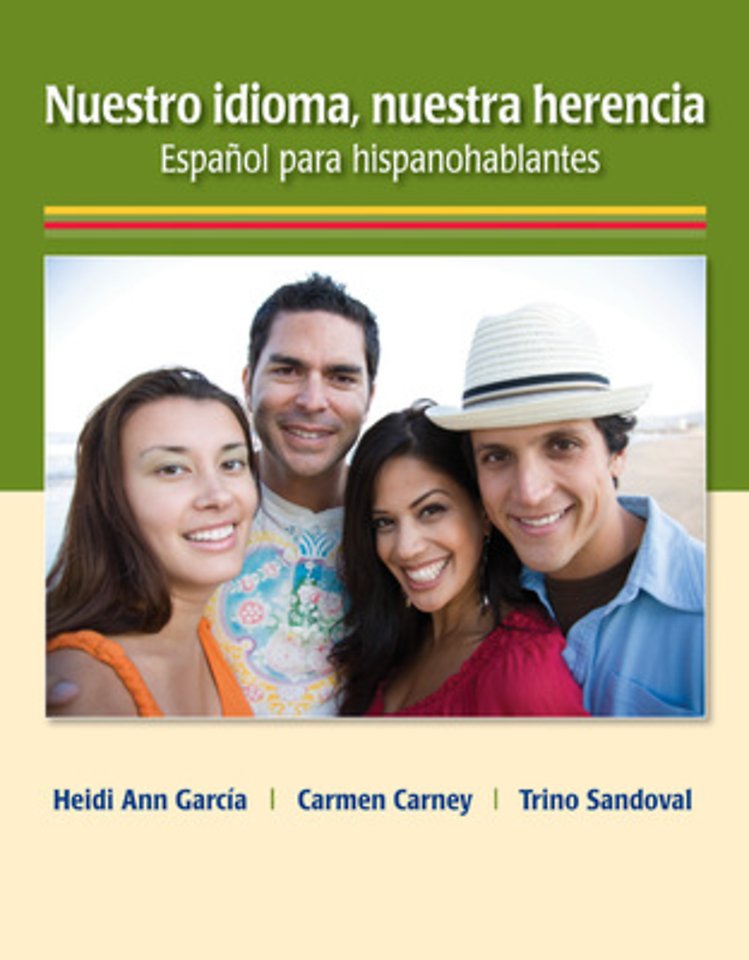
<h1>NUESTRO IDIOMA, NUESTRA HERENCIA, 1e</h1><h2>CAPÍTULO 1: La música del Caribe hispano</h2><h4>Países: Cuba, la República Dominicana, y Puerto Rico</h4><h4>PARA EMPEZAR</h4><h5>Encuesta: ¿Cuánto sabe Ud. de la música del Caribe hispano?</h5><h4>LECTURAS CULTURALES</h4><h5>Lectura cultural 1: Cuba: Modelo de sincretismo musical</h5><h5>Lectura cultural 2: El merengue y la bachata de la República Dominicana</h5><h5>Lectura cultural 3: Puerto Rico: De la danza a la plena y de la plena al rap latino</h5><h4>ORTOGRAFÍA</h4><h5>División de palabras en sílabas</h5><h5>Reglas de acentuación y clases de palabras de acuerdo con la sílaba tónica</h5><h5>Vocales: Diptongos, triptongos e hiatos</h5><h5>Monosílabos</h5><h4>GRAMÁTICA</h4><h5>La oración</h5><h4>NUESTRO IDIOMA</h4><h5>Palabras en español de origen taíno</h5><h4>ESCRITURA</h4><h5>La descripción</h5><h5>Comparar y contrastar</h5><h4>PERSONAJES DESTACADOS DE LA MÚSICA CARIBEÑA</h4><h4>NEGOCIOS</h4><h5>Lectura: La venta de la música latina en los Estados Unidos y en el mundo</h5><h4>PROYECTO FINAL</h4><h2>CAPÍTULO 2: El cine mexicano</h2><h4>País: Mexico</h4><h4>PARA EMPEZAR</h4><h5>Encuesta: ¿Cuánto sabe Ud. del cine mexicano?</h5><h4>LECTURAS CULTURALES</h4><h5>Lectura cultural 1: La época de Oro del cine mexicano</h5><h5>Lectura cultural 2: El cine mexicano del nuevo milenio</h5><h5>Lectura cultural 3: Cine y literatura en México</h5><h4>ORTOGRAFÍA</h4><h5>Los usos de la letra <strong>h</strong></h5><h4>GRAMÁTICA</h4><h5>El pretérito</h5><h5>El imperfecto</h5><h4>NUESTRO IDIOMA</h4><h5>Palabras en español de origen náhuatl</h5><h4>ESCRITURA</h4><h5>La narración en el pasado: La biografía y la autobiografía</h5><h4>PERSONAJES DESTACADOS DEL CINE MEXICANO</h4><h4>NEGOCIOS</h4><h5>Lectura: La participación hispana en la industria del cine</h5><h4>PROYECTO FINAL</h4><h2>CAPÍTULO 3: Tradiciones y celebraciones</h2><h4>Paises: Guatemala, Nicaragua, Honduras, El Salvador, Panamá y Costa Rica</h4><h4>PARA EMPEZAR</h4><h5>Encuesta: ¿Cuánto sabe Ud. de las tradiciones y celebraciones en Centroamérica?</h5><h4>LECTURAS CULTURALES</h4><h5>Lectura cultural 1: La Semana Santa en Guatemala</h5><h5>Lectura cultural 2: Las Fiestas Patrias: Nicaragua, Honduras, El Salvador y Panamá</h5><h5>Lectura cultural 3: Costumbres y celebraciones de Costa Rica</h5><h4>ORTOGRAFÍA</h4><h5>Los usos de las letras g y j</h5><h4>GRAMÁTICA</h4><h5>El participio pasado: Cómo se forma</h5><h5>El participio pasado como adjetivo</h5><h4>NUESTRO IDIOMA</h4><h5>Palabras en español de origen griego</h5><h4>ESCRITURA</h4><h5>Punto de vista</h5><h4>PERSONAJES DESTACADOS DE ORIGEN CENTROAMERICANO</h4><h4>NEGOCIOS</h4><h5>Lectura: Hispanos en los Estados Unidos y el comercio: Las tiendas especializadas en productos hispanos</h5><h4>PROYECTO FINAL</h4><h2>CAPÍTULO 4: El turismo y el medio ambiente</h2><h4>Países: Colombia, Venezuela y Costa Rica</h4><h4>PARA EMPEZAR</h4><h5>Encuesta: ¿Cuánto sabe Ud. del turismo y su relación con el medio ambiente? ¿Cuánto sabe Ud. del turismo en los países de Colombia, Venezuela y Costa Rica?</h5><h4>LECTURAS CULTURALES</h4><h5>Lectura cultural 1: El turismo en Colombia</h5><h5>Lectura cultural 2: El turismo en Venezuela</h5><h5>Lectura cultural 3: El turismo en Costa Rica</h5><h4>ORTOGRAFÍA</h4><h4>Las letras c, z y s</h4><h4>GRAMÁTICA</h4><h5>Los tiempos compuestos</h5><h4>NUESTRO IDIOMA</h4><h5>Palabras en español del origen visigodo</h5><h4>ESCRITURA</h4><h5>Ensayo expositivo</h5><h4>PERSONAJES DESTACADOS DE ORIGEN COLOMBIANO, VENEZOLANO Y COSTARRICENSE</h4><h4>NEGOCIOS</h4><h5>Lectura: El turismo como sector económico de un país</h5><h4>PROYECTO FINAL</h4><h2>CAPÍTULO 5: Tradiciones literarias, mitos y leyendas</h2><h4>Países: Perú, Ecuador y Bolivia</h4><h4>PARA EMPEZAR</h4><h5>Encuesta: ¿Cuánto sabe Ud. de las tradiciones literarias, mitos y leyendas de Perú, Ecuador y Bolivia?</h5><h4>LECTURAS CULTURALES</h4><h5>Lectura cultural 1: Tradiciones literarias en Perú desde Apu Inca Atawallpaman a Mario Vargas Llosa </h5><h5>Lectura cultural 2: Tradiciones literarias, mitos y leyendas de la zona andina</h5><h5>Lectura cultural 3: Mitos y leyendas de Ecuador y Bolivia</h5><h4>ORTOGRAFÍA</h4><h5>Los usos de las letras b y v</h5><h4>GRAMÁTICA</h4><h5>La voz pasiva y la voz activa</h5><h4>NUESTRO IDIOMA</h4><h5>Palabras en español de origen quechua</h5><h4>ESCRITURA</h4><h5>Causa y efecto</h5><h4>PERSONAJES DESTACADOS DE ORIGEN PERUANO, ECUATORIANO Y BOLIVIANO</h4><h4>NEGOCIOS</h4><h5>Lectura: El valor económico de la palabra escrita</h5><h4>PROYECTO FINAL</h4><h2>CAPÍTULO 6: Las artes</h2><h4>Países: Argentina, chile, Paraguay y Uruguay</h4><h4>PARA EMPEZAR</h4><h5>Encuesta: ¿Cuánto sabe Ud. de las artes plásticas y escénicas en Argentina, Chile, Paraguay y Uruguay?</h5><h4>LECTURAS CULTURALES</h4><h5>Lectura cultural 1: Ideas generales del teatro y las artes plásticas en Argentina</h5><h5>Lectura cultural 2: Ideas generales del teatro y las artes plásticas en Chile</h5><h5>Lectura cultural 3: Museos y teatros de Paraguay y Uruguay</h5><h4>ORTOGRAFÍA</h4><h5>Los usos de la ll y la y</h5><h4>GRAMÁTICA</h4><h5>El futuro de indicativo</h5><h5>El condicional de indicativo</h5><h4>NUESTRO IDIOMA</h4><h5>Palabras en español de origen guaraní</h5><h4>ESCRITURA</h4><h5>Argumentación</h5><h4>PERSONAJES DESTACADOS DE ORIGEN ARGENTINO, CHILENO, PARAGUAYO Y URUGUAYO</h4><h4>NEGOCIOS</h4><h5>Lectura: El arte y el comercio</h5><h4>PROYECTO FINAL</h4><h2>CAPÍTULO 7: El año 1992: 500 años después de la conquista de América</h2><h4>País: España</h4><h4>PARA EMPEZAR</h4><h5>Encuesta: ¿Cuánto sabe Ud. de las ciudades españolas de Madrid, Sevilla y Barcelona y la importancia que tuvieron para España en 1992?</h5><h4>LECTURAS CULTURALES</h4><h5>Lectura cultural 1: Madrid: Capital Europea de la Cultura en 1992</h5><h5>Lectura cultural 2: Sevilla: Ciudad de exposiciones</h5><h5>Lectura cultural 3: Barcelona: Sede de las Olimpiadas de 1992</h5><h4>ORTOGRAFÍA</h4><h5>Los usos de c, k y q</h5><h4>GRAMÁTICA</h4><h5>El presente de subjuntivo</h5><h4>NUESTRO IDIOMA</h4><h5>Palabras en español de origen árabe</h5><h4>ESCRITURA</h4><h5>El ensayo periodístico</h5><h4>PERSONAJES DESTACADOS DE ORIGEN ESPAÑOL</h4><h4>NEGOCIOS</h4><h5>Lectura: El impacto económico de los Juegos Olímpicos </h5><h4>PROYECTO FINAL</h4><h2>CAPÍTULO 8: Los hispanos en los Estados Unidos</h2><h4>País: Los Estados Unidos</h4><h4>PARA EMPEZAR</h4><h5>Encuesta: ¿Cuánto sabe Ud. de los hispanos en los Estados Unidos?</h5><h4>LECTURAS CULTURALES</h4><h5>Lectura cultural 1: Historia general de los hispanos en los Estados Unidos</h5><h5>Lectura cultural 2: La identidad hispana en los Estados Unidos</h5><h5>Lectura cultural 3: Aportaciones de los hispanos a la cultura estadounidense</h5><h4>ORTOGRAFÍA</h4><h5>Errores de uso común</h5><h4>GRAMÁTICA</h4><h5>El imperfecto de subjuntivo</h5><h4>NUESTRO IDIOMA</h4><h5>Palabras en español de origen inglés</h5><h4>ESCRITURA</h4><h5>Editorial</h5><h4>PERSONAJES DESTACADOS DE ORIGEN HISPANO EN LOS ESTADOS UNIDOS</h4><h4>NEGOCIOS</h4><h5>Lectura: Los hispanos en los Estados Unidos: Una fuerza en la economía estadounidense</h5><h4>PROYECTO FINAL</h4>